

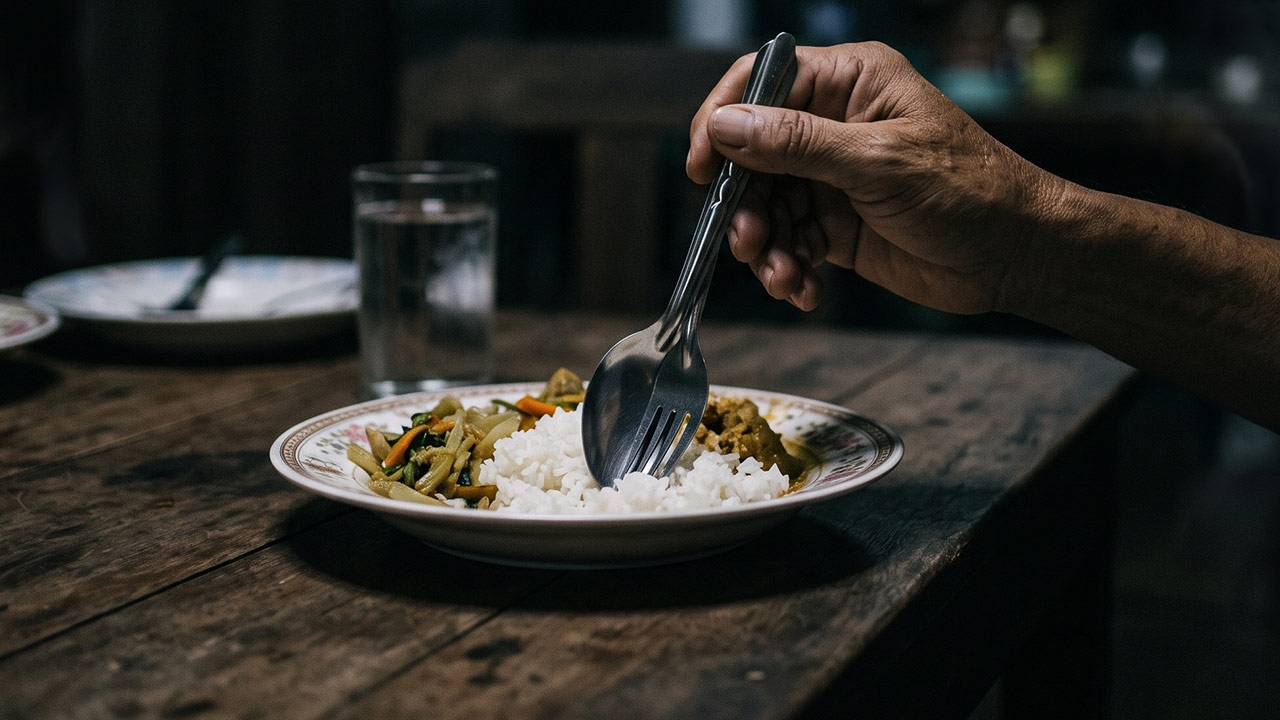
Why do elders warn so insistently "Don't knock your rice plate" ? Unveiling the ancient belief hiding a curse that summons wandering spirits and causes hunger, plus the table manners everyone should know.
For Thais, ancient prohibitions are inseparable from daily life. One familiar warning from childhood is "Don't knock your rice plate while eating." Many wonder why such a simple act as knocking a plate became taboo. From a belief perspective, what "bad things" might happen if one accidentally knocks their rice plate?
According to traditional Thai belief, the sound of knocking a rice plate or clashing cutlery loudly during a meal is akin to , sending a signal to summon spirits, especially wandering ghosts, spirits, or restless souls who are hungry and have no relatives to make merit for them.
It is believed that when these spirits hear the knocking, they mistakenly think they are being invited to join the meal. This aligns with some cultural rituals where knocking vessels is used to call spirits to receive offerings.
From a mystical viewpoint, those who break this taboo are often linked to various unseen consequences, including
Although it appears to be about spirits and superstition, analyzing from a rational and socio-historical perspective reveals that the ban on knocking plates is a clever strategy elders used to teach younger generations.
1. Maintaining table manners. Loudly knocking plates is very impolite, causing annoyance and appearing disrespectful, especially when eating with elders or guests.
2. Protecting household belongings. In the past, food containers were often made of fragile materials like earthenware, ceramics, or porcelain. Knocking forcefully could chip or break dishes, posing dangers and wasting money.
3. Showing respect to Mae Phosop. Thai society honors rice and "Mae Phosop" (the rice goddess). Playing or behaving disrespectfully while eating is considered to dishonor the rice that sustains life.
The belief forbidding knocking rice plates is not merely a spooky tale to scare children into good behavior but reflects Thai wisdom using "belief" as a tool to cultivate social manners, carefulness with belongings, and gratitude toward the environment.