

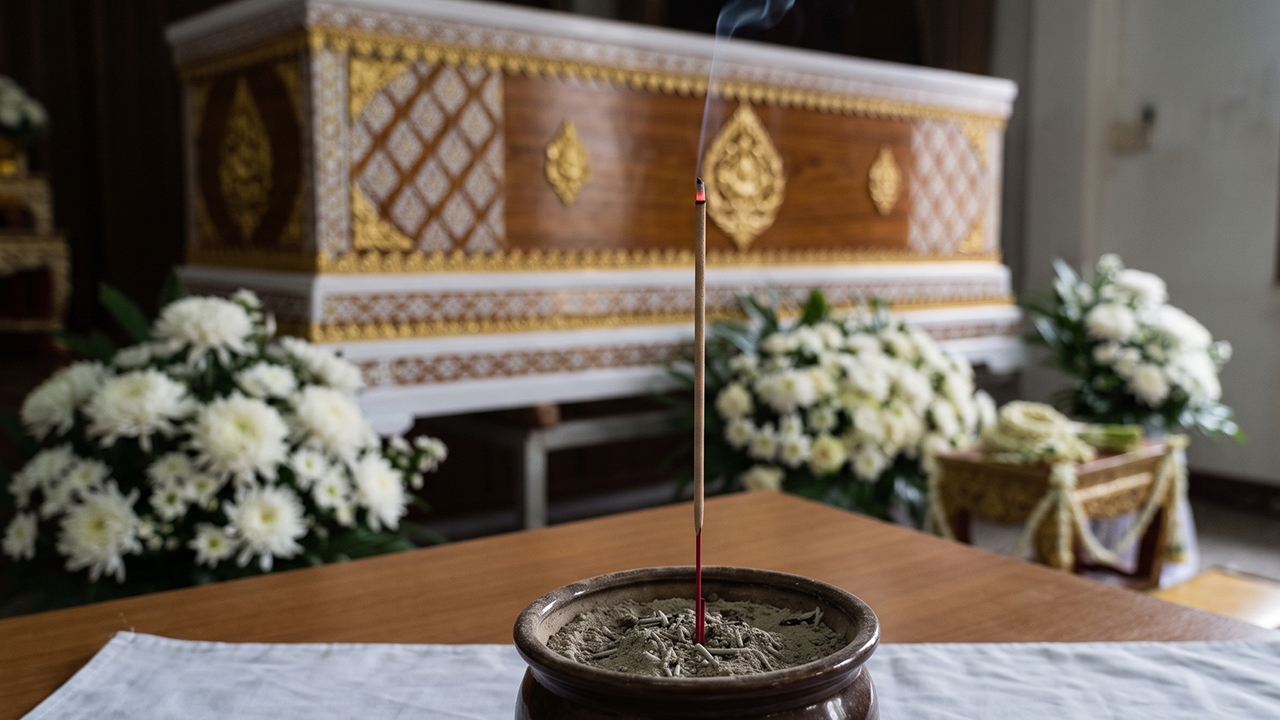
Clearing up the mystery Why is one incense stick lit when paying respect to the deceased? Revealing the meaning according to ancient beliefs used to communicate with spirits, along with precautions for correctly performing the ritual according to Thai tradition.
In Thai religious traditions and ceremonies, "incense sticks" have long been used as symbols to communicate and show respect to sacred beings and spirits. The number of incense sticks lit carries different meanings depending on the status of the one being honored. A common question many people ask during funerals is why is one incense stick lit when paying respect to the deceased?
According to ancient beliefs, lighting one incense stick symbolizes a "single soul" or Ekaphum, meaning an ordinary person who has passed away and has not yet reincarnated into a divine realm or become a sacred being. Lighting only one incense stick is a specific invitation for the soul of that deceased individual to receive merit or to show respect and mourning.
Although lighting one incense stick is used to represent an ordinary spirit in both cases, the context and place of the ritual differ clearly.
Because of this, according to the beliefs of elders, children or household members are often prohibited from playing with a single incense stick inside the home, as it could unintentionally communicate with or invite wandering spirits into the living area.
To perform rituals properly and comfortably, the basic meanings of incense stick numbers are as follows:
Nowadays, with increased awareness of fine dust (PM 2.5) and air pollution problems, many temples have policies to stop lighting real incense sticks or have switched to using "electric incense" or "digital incense" instead. Religious and cultural scholars explain that the essence of paying respect lies in the "intention and mental remembrance of the deceased." Therefore, using one electric incense stick to pay respect at funerals can replace a real incense stick and is not considered against tradition. It is also healthier for attendees and the environment.
However, lighting one incense stick to pay respect at funerals is a cultural device that distinguishes the hierarchy between sacred beings and ordinary spirits. Understanding these meanings helps us behave appropriately when attending funerals or ceremonies and preserves Thai traditions with a true understanding of their foundations.