

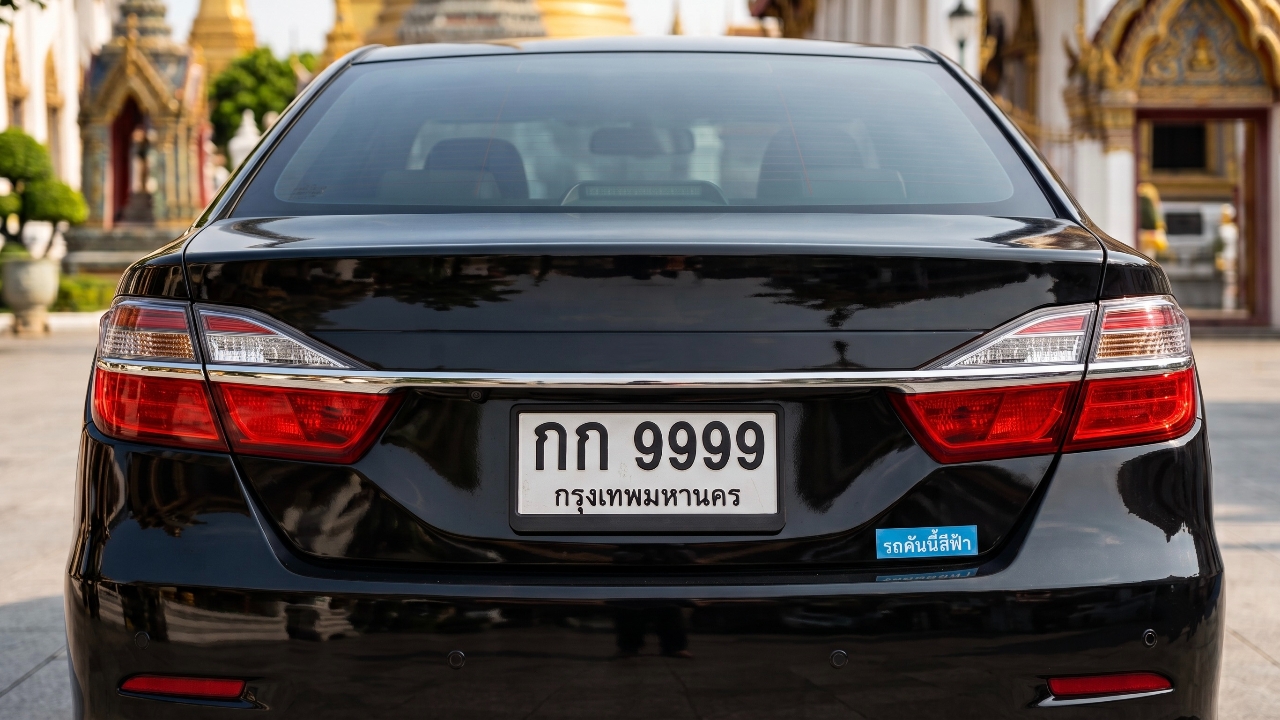
An in-depth look at the five most debated car-related superstitions among netizens, ranging from "This Car Is Color..." stickers to vehicle blessings and the Mother Goddess of Vehicles. Do spiritual practices really enhance luck and safety or are they just psychological comfort?
For many Thais, buying a new car is not just about choosing the brand or performance; it also involves "car-related superstitions." These deeply rooted beliefs in mysticism and superstition permeate society. However, in the social media age, such beliefs often spark widespread debate online—both from personal comfort and scientific perspectives.
Thairath Online compiles five popular car-related superstitions embraced by Thais. Let's examine the origins of each belief and how the online community views them.
This is a persistent legend still questioned by netizens, especially regarding stickers such as "This car is pink" even when the vehicle is actually black. This belief is based on astrology concerning auspicious colors by birth date. If the car's color is considered inauspicious, applying the sticker is seen as "correcting the fate."
Social media perspective There is often humorous debate asking whether "the spirits can read" or if it's "self-deception." For believers, however, this is a simple and low-cost way to boost confidence without harming anyone.

Another essential tradition when acquiring a new car is inviting monks or respected persons to "bless the car" by applying sacred powder and gold leaf on the interior ceiling or steering wheel. Traditionally, this is meant to invoke good luck and protect the driver from harm.
Social media perspective Most netizens still view this as comforting, but caution is advised: applying blessings on the windshield may obstruct the driver's view and cause danger.
The belief in the "Mother Goddess" has a long history, evolving from worshipping river spirits when Thais traveled by boat. When cars replaced boats, this belief transferred accordingly. Drivers often hang wreaths on the rearview mirror and set up altars during Songkran or Chinese New Year.
Social media perspective This belief is widely accepted as showing gratitude to the vehicle that provides livelihood. However, experts recommend regularly replacing steering wheel flower garlands to prevent mold and dust accumulation in the air vents.
Numerology is closely linked with superstition. Choosing an auspicious license plate without unlucky numbers or with favorable numerical sums is believed to improve career, wealth, and prevent accidents. Hence, attractive plates often fetch high auction prices.
Social media perspective Although many pay a premium for favored numbers, netizens and safety agencies repeatedly emphasize that no matter how auspicious the plate, careless driving can still cause accidents.
"Auspicious timing" is important when starting something new. Seeking an auspicious time to take delivery based on birth date and year is a passed-down custom. There are also minor beliefs, such as whether the owner steps in with the left or right foot first or drives toward a lucky direction.
Social media perspective This is seen as setting a positive start for good fortune, though sometimes it inconveniences dealerships if the auspicious time is very early or late.
Finally, we address the most debated topic among netizens that mixes belief and law: the stickers "This Car Is Color..." We have verified legal facts to inform readers as follows.
According to the Department of Land Transport, generally, small decorative stickers or "corrective" stickers that do not significantly cover the original car color "are not illegal."
However, if the sticker is large enough to "change the car's registered color" or covers more than 30% of the vehicle's surface, the owner must report the color change to the transport office within 7 days. Failure to do so can result in a fine of up to 2,000 baht under the Motor Vehicle Act of 1979.
In summary, small "corrective" stickers commonly placed at the rear are usually tolerated by police. However, enthusiasts should ensure stickers do not cover tail lights, brake lights, or license plates, as that could lead to fines for unsafe vehicle modifications.