

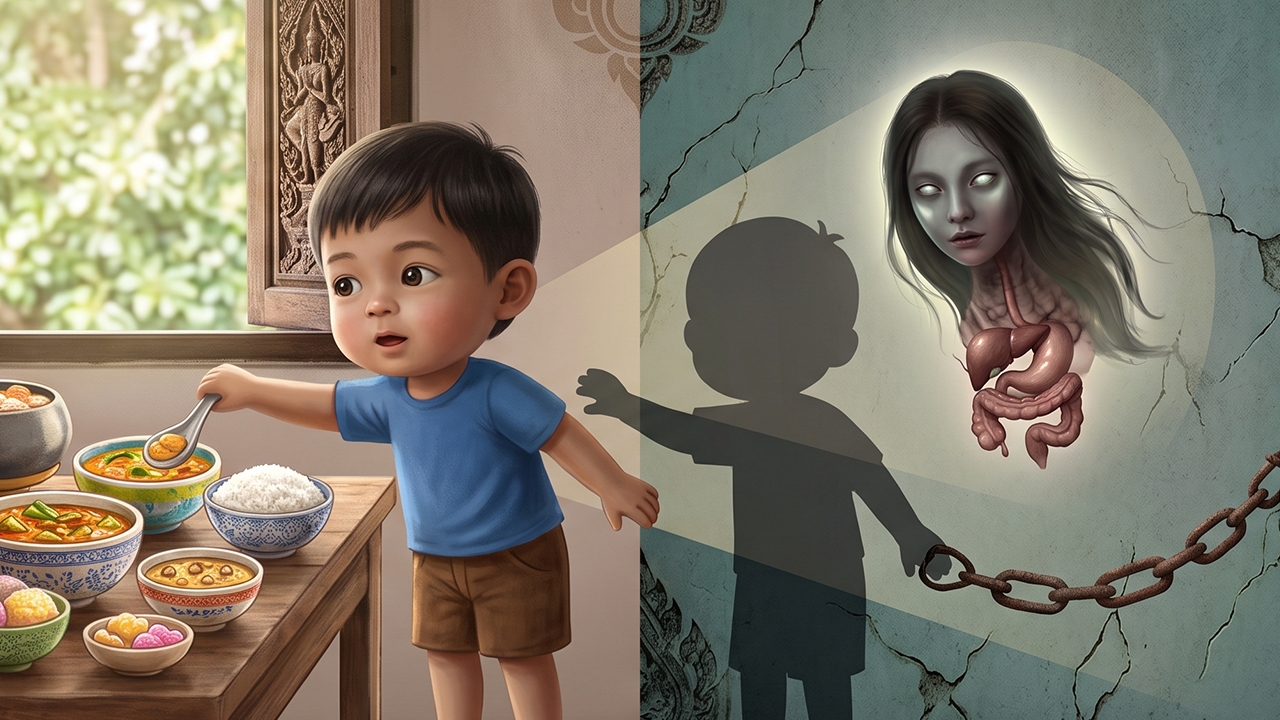
"Eating food meant for alms will turn you into a krasue." A deep look into the social strategy behind this ancient warning and whether people still believe it today.
"Be careful eating alms food or you'll become a krasue!" This chilling warning from elders often frightened many children. What social strategy does it actually hide? And do people still believe this in modern society? Thairath Online explores the answers without superstition.
"Don't sneak and eat the food meant for alms, or the krasue will eat your insides!" This classic phrase elders use to warn children when they see delicious food prepared for morning merit-making carries a scary undertone. Deeply rooted in Thai society for a long time, as times change many question the origin of this supernatural belief and whether people still believe it today.
In the past, Thai society was deeply connected with Buddhism. Making merit by giving alms was the highest blessing. Food prepared for monks had to be the best and purest, and no one was allowed to touch or taste it beforehand.
Ancestors used the figures of "krasue" or "pret" as tools to scare children by invoking symbols of hunger and horror to create a frightening image. Children who did not understand deeper principles would fear turning into ghosts who eat rotten food or have their insides eaten, thus avoiding taking the food.

Decoding this belief reveals it is not mere superstition but a subtle social strategy.
With society entering the digital age and easier access to information, views on the "krasue" warning have clearly changed.
1. Elderly rural groups Some still strictly observe traditions regarding preparing alms food, though they may not literally believe in turning into a krasue. They often use the phrase habitually to warn their children.
2. Younger and working-age people Almost no one believes they will become a krasue from eating alms food. This generation sees it as a social strategy or children’s tale from the past, yet most still maintain the etiquette of not eating food prepared for merit before monks, out of respect and propriety rather than fear of ghosts.
The fact to understand is The prohibition applies only to "before" the food is offered to the monks. Once the monks have received and finished their meal, leftover food called "rice at the bottom of the bowl" can be eaten normally. In Buddhism and traditional belief, it is even considered auspicious, believed to help heal illnesses and bring blessings to life.