

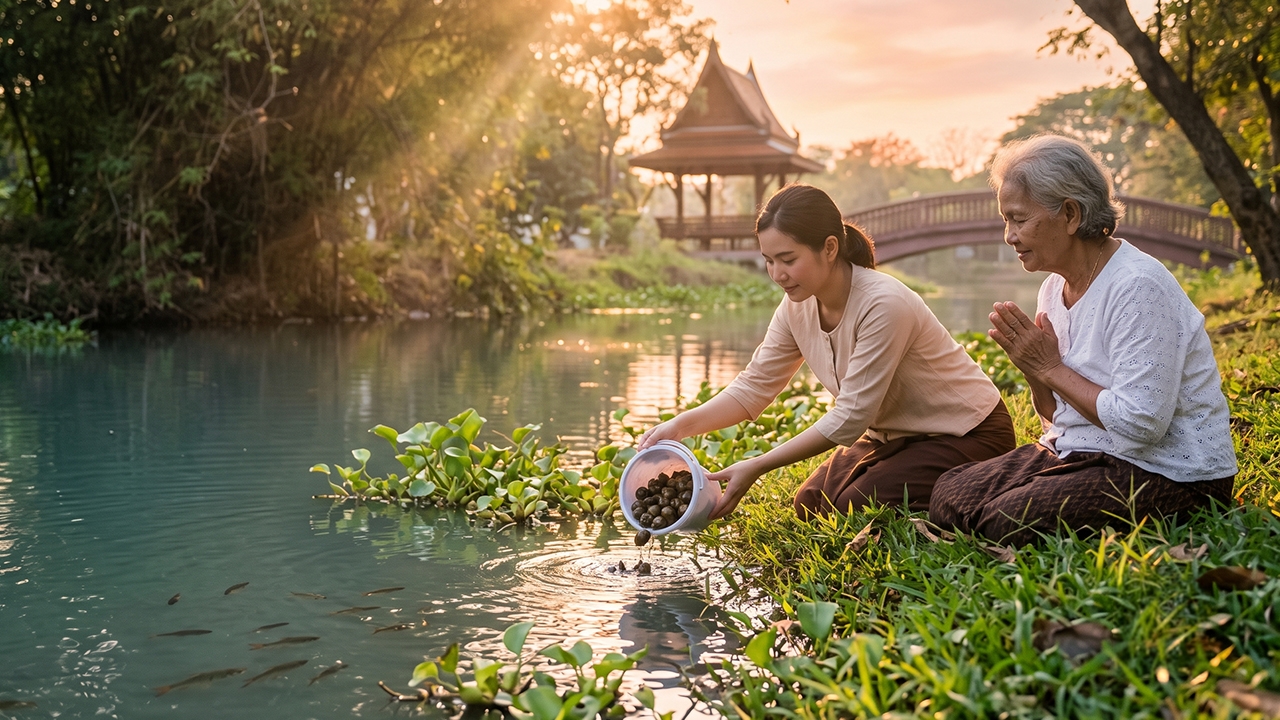
To earn merit by releasing aquatic animals, you must release them in the right place. Revealing how to release apple snails and eels. And other aquatic animals according to the Department of Fisheries’ advice, along with a list of alien species strictly prohibited from release.
The tradition of releasing fish or aquatic animals for merit has long been part of Thai society, especially among spiritual believers who think giving life anew can ward off misfortune and bring good luck. However, releasing aquatic animals without studying suitable habitats may indirectly harm them and disrupt ecosystems.
The Department of Fisheries has therefore urged the public to release native Thai aquatic animals such as barb, climbing perch, Thai snakehead, and snakehead fish. They must be healthy, free from wounds to prevent disease spread, and most importantly, must be released in the correct locations.
For those wishing to make merit by releasing apple snails to bring peace and remove bitterness as believed, proper release guidelines are as follows.
Water body characteristics. They should be released into canals, ponds, ditches, swamps, or rice fields with still or slow-flowing water.
Surface conditions. The bottom must be soil or mud, with water depth from 10 centimeters to 2 meters.
Attachment points. The release area should have posts, bridges, submerged wood, or aquatic plants for apple snails to cling to and sustain life.
Besides apple snails, different aquatic animals have varying habitat needs.
Rice field eels and rice field frogs. They prefer moist, swampy areas with slow-flowing water and should be released near riverbanks, streams, ponds, rice fields, or garden ditches with muddy soil because eels need to burrow and these areas provide insects that frogs eat.
Pangasius catfish, giant catfish, barb, and black fish. These are large, mature fish best released into deep rivers or canals with strong currents to provide ample space for growth.
A top caution for merit-making by releasing fish is to strictly avoid releasing alien species, hybrids, or unsuitable aquatic animals into natural waters, as they can damage ecosystems and native species.
Snakehead group. Black-chinned snakehead, Mayan snakehead, and butter snakehead.
Catfish group. African catfish, Big U hybrid catfish (cross between African catfish and U catfish). Note: The Department of Fisheries does not support releasing any catfish species because the public may have difficulty distinguishing native catfish from hybrids.
Other aquatic animals. Sucker fish, peacock bass, Japanese turtle (red-eared slider), and crayfish.
If anyone has alien aquatic animals they no longer wish to keep, they can deliver them to the nearest Department of Fisheries office for proper handling. For your next merit-making, remember to check carefully and release in the correct place to gain merit and help conserve the environment at the same time!