

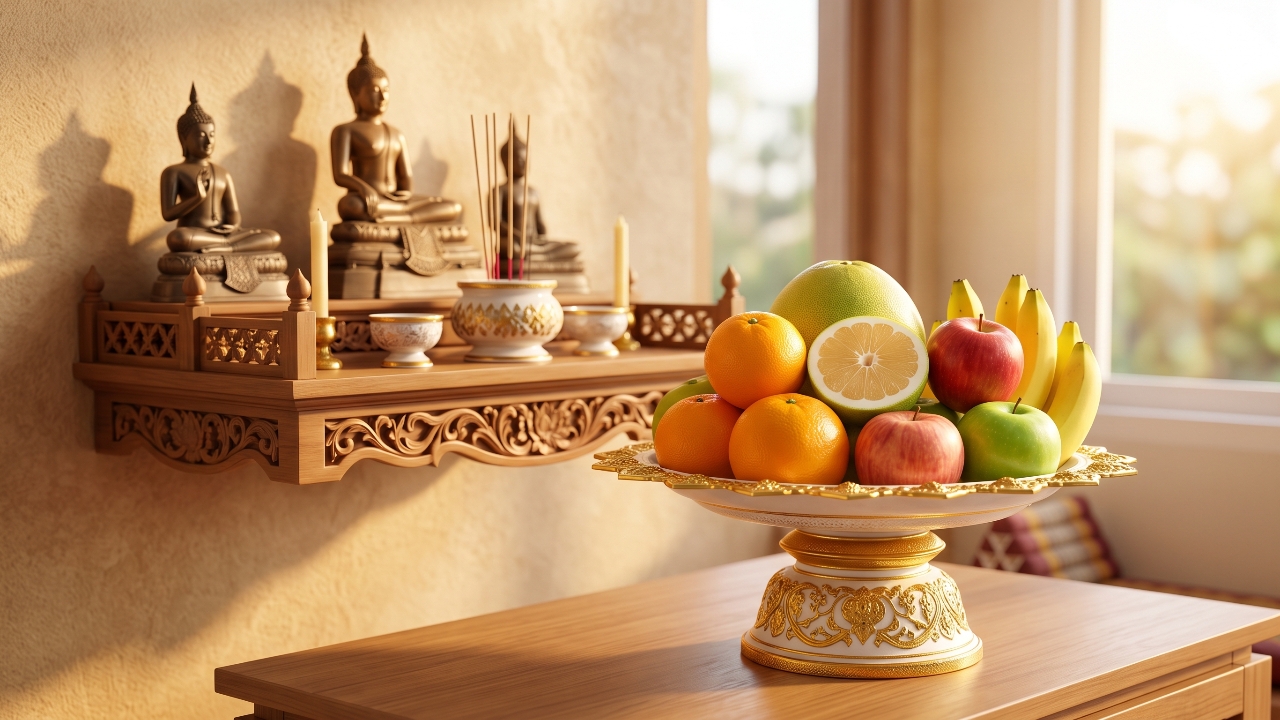
When arranging fruit offerings for Buddha and sacred entities, beyond choosing auspicious names, the condition of the fruit is also important. Check these 4 characteristics to avoid for purity and to enhance life's auspiciousness.
Ancient Thai beliefs. Presenting offerings to Buddha images or setting up altars for sacred objects is a way to express gratitude, respect, and care from the devotee. It is believed that pure and perfect items help promote auspiciousness, prosperity, and good fortune to the practitioner.
However, besides selecting types of fruit with auspicious names, there is also the "freshness and perfection" of the fruit, which is crucial. Information from combined beliefs and hygiene principles identifies 4 fruit characteristics to avoid when preparing offerings.
Characteristics: Having bruises, skin discoloration, mold spots, or leaking juice from the flesh.
Reasoning: According to beliefs, such fruits are considered flawed and incomplete, possibly diminishing the sincerity of the offering. From a hygiene perspective, the smell and leaking juice harbor germs and attract flies and ants to the altar.

Characteristics: Fruits past their prime ripeness with mushy flesh, thin skin, and prone to spoilage.
Reasoning: Thailand's warm climate accelerates overripening and decay. If left on the altar for several days, the fruit emits a foul odor, disturbing the tranquility of the worship area.
Characteristics: Fruits with strong distinctive smells when ripe, such as durian or ripe jackfruit.
Reasoning: Though tasty or valuable, their strong smell can disrupt meditation or cause discomfort to others nearby. One should consider the suitability of the placement location.
Characteristics: Having dirt, chemical residues, or insects attached to stems and skins.
Reasoning: Offering unclean items reflects lack of care. Before placing on the altar, fruits should be washed and thoroughly dried to prevent moisture that speeds decay.
To avoid the risk of easily spoiled fruits, it is advised to select fruits with thick skins that stay fresh longer and carry auspicious meanings, such as:
Oranges, symbolizing good luck, wealth, and auspiciousness; they keep well and resist spoilage.
Golden bananas, representing the beckoning of good fortune and having supportive followers; choose fruits that are just ripe or slightly underripe.
Red apples, symbolizing happiness, inner peace, and family safety.