

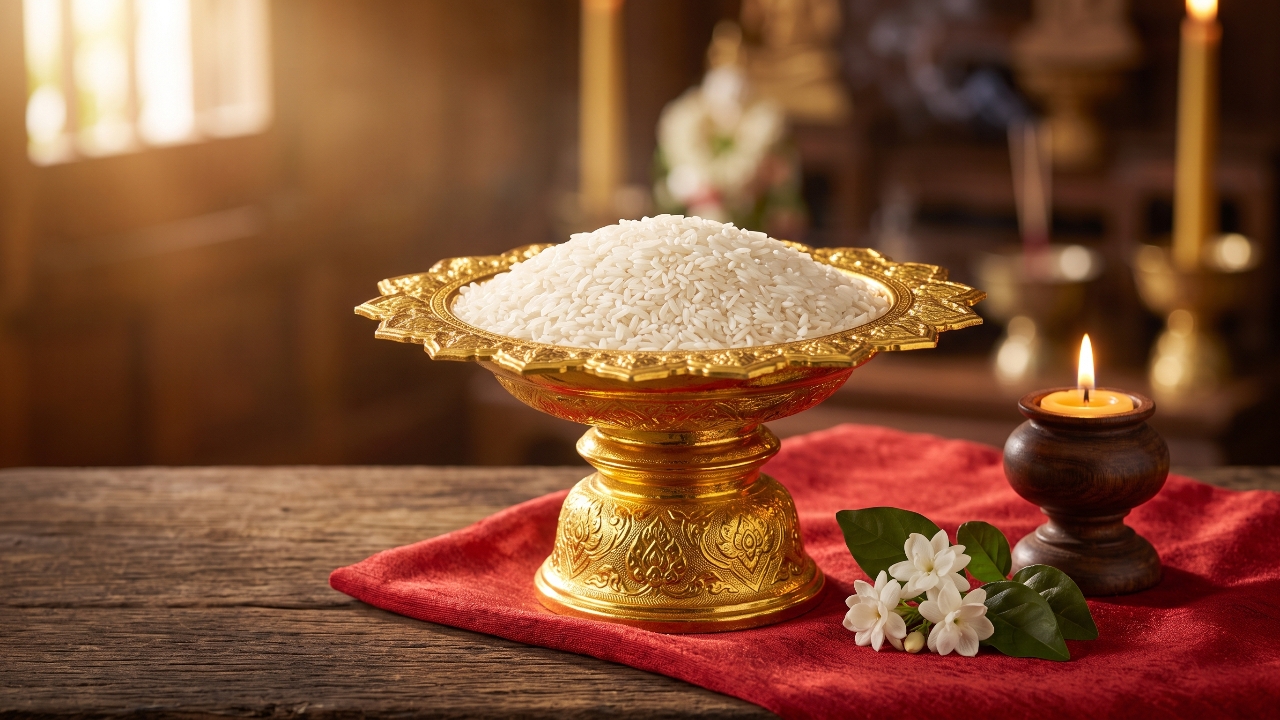
Have you ever wondered why ancient rituals use "blessed rice grains" to repel evil spirits, what types of rice are used, and why ordinary grains become a popular talisman among Thai spiritual followers?
The image of a shaman sprinkling "blessed rice grains" to drive away unseen spirits is well known. Folklore and belief history note that agrarian societies revere "Phra Mae Phosop" the goddess of grains. Rice thus symbolizes the "life force" and purity. When subjected to Buddhist consecration or incantations (such as the Five Weapons Mantra), ordinary rice transforms into a sacred object with the power to dispel misfortune.
What rice is used to make blessed rice grains? Generally, "white rice" (such as raw jasmine or raw Sao Hai rice) with whole, unbroken grains is used to symbolize purity and luck. However, some ancient occult texts mention using "black rice" (roasted or specially processed rice) to emphasize protection against witchcraft, or "sticky rice" in rituals from northeastern and northern regions.
Who is blessed rice grain used for, and how? In fact, it is not only for exorcising spirits! It can be applied according to these principles:
Suppression aspect: sprinkled on ghosts, spirits, or suspected individuals possessed by witchcraft.
Protection aspect: sprinkled around homes, buildings, or land to create a sacred boundary and prevent misfortune.
Attraction and popularity aspect: placed in small cloth bags as "blessed rice charm bags" carried in wallets or money baskets to attract wealth and abundance.
Can other items be blessed instead? The answer is "yes." Thai rituals also bless other objects for similar purposes, such as blessed sand (commonly sprinkled around fences to ward off evil), blessed pepper (to strongly repel misfortune), holy water (used for sprinkling or bathing), or beans, mung beans, and sesame (emphasizing auspiciousness and growth).
It is believed that spirits do not fear the rice grains themselves but fear the "power of Buddhist blessings" and the spiritual authority of teachers present in the rice. When sprinkled, blessed rice acts like a spiritual weapon disrupting negative energies.
From a psychological perspective, blessed rice grains serve as a "confidence-building tool." Having a familiar sacred object helps calm the mind and dispel fear, empowering practitioners to face unseen challenges bravely.
For those sensing obstacles, bad luck, or negative energy at home, ancient belief texts recommend the "method of sprinkling blessed rice to dispel misfortune." Prepare to dispel obstacles.
Prepare body and mind. Perform on a Buddhist holy day or when feeling calm and comfortable. Bathe to cleanse the body, then place blessed rice in a small tray or bowl.
Recite the Threefold Namo (Namo Tassa...) three times. Before sprinkling, mentally pray to the Triple Gem, household guardian spirits, and the teachers who blessed the rice, asking to clear all evil and obstacles.
Direction for sprinkling. Begin sprinkling from inside the house outward, starting at the deepest point and slowly walking while scattering the rice and reciting mantras (such as Buddhist invocations or Namo Buddhaya) to drive out negativity to the front door or fence line.
Additional advice. To protect a property, sprinkle at the four fence corners to establish a sacred sanctuary according to belief.
"Blessed rice grains" are not just ghost-repelling amulets seen in entertainment but embody beliefs, wisdom, and psychological tools of ancient Thais. Whether used to ward off bad luck or for peace of mind, the most important thing is to live mindfully and cautiously.