

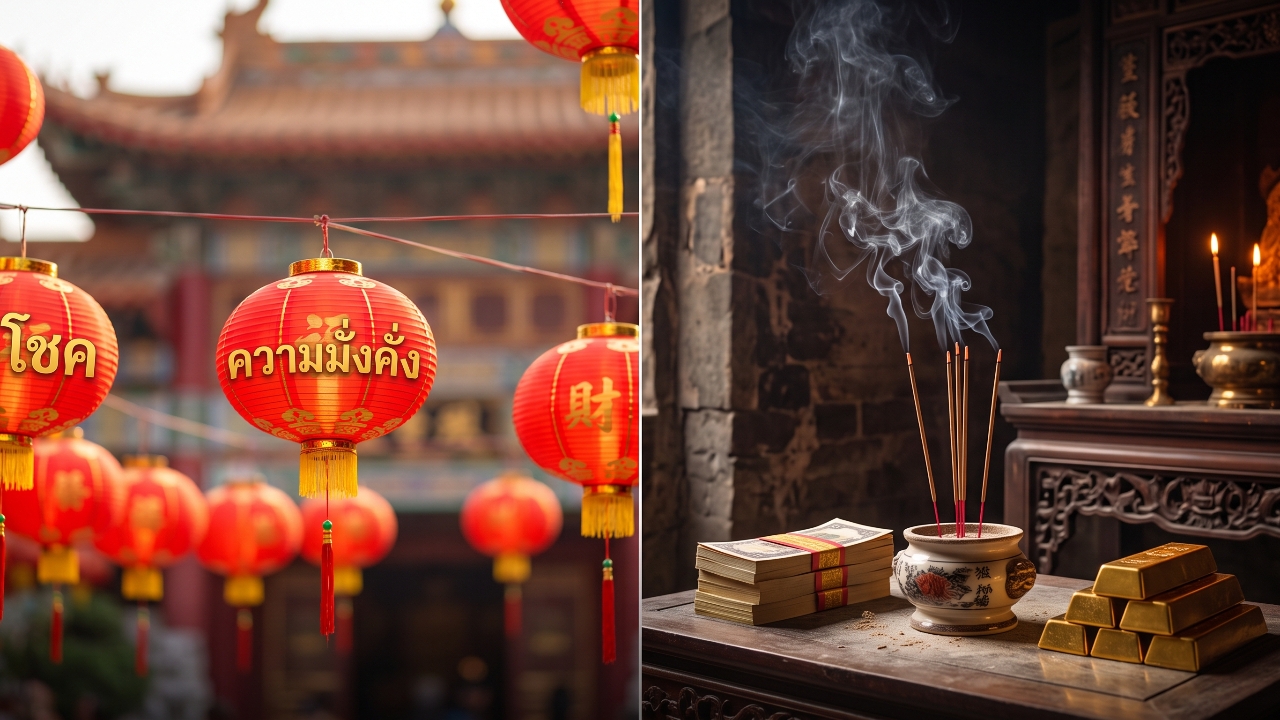
Chinese New Year and the Chinese Ghost Festival These are important festivals for Thai people of Chinese descent but have clear differences in purpose, Month 7 taboos, and the arrangement of offerings. Here are key points to know for proper worship and merit-making.
Festivals among Thai people of Chinese ancestry often involve worship of gods and ancestors, but many may still confuse "Chinese New Year Festival" and "Chinese Ghost Festival" and how they differ. Cultural information indicates that these two festivals have entirely different purposes, taboos, and offering preparations.
The clearest difference is the core essence of each festival.
Since Chinese New Year is an auspicious event filled with color and celebration, the Ghost Festival occurs in Month 7, regarded as the spirit month, so there are many taboos and superstitions passed down, such as:

Preparing offerings is another aspect to be careful about. Although meats and fruits may be similar, "joss paper" and some offerings are specific and cannot be interchanged. Some joss papers are designed especially for worshiping deities during Chinese New Year, while the Ghost Festival focuses on joss paper representing clothes, daily items, and money to send to ancestors and wandering spirits. Those preparing offerings should consult experts or sellers to ensure correctness before performing rituals.
Although both Chinese New Year and the Chinese Ghost Festival reflect family bonds and gratitude, their contexts differ completely. Chinese New Year is about receiving blessings and praying to gods, while the Ghost Festival involves making merit, dedicating merit, and cautious living according to beliefs in the spirit month. Understanding these differences helps us preserve traditions properly and auspiciously.