

Luang Pho Thap was a Phra Kru monk, while Somdet Phra Sangharaja Phae held the title of Chaokhun at Phra Tham Kosachan Temple. Sharing similar interests, it is said that Somdet Phra Sangharaja often visited Wat Thong to discuss metal casting techniques for amulet creation with Luang Pho Thap.
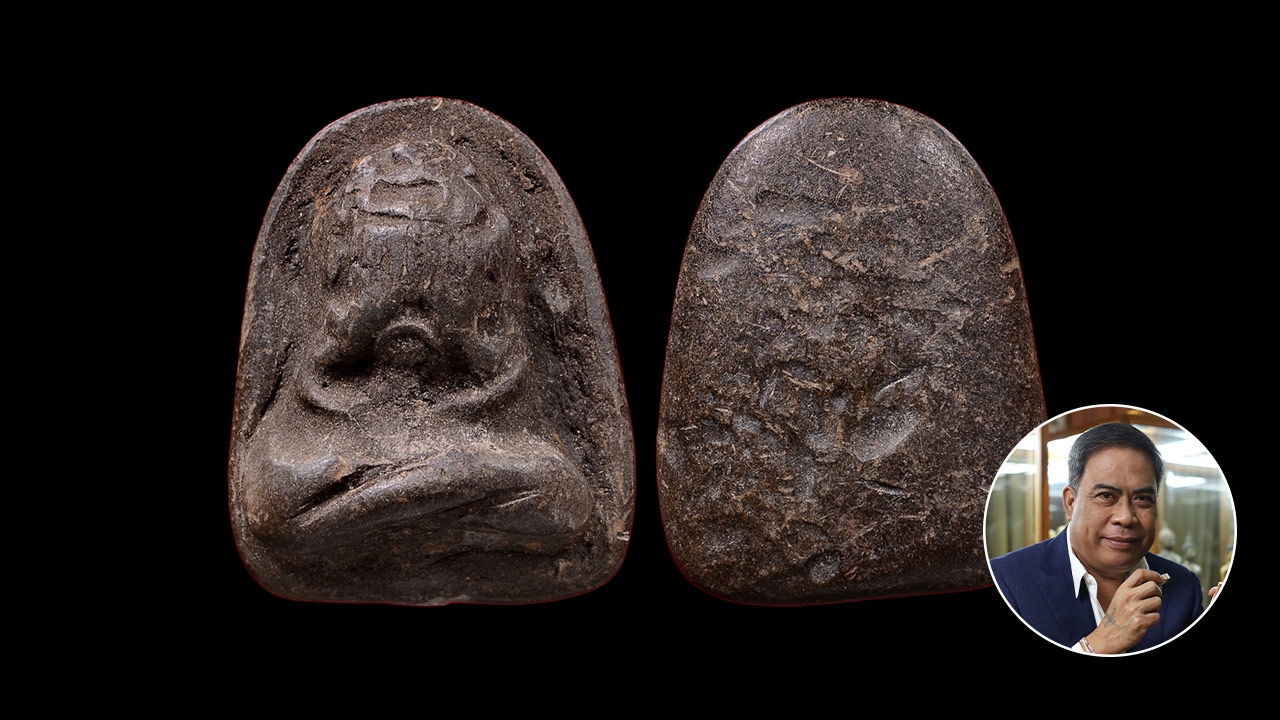
The first person to research and publish Luang Pho Thap’s nine-metal alloy formula in amulet literature was Treeyampawai. In recent times, amulet books have become widespread, featuring many images of Wat Thong’s lacquered powder Maha Utham amulets. Each piece closely resembles the same mold for the head, often a small version, with the front mold identical and the back either convex or flat.
It is estimated that Luang Pho Thap chose a beautiful bronze mold as a model, pressing it to create powder amulets. Compared to the bronze versions, the number of these powder amulets is likely very limited.


The lacquered powder material used by Luang Pho Thap is similar to that of Luang Pho Kaew’s amulets and the Phra Pidta style from Chonburi. However, no one has clarified what materials Luang Pho Thap used or whether he employed auspicious woods like Luang Pho Kaew did.
Luang Pho Kaew of Wat Kruawan was a contemporary of Luang Pho Thap of Wat Thong.
Using age as a connection, the techniques for creating lacquered powder amulets among masters of that era were tested and compared with each other. It is generally accepted that the spiritual benefits of the lacquered powder amulets from these two temples are similarly associated with great charm and wealth.
Regarding the amulets’ spiritual powers, there is little logical explanation; the community relies on faith. People believe according to their own conviction and respectfully invoke the monks’ blessings accordingly.
The Wat Thong Maha Utham lacquered powder amulet uses a mold featuring a yantra on the calf area. Additionally, it is coated with lacquer and gold leaf. The aged gold lacquer indicates the amulet’s venerable age.

