

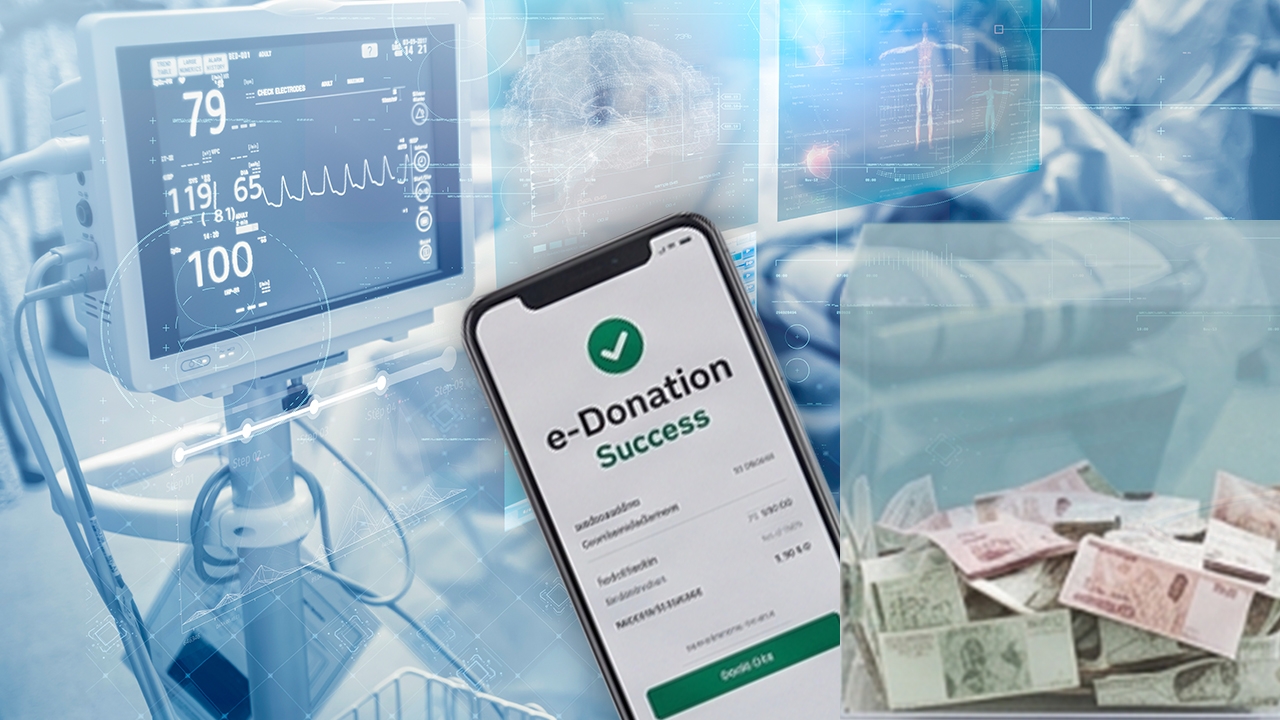
Scenes of people queuing to offer Sanghadana or place donation envelopes at temples are becoming less common, as younger and working-age people view merit-making differently, believing that creating merit no longer needs to be confined within temple walls.
Many have shifted their behavior from maintaining religious sites to channeling resources to public hospitals and healthcare facilities that still face shortages. This change reflects a shift in mindset, valuing concrete help for human lives and a changing social direction.
The main factor driving changes in donor behavior is transparency and verifiable outcomes. Reports over the years about temple donation management lacking clear auditing have raised societal doubts about whether donated money is used as intended.
In contrast, donations to hospitals have clear operational structures and accounting systems. Donors can immediately see how every baht is converted into items such as
leading to the feeling that "donations can save lives immediately." This appeals to the younger generation focused on positive, real-world results.
Beyond the spiritual aspect, personal financial management also motivates workers to donate more to public hospitals.
The Revenue Department allows donations to public hospitals to be deducted from taxable income at twice the actual donation amount (up to 10% of net income), unlike donations to temples or general foundations which are only deductible at a 1:1 ratio.
Additionally, the e-Donation system sends data directly to the Revenue Department, eliminating the hassle of keeping physical receipts.
For younger people, merit-making is no longer limited to supernatural dimensions or accumulating merit for the next life.
Nowadays, the value of creating merit is reinterpreted as genuine social sharing. They believe that saving lives and enabling equitable access to healthcare is the highest merit today. Donating to hospitals thus becomes a way to demonstrate social responsibility that immediately improves people's quality of life.
The shift from donating to temples to supporting hospitals does not mean Thais are losing faith in religion. Rather, it signals that people are questioning and choosing to use their resources more effectively. The desire for tangible results, transparent systems, tax benefits, and a view of merit as helping fellow humans are key factors driving this value shift.
For those seeking ways to give, donating to public hospitals, medical foundations, or programs aiding underprivileged patients offers a real positive social impact. Starting with local hospitals or nearby foundations allows participation in improving quality of life and building a sustainable culture of sharing.