

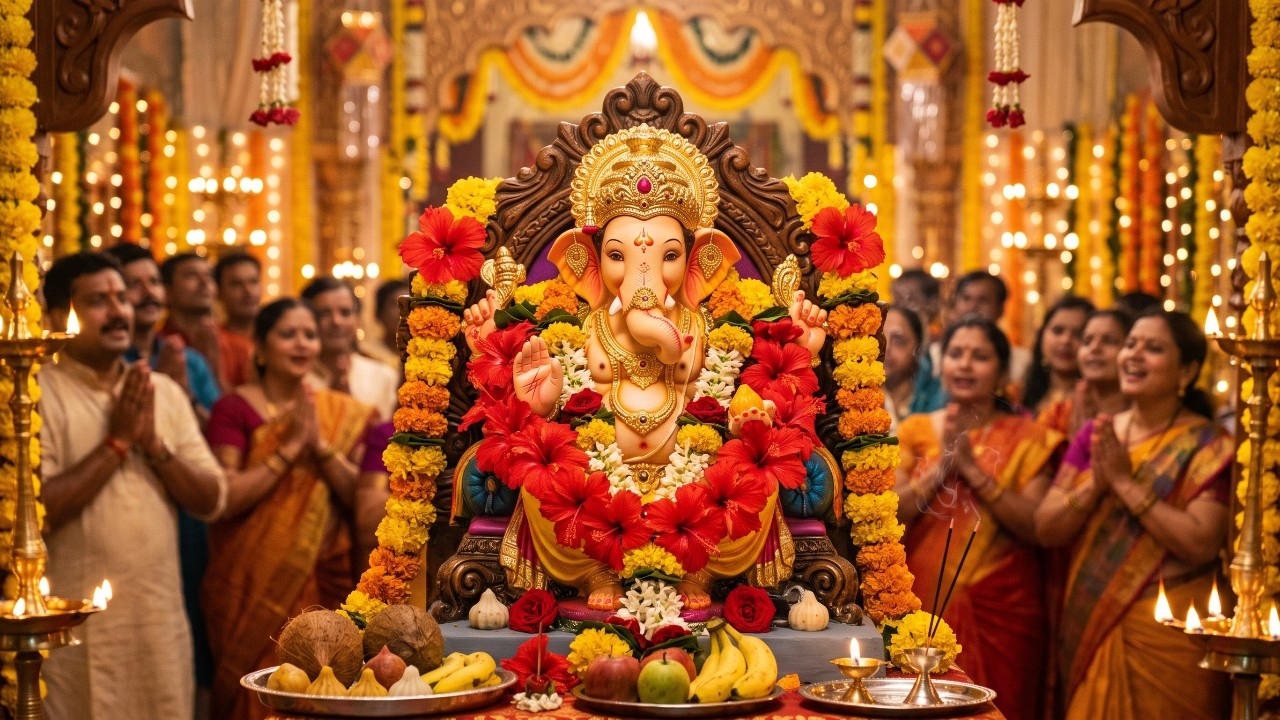
The auspicious time has arrived with the Ganesh Chaturthi festival held from 14 to 25 Sep 2026 GMT+7, which in Hindu belief marks the period when Lord Ganesha descends to grant blessings to humans, prompting many devotees to prepare elaborate altars carefully.
However, focusing on elaborate offerings while overlooking small prohibitions can reduce the effectiveness of your prayers. To ensure your intentions remain strong, let's review 5 things to avoid during this festival.

When making offerings to Lord Ganesha, purity is paramount. Food offerings should be vegetarian or vegan, free from meat, eggs, and pungent vegetables like onions and garlic. Favored offerings include sweets like modak and laddu, auspicious fruits, fresh milk, or ghee (clarified butter).
However, one must not overlook hidden ingredients in modern sweets, especially gelatin derived from animal bones or skin, as well as eggs in baked goods. Carefully checking labels before purchase is essential to maintain purity in worship.
While most natural plants are auspicious, holy basil or "Tulsi" is a significant exception in worship of Lord Ganesha. According to Hindu mythology, the goddess Tulsi once had a dispute with Lord Ganesha, resulting in a strict prohibition against using holy basil leaves in his worship, except on Ananta Chaturdashi day.
If you wish to offer auspicious plants favored by the deity, you should instead choose "Durva Grass" (Durva Grass) which symbolizes prosperity and freshness.
All items offered to the deity must be new, fresh, and 100% pure according to ritual rules. No one is allowed to taste, sniff closely, or handle the offering before the ceremony, as it would contaminate the item's energy with human influence.
Practically, offerings become "Prasad"—blessed food that can be eaten—only after the deity accepts and returns them. Therefore, if you prepare sweets yourself, you must be disciplined, measure ingredients precisely without tasting during preparation, and set aside portions in clean containers specifically for offering.
Flowers serve as a medium of positive energy and freshness. Flowers used in worship should be fresh with vibrant colors, such as red hibiscus, yellow marigolds, or thornless roses.
Offering wilted flowers, flowers with sharp thorns, or dull-colored blossoms is considered inauspicious. Likewise, worship items like broken incense sticks, candles, or cracked altars should be replaced before the ceremony to fully welcome positive energy.
Beyond external items, the "mind" is the greatest offering. The ritual is most effective when the participant’s mind is calm, bright, and joyful. During this sacred festival, avoid criticism, gossip, anger, or negative thoughts while preparing and performing the ceremony.
If your mood is disturbed, positive energy frequencies decrease, weakening spiritual connection and blessings. Maintaining faith, smiling, and radiating goodwill helps attract abundant success energy.
Worshiping Lord Ganesha during the Ganesh Chaturthi festival is not complicated beyond sincere intention. By adhering to principles of faith and purity in body, speech, and mind, and observing these 5 key prohibitions, your ceremony will be complete and ready to receive full blessings and success.