

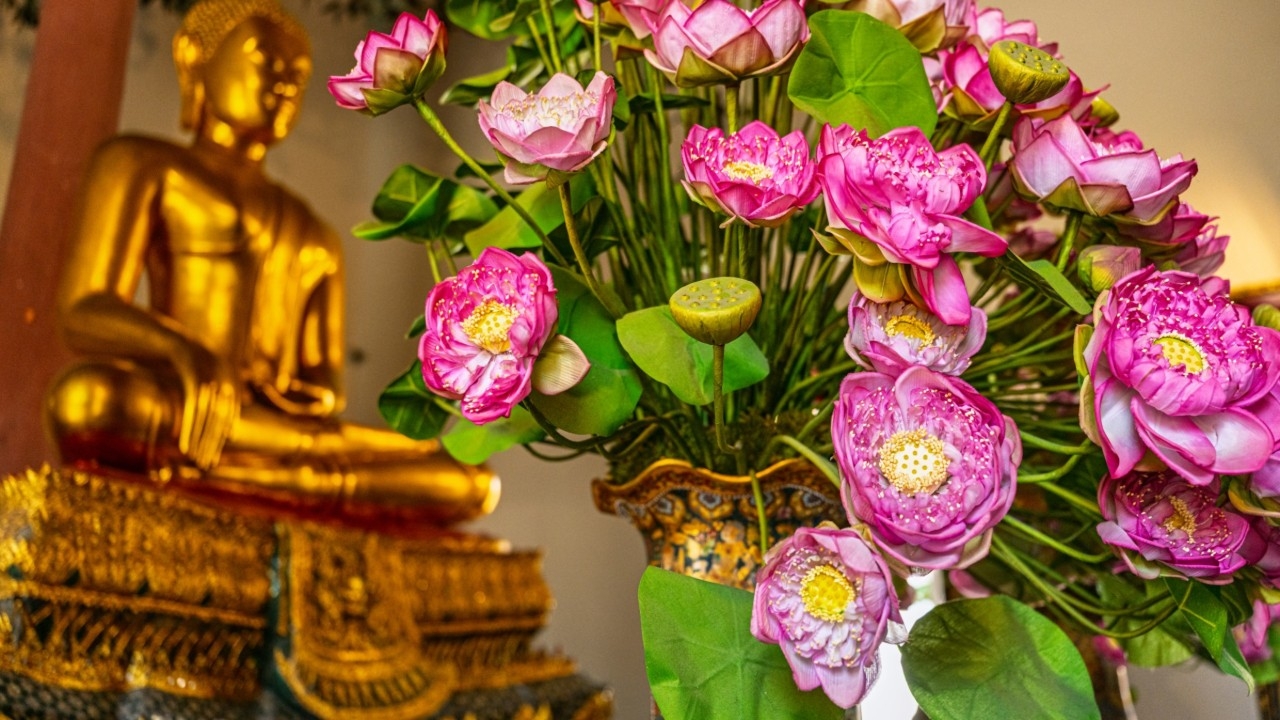
" Flowers Used for Worship "Flowers used for worship" are a familiar offering for Thai people, whether visiting temples for merit-making, daily worship, or seeking blessings at sacred sites. Beyond their beauty and fragrance, each flower is connected with distinct auspicious meanings related to success, love, wealth, and prosperity.
In Buddhism, offering flowers expresses respect and serves as a devotional item. Therefore, if you want to select flowers that align with your intentions in making merit or seeking blessings, you can use the symbolic meanings of flowers as a guide, as each type carries traditional symbolic significance.
" The lotus flower is one of the most prominently associated flowers with Buddhism and has long been used in Buddha worship. The lotus symbolizes enlightenment and is suitable for praying for wisdom, peace, and success in overcoming difficulties.
Its characteristic growth from muddy water before rising above the surface is often compared to elevating the mind and transcending impurities. Thus, it is ideal for those who wish to make merit with intentions for mindfulness, wisdom, calmness, and overcoming life’s obstacles.

The name “marigold” is linked to the word “prosperity,” making it a popular auspicious flower among Thais for offering to Buddha and sacred sites. Its bright golden yellow color is symbolically associated with growth, wealth, and advancement, making it suitable for prayers related to work, finances, career progression, and prosperity.
If you are starting a new job, launching a business, or want to boost confidence in your career, marigolds are a favored choice, often representing the wish for a flourishing life.

Jasmine is a white, fragrant flower well-known among Thais for symbolizing pure love and gratitude, especially as a symbol on Mother’s Day. It is suitable for prayers concerning family, love, relationships, and peace.
When used in worship, jasmine’s meaning fits those who want to show sincere respect or pray for the happiness and harmony of family members. It is also used as an offering to Buddha for auspiciousness.

Orchids are another popular flower for Buddha offerings due to their beautiful shapes and variety of colors. Offering orchids is associated with success, smooth progress, and stability, especially in work and business. They are suitable for prayers about careers, business, achievement, and security.
Those starting a business, initiating a new project, or seeking advancement in their career are encouraged to offer orchids for auspiciousness, enhancing meanings of success, stability, and continuous growth in their endeavors.

Although many associate roses primarily with romantic love, they can also be offered to Buddha for auspiciousness like other flowers. Roses generally signify love, goodwill, and kindness toward others, making them appropriate for those seeking blessings related to love, family, or interpersonal relationships.
Additionally, rose colors convey different meanings and feelings: pink roses denote gentleness, care, and goodwill; white roses often symbolize purity, sincerity, and peace. Therefore, you can select rose colors that align with the message you want to express.

Chrysanthemums, with their beautiful and durable form, are commonly used in flower arrangements or bouquets for Buddha offerings. Symbolically, they are linked with longevity, good health, and auspiciousness, making them suitable for those wishing for strong health and peaceful life for themselves or family.
For offerings, white chrysanthemums evoke purity, calmness, and simplicity, while yellow ones appear bright and auspicious. Both colors are fitting for Buddha offerings and help create a dignified and beautiful floral display.

Gardenia is a white, fragrant flower often used in garlands or as an offering. Traditionally, its name is connected to the word “growth,” symbolizing prosperity and flourishing. Its white color conveys purity and tranquility, making it auspicious for progress and peaceful life.
Gardenias are suitable for those intending to pray for advancement, stability, or a smooth start in new ventures, as well as a calm and happy life. However, when offering flowers, the sincerity and respect of the giver are more important than expecting blessings solely based on the flower's meaning.

Although each flower has different auspicious meanings according to belief, worship or flower offerings do not have to strictly match the blessing you seek. The most important factors are the intention and respect of the person offering.
When offering flowers to Buddha, choose fresh, clean flowers without wilting or damage, and arrange them neatly. The type, color, or quantity can be selected according to each person’s suitability and means.
Ultimately, the meanings of flowers can enhance the significance of worship, but the most vital aspect is your sincere intention. Use the time of worship to calm your mind, focus your thoughts, and reflect on goodness.