

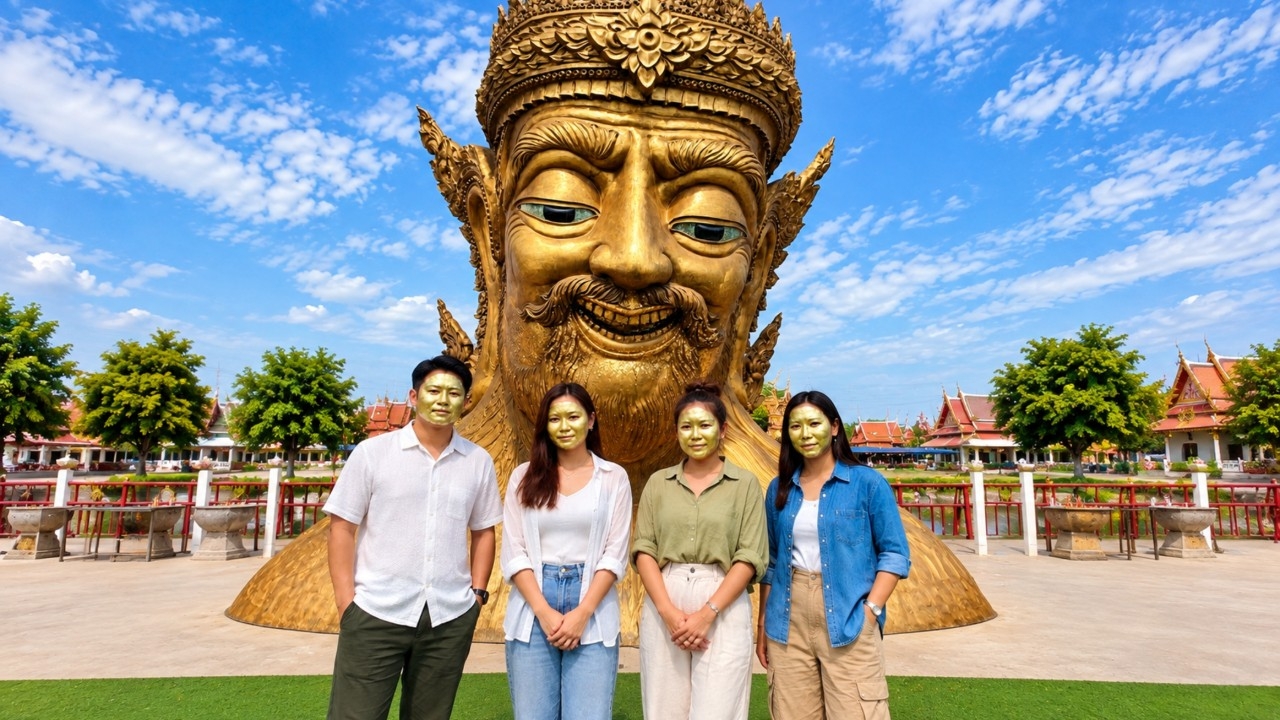
" Millionaire Father " is a popular spiritual site discussed online, especially among those who believe in luck, wealth, business success, and achievement. Its distinctive feature is the "Ta Ta Pon" (drum-striking) pose, which devotees commonly visit to pay respects and strike the drum for good fortune.
Beyond beliefs about wealth, the site attracts attention due to accounts from devotees who share stories of receiving fortune, including those who have paid respects to Millionaire Father and subsequently won the first prize lottery, totaling 11 individuals. This has made the name "},{ Millionaire Father " increasingly recognized among spiritual believers and lottery enthusiasts.

" Millionaire Father " is also known as "},{ Grandfather Rishi Phetchaluk, in the Ta Ta Pon Wealth-Calling pose ". In Thai tradition, the term “Father” often refers to a revered rishi or spiritual master, connected to the belief in venerating teachers and gurus.
Currently, the Millionaire Father statue is enshrined at Tham Uthayan Suan Pa Singwattanusorn in Bang Phra Khru Subdistrict, Nakhon Luang District, Phra Nakhon Si Ayutthaya Province. Previously, it was located in Singburi Province and at Wat Chan in Nakhon Luang District, Phra Nakhon Si Ayutthaya Province.

A unique and memorable aspect of the Millionaire Father statue is its depiction in the drum-striking pose, leading to the nicknames "},{ Millionaire Father Ta Ta Pon " or "},{ Millionaire Father Drum-Calling Wealth ". Devotees believe that striking the drum symbolizes calling in wealth, luck, and enhancing auspiciousness in business, work, and commerce.
However, these beliefs are personal and lack scientific proof that worship or drum-striking can bring fortune or wealth.
It began with Phra Ajarn Kraison who, while at Wat Pho Kao Ton in Singburi Province, traveled to practice meditation. He reportedly had a vision of the Millionaire Father happily striking a drum, inspiring him to commission the statue for devotees to worship.
Thus, the Millionaire Father statue was created as Grandfather Rishi Phetchaluk in the Ta Ta Pon Wealth-Calling pose and originally enshrined at Wat Pho Kao Ton in Singburi. Later, it was moved to Wat Chan in Nakhon Luang District, Phra Nakhon Si Ayutthaya, a period when the statue’s popularity began to grow.
Since then, devotees have come to pay respects and participate in ceremonies before it was relocated to Tham Uthayan Suan Pa Singwattanusorn in Nakhon Luang District, Phra Nakhon Si Ayutthaya, where continuous worshippers come to seek blessings for luck and fortune.

A key distinctive practice is "drum-striking to call wealth," which differs from typical worship. Visitors usually set their intentions and pray before striking the drum, believing it summons wealth, fortune, and opens pathways for livelihood.
Beliefs about the statue cover many areas including finances, careers, commerce, popularity, and luck. This attracts merchants, business owners, workers, and lottery enthusiasts. Sharing of experiences on TikTok and social media has also expanded the statue’s recognition widely.
One reason for the statue’s fame among spiritual devotees and gamblers is stories of devotees who prayed here and won the government lottery. It is said that 11 individuals have won the first prize after praying and striking the drum. Others claim to have won other prizes and later returned to fulfill vows.
These lottery win stories circulate among believers and gambling media but do not serve as proof that worship or rituals guarantee winning. They should be regarded as personal beliefs.

Visitors can begin by calming their minds, stating their full name, and making a wish before striking the drum, believed to call wealth and good luck. Some also participate in hand and ‘Na Naa Thong’ blessings for auspiciousness according to tradition.
However, paying respects to Millionaire Father, drum-striking, and related ceremonies are personal beliefs without guaranteed financial or luck outcomes. Visitors should exercise discretion, especially regarding lottery purchases or gambling, setting budgets to avoid affecting daily living expenses.