

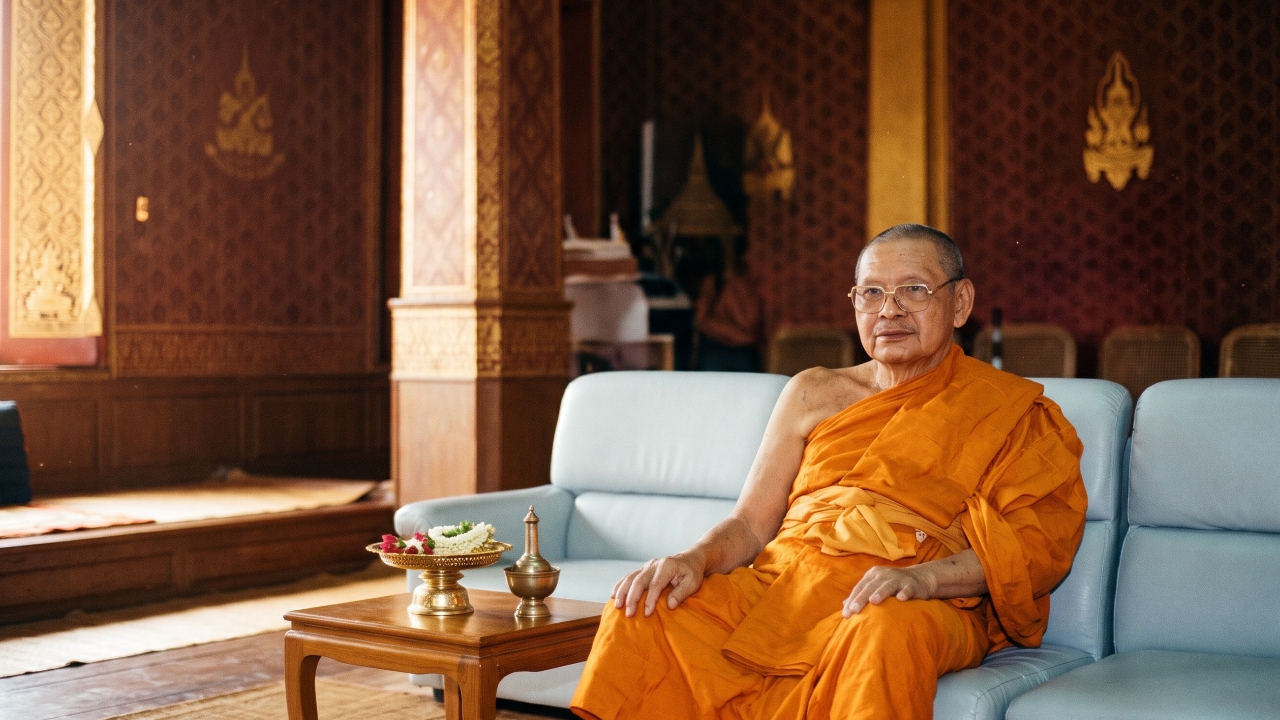
During the festival period of the End of Buddhist Lent besides making merit by offering food during the Tak Bat Thewo ceremony, there is also the belief in "hell pausing for three days" which is considered a golden time to send merit to deceased relatives. "How should one speak when making merit for deceased relatives?" If done correctly according to Luang Por Ruesi Lingdam's teachings,

According to Buddhist moral records in the book Dhamma Vimok, the underworld temporarily halts the investigation of karmic retribution four times annually. Each pause lasts three days, coinciding with the 14th and 15th waxing moon days and the 1st waning moon day during important Buddhist days: Magha Puja, Visakha Puja, the start of Buddhist Lent, and the end of Buddhist Lent.
During these three days, spirits awaiting judgment are granted temporary freedom. This state allows them to visit family or have an open mind to receive the flow of merit dedicated to them. It is like a visitation day where the accused receive supplies from the outside.
Luang Por Ruesi Lingdam once asked King Yama if spirits receive merit sent during this time. The answer was "If the relatives are wise, everyone will receive it all." Some spirits may even be released from hell immediately.

Sometimes spirits are obstructed by residual karma and are not ready to receive merit at that time. Ancient practice recommends entrusting merit to King Yama to act as a witness and inform the spirit when the timing is right.
The prayer to entrust merit says, "If the person I intend to send merit to has not yet had the opportunity to rejoice in this merit, may King Yama be the witness. When you meet that person, please inform them to rejoice then."
This prayer ensures that merit is not lost. When spirits face judgment, King Yama will remind them and open the chance to recall this merit, which can lighten their burden.
| Aspect | General merit-making days | During the underworld's three-day holiday |
| Spirit condition | Spirits strictly follow their karma and realm. | Spirits awaiting judgment are given temporary freedom and can better receive merit energy. |
| Method of merit dedication | Usually extends loving-kindness broadly to all beings and karmic creditors. | Specifically state full names and entrust merit with King Yama as a guarantee. |
| Merit result | Focuses on accumulating merit and peace of mind for the giver. | Acts as an "emergency supply of merit" sent to the deceased before judgment begins. |
Stories and beliefs about the underworld holiday serve as a clever reminder for Buddhists to remember their ancestors' kindness. Visiting temples, making merit, and observing precepts with a pure mind bring peace to oneself and send goodwill to the departed. The End of Buddhist Lent is thus a good opportunity to make great merit and dedicate merit properly to provide a supply of merit to loved ones across realms.
References Dhamma Vimok Book by Phra Rajapromyan (Luang Por Ruesi Lingdam), Wat Chantaram (Tha Sung), Uthai Thani Province