

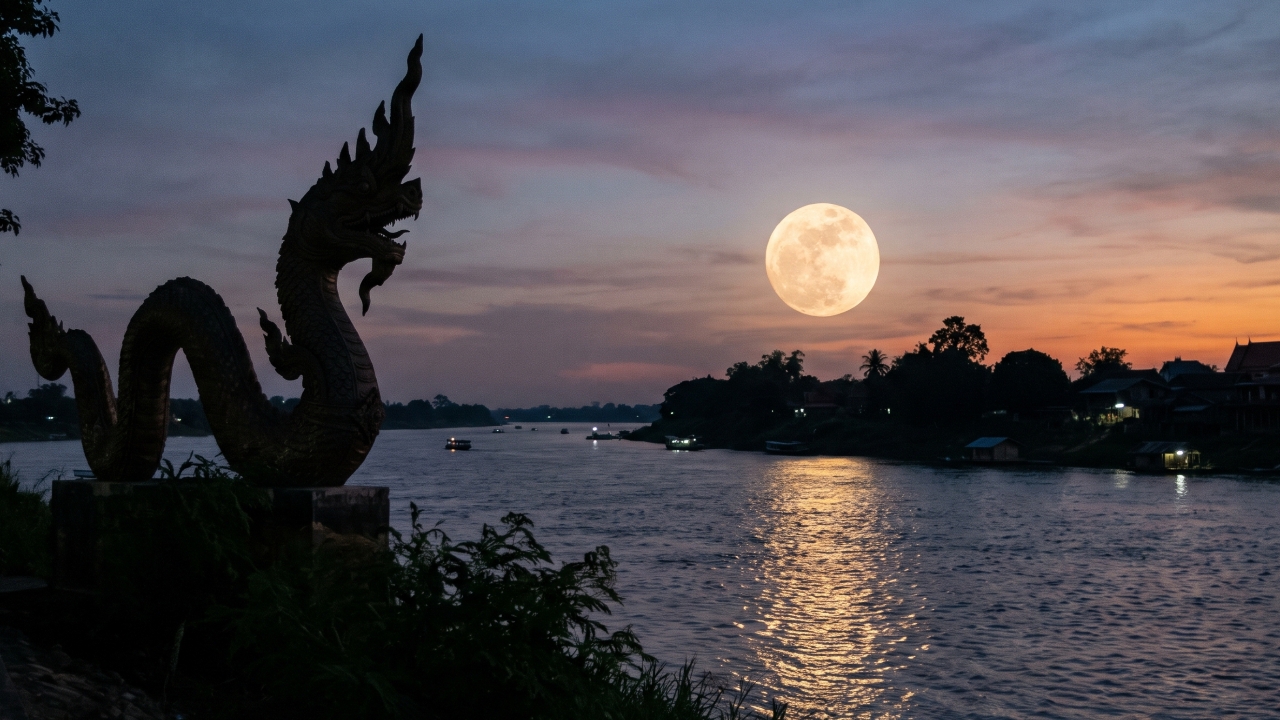
Behind the hundreds of thousands who flood to the Mekong riverside on the night of the End of Buddhist Lent there is not only the phenomenon of the Naga Fireballs but also an ancient belief about the "opening of the underwater city gate" which connects faith to the treasure of abundance.
As the first cold winds begin to sweep across the Mekong during the End of Buddhist Lent festival, people from all directions head to the riverbanks to participate in the Naga worship ceremony and await the Naga Fireball phenomenon on the full moon night of the 11th lunar month.
Many may see this journey as just a trend or a quest for financial luck, yet behind the crowds lies a deeply rooted ancient belief that this night is a time when the gates between realms open to connect devotees with the treasures of life.
The origin of this long-standing connection is related to Theworohana Day, according to Buddhist history, which marks the day the Buddha descended from the Tavatimsa Heaven after his Lent to preach to his mother. It is considered the day that opened the three worlds—heaven, humans, and the underwater realm—to awareness of each other.
Local legends along the Mekong recount that the Nagas and the underwater people celebrated together by lighting lamps to honor the Buddha, which became the glowing fireballs rising into the sky, known as "Naga Fireballs."
This belief reflects the role of the Naga as guardians of Buddhism, devoted and supportive of those who practice righteousness. Worshiping the Naga on this night is therefore not merely a request for worldly blessings but an expression of respect toward sacred beings who share in rejoicing the great merit.
According to the original beliefs of the Isan and Lanna peoples, the full moon night of the 15th day of the 11th lunar month is not just any full moon night but a great full moon night when the energies of water and the moon are perfectly balanced. Ancestors believed this was the time when the gates of the underwater city opened to release abundance to the human world, which can be divided into two important dimensions.
Ancestors therefore practiced cleansing the mind, making merit by offering alms on Theworohana Day, and spreading loving-kindness to all beings to receive auspiciousness and fortune flowing from the underworld realm.
Although time has passed, the practice of worshiping the Naga has grown increasingly popular in Thai society. This is largely due to adapting the belief to resonate with urban people seeking spiritual refuge amid economic uncertainties.
Today, Naga worship is elevated as a symbol of wealth, fortune, and career success alongside the power of protection from danger.
Traveling to sacred places such as Lan Phaya Si Sattanakharat in Nakhon Phanom, Khamchanod in Udon Thani, or along the Mekong in Nong Khai has become cultural tourism that unites families and significantly drives the local economy every year.
Successful worship of the Naga on the full moon night of the 11th lunar month does not depend on costly offerings but on practice based on right view, with these proper guidelines:
1. Set a pure intention Observe the Five Precepts and abstain from harming oneself or others to calm the mind and prepare to receive positive energy.
2. Prepare simple offerings Arrange white or pink lotus flowers, clean water, and appropriate incense and candles. Avoid intoxicants or anything immoral.
3. Practice meditation and loving-kindness Chant protective verses or the Karaniya Metta Sutta, dedicating merit to all Naga clans, including Virupaksa, Erapata, Chappayaputta, and Kanhakotama.
4. Take action toward real success The Naga symbolizes perseverance and patience, so requests for fortune must be accompanied by diligence and wise life management.
Visiting the Naga to worship on the End of Buddhist Lent night is more than a popular event; it is a profound ancient practice linking faith, nature, and mental refinement.
The true underwater treasure may not be jewels rising above the water but the spirit, abundance in life, and wisdom to see opportunities for progress.
If you have a chance to participate in the ceremony or reflect on this night, try setting a firm intention to do good, observe precepts, and strive for success with determination. You will find the greatest treasure is always open within your heart.
References