

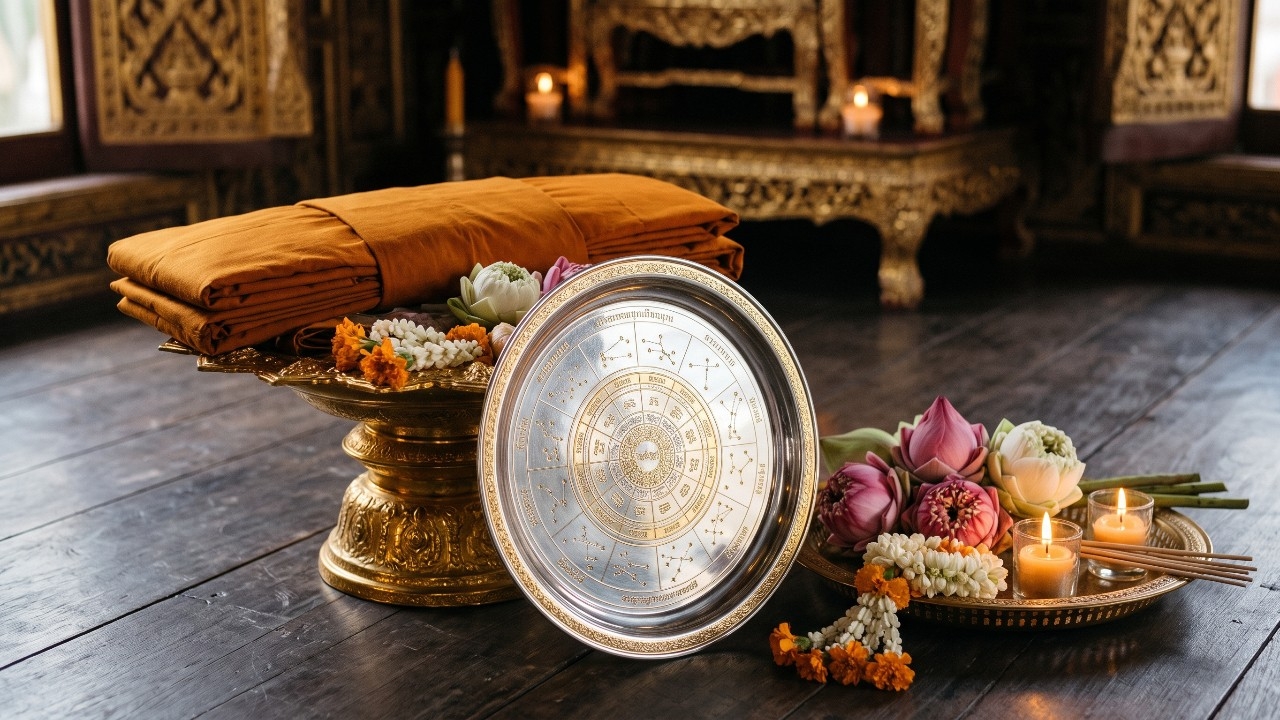
Introduction "Ordaining Your Destiny" An ancient ritual without head shaving, a spiritual technique to support falling fortunes, ease heavy misfortunes, and provide ways to enhance auspiciousness for a smooth year
A fortunate alternative that requires no head shaving or renouncing secular life but supports a faltering destiny while reassuringly easing misfortunes
When life faces overwhelming obstacles—be it stalled work, financial difficulties, or a string of misfortunes—many seek spiritual refuge to regain stability and confidence
One ancient belief system gaining renewed interest today is the “Ordaining Your Destiny” ritual or destiny ordination to remedy misfortune. A key feature fitting modern life is that participants do not need to shave their heads or abandon their work duties as in traditional ordination, but instead entrust their destiny under the protection of Buddhism
In folklore and local tradition, ordaining your destiny traces back to the "Royal Destiny Ordination" ceremony of Lanna culture, devised as a spiritual method for devoted individuals unable to undergo actual ordination, such as women, those with work obligations, or health restrictions
The main difference is that traditional monk ordination changes one’s status to the monastic order, whereas ordaining your destiny involves inscribing personal details—name, surname, birth date and time—onto a destiny plaque, often made of gold, silver, or nickel
Then, monks perform religious rites with the plaque, monastic robes, and alms bowls as offerings, symbolically bringing the person’s life under Buddhist protection during the ritual period

Its ongoing popularity stems from belief in the Buddha’s power to harmonize life’s currents, focusing on three main positive outcomes
The ordination ritual is usually held at temples or meditation centers specializing in destiny rites, following key steps
1. Preparing the destiny plaque Write the name, surname, birth date, and birth time on a brass plate or yantra paper to represent the individual
2. Preparing offerings Gather monastic robes, flowers, incense, candles, puffed rice, and alms sets for the monks
3. Chanting Buddhist scriptures Monks jointly chant scriptures for dispelling misfortune, ordaining destiny, and dedicating merit to karmic creditors
4. Observing precepts and meditation Many centers recommend participants wear white, take five or eight precepts, and meditate to calm the mind and receive merit purely
While ordaining your destiny is a hopeful spiritual anchor, Buddhist teachings emphasize that the true determinant of life’s direction is “karma” or present actions
Participation is like a compass and morale booster, but tangible improvements in work and finances come only through determined effort, careful planning, and disciplined living
Ancient rituals may help calm and relieve worries, but the best protection from misfortune and the clearest path to lasting success come from living mindfully and prudently in every decision