

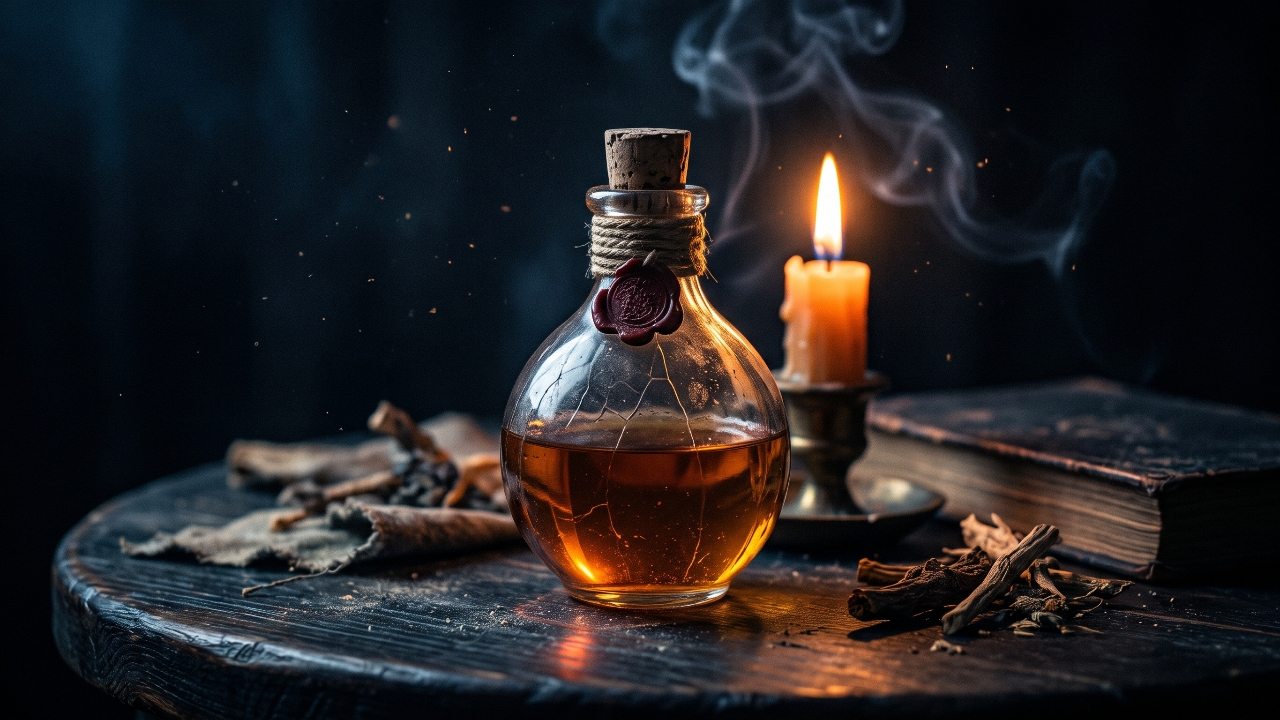
Unveiling the legend of "Namman Phray" the popular dark charm of attraction
When discussing the ultimate charm talisman that evokes chills in Thai belief history, many would agree that the name " Namman Phray" undoubtedly ranks first. From tales told beside ancient pyres ("Kong Fon" means an open-air cremation site using wooden pyres) to an item many secretly seek to win someone's heart,
beneath this dark magic haze lie folklore, ethnology, psychological mechanisms, as well as legal and health warnings everyone should be aware of before losing money or falling victim to deception unknowingly.
In traditional Thai society, Namman Phray was classified as "black magic" or the most intense form of dark sorcery. The legend says it was a liquid extracted from the corpse of a young woman who died unnaturally, such as during childbirth. A powerful shaman would heat wax candles on the corpse's chin during rituals on a new moon night.
Originally, this charm was not merely about attraction but involved beliefs in "controlling spirits" for sexual purposes, mind control, or spiritual puppetry, reflecting supernatural power compelling others to submit.

These stories clearly reflect ancient social structures, where humans faced insecurity in relationships, unrequited love, or loneliness, and sought supernatural power to compensate for what they could not control in real life.
Entering the digital age, Namman Phray sold widely on social media bears little relation to cemetery legends. To understand the reality behind the spiritual marketing, the differences are as follows:
| Aspect | Namman Phray in folklore | Namman Phray in today's spiritual market |
| Main ingredients | Fat or bodily fluids extracted by heating the corpse's chin | Charm herb oils, vegetable oils mixed with herbs, formalin, or essential oils |
| Rituals | Shamans performing spirit binding rituals at cemeteries | Symbolic consecration by spiritual houses or commercial reproductions |
| Claimed effects | Obsessive control over the mind | Trade success, popularity, and attraction |
| Main risks | Curses or supernatural backlash (by belief) | Fraud, hygiene problems, and skin infections |
Today, the risks are not ghostly hauntings but chemical or contaminant hazards causing allergies, inflammation, or skin infections requiring medical treatment.

Even though many understand that purchased products are not actual corpse oils, why does the belief in "supernatural power" persist? Behavioral science and scientific perspectives offer clear explanations for this phenomenon.
Belief in spiritual charms is a personal right so long as it does not infringe on others. However, possession, reproduction, or trade of objects claimed to be human-derived is strictly controlled by Thai criminal law.
The legend of Namman Phray remains an ethnological heritage reflecting human fear, hope, and vulnerability. Today, seeking spiritual support is not wrong but must be done wisely, aware of scams, and mindful of health and legal safety. Ultimately, true lasting charm does not come from any oil drop but is built from sincerity, self-care, and good conduct toward others.