

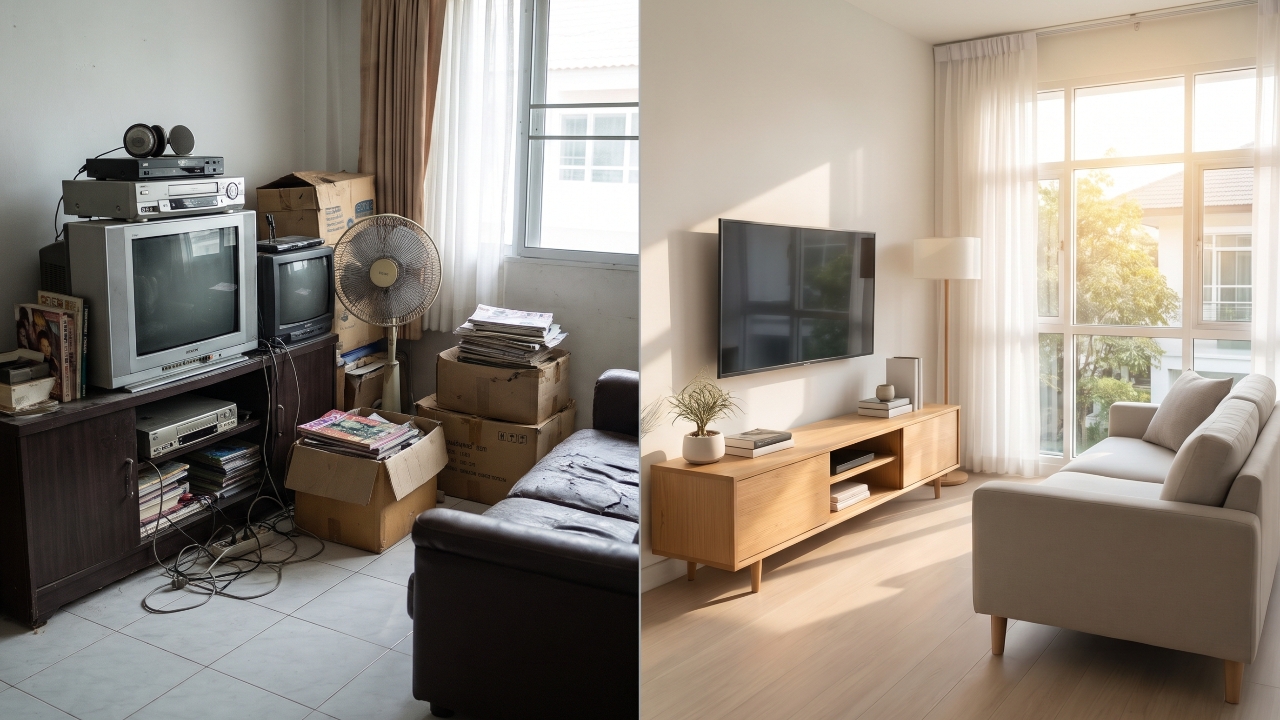
Dead clocks, broken chairs, or old electrical appliances that won't turn on—many people keep these items at home out of reluctance or vague thoughts like "I'll get around to fixing it later." But did you know that passing by and seeing these broken items every day silently drains your life energy? Discarding broken things benefits not only superstitious beliefs about luck but is also clearly supported by psychology as to why it wears you down.
Psychology describes the Zeigarnik Effect, which explains that the human brain remembers "unfinished tasks" better than completed ones. Keeping broken items at home signals to the brain that these are pending tasks.
Each time you see a broken fan or a cupboard door that won’t close properly, your subconscious is reminded of unfinished duties. These small unresolved issues accumulate into hidden stress that makes you feel tired, unfocused, and emotionally heavy without a clear reason.
Our surroundings often mirror our mental state. Living among broken or unusable items creates a subconscious feeling of stagnation and lack of progress.
When we become accustomed to these repairable imperfections but neglect them, this attitude can spread to other areas of life, diminishing enthusiasm, causing a sense of being stuck, and making us more likely to give in to daily problems unknowingly.
| Context of broken items | Superstitious / Feng Shui beliefs | Psychological and behavioral science explanations |
| Dead clocks / broken electrical devices | Symbolize death, stopped time, obstructing progress | Reflect unavailability, causing repeated frustration when handled |
| Chipped dishes / cracked mirrors | Origins of conflict, undermining relationships and luck | Physical danger; subconscious remains alert to accidents, causing stress |
| Torn clothes / damaged shoes kept around | Lead to decline, attracting scarcity and hardship | Reinforce a diminished self-esteem image |
| Broken items piled in dark corners | Trap negative energy (chi), bringing bad luck | Zeigarnik Effect: brain keeps unfinished tasks active, leading to emotional fatigue |
Ancient beliefs and feng shui often warn that "Keeping broken items at home blocks fortune and invites bad luck." Viewed through psychological principles, this warning is reasonable and explained by emotional dynamics.
When the environment is full of broken things, our minds become gloomy, irritable, and unstable. When emotions are clouded, decisions tend to be faulty and careless. These frequent errors are often mistaken as "bad luck" or misfortune, though they actually stem from a negative environment that saps positive energy.
The year-end or New Year period is an excellent psychological milestone for new beginnings. It’s the perfect time to inspect your home and deal with worn-out items.
Try setting a simple rule for yourself: if an item is broken and has been left unrepaired for over six months, decide to discard, donate, or fix it immediately. Don’t keep it out of regret. Managing these items is a concrete way to unlock the mental burden.
When your home space clears and surrounds you with functional items, you immediately feel refreshed and reenergized. Discarding broken things is not just tidying up to welcome good luck as superstition says; it’s organizing mental conflicts and opening your heart to fully embrace new opportunities this year.