

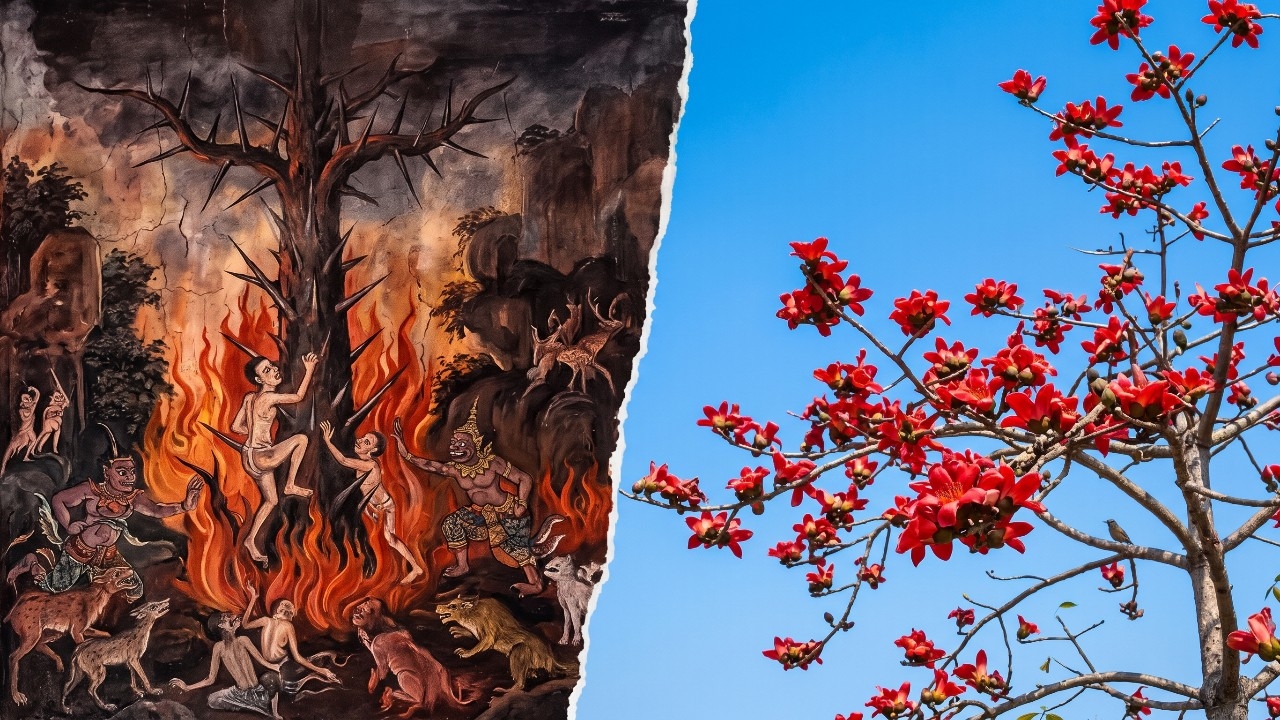
When mentioning the name "Tohn Ngiu" The first image that comes to most Thai people's minds is often the scene of a copper pan in hell, surrounded by vultures, crows, and sinners climbing a tree with sharp thorns. This story has been so deeply ingrained that many forget that in reality, the Tohn Ngiu is a living tree on Earth with value beyond just a fearful symbol.
The belief about the Tohn Ngiu is primarily rooted in the scripture Trai Phum Phra Ruang which served as a social moral guide in the past. The image of the iron Tohn Ngiu tree, with long thorns and engulfing flames, was used to reflect the karmic consequences of breaking the third precept or committing sexual misconduct.

Ancient people used a tangible form of pain, such as "sharp thorns" to symbolize the pain caused by betrayal in relationships. This moral allegory reminded people to be faithful to their partners because uncontrolled desire burns away inner peace like the fires of hell.
Botanically, the commonly known Tohn Ngiu is the red Ngiu tree, a large deciduous tree that can grow 20–30 meters tall. Its most striking feature is the conical sharp thorns scattered around the trunk and branches, naturally developed to prevent large animals from climbing and damaging the young shoots.
Despite its intimidating sharp thorns, during the dry season from late year to early year, the Tohn Ngiu sheds all its leaves and is replaced by bright orange-red flowers in full bloom, creating one of the most beautiful sights in Thailand's mixed deciduous and dry dipterocarp forests.
Today, you can commonly find Tohn Ngiu trees in nature, especially in northern and northeastern regions, as well as at many old temples, without having to wait for the afterlife to see them.

Surprisingly, in reality, the Tohn Ngiu tree is deeply intertwined with Thai lifestyles, especially for those who enjoy Northern cuisine, because the key element of "Khanom Jeen Nam Ngeow" is the dried pollen of the Tohn Ngiu flower, which adds a soft, chewy texture and enriches the flavor complexity of the curry broth.
Besides food, the mature fruit of the Tohn Ngiu splits open to release pure white fluff. Traditionally, this fluff was used as filling for pillows and mattresses due to its softness, breathability, and heat resistance—natural wisdom that has provided comfort for resting over a long time.
Therefore, the Tohn Ngiu is not a symbol of death or suffering but a life-giving tree offering benefits from trunk and flowers to the inner fibers.
Ultimately, the legend of the Tohn Ngiu tree in hell may not be meant to instill fear of the afterlife but to remind us to live mindfully in the present. Respecting loved ones and being sincere in relationships is the best protection without relying on fear of any sharp thorns. And whenever you see the vivid red flowers of the Tohn Ngiu blooming in the cold wind, you will truly see nature’s beauty that reminds us of honesty in the heart.