

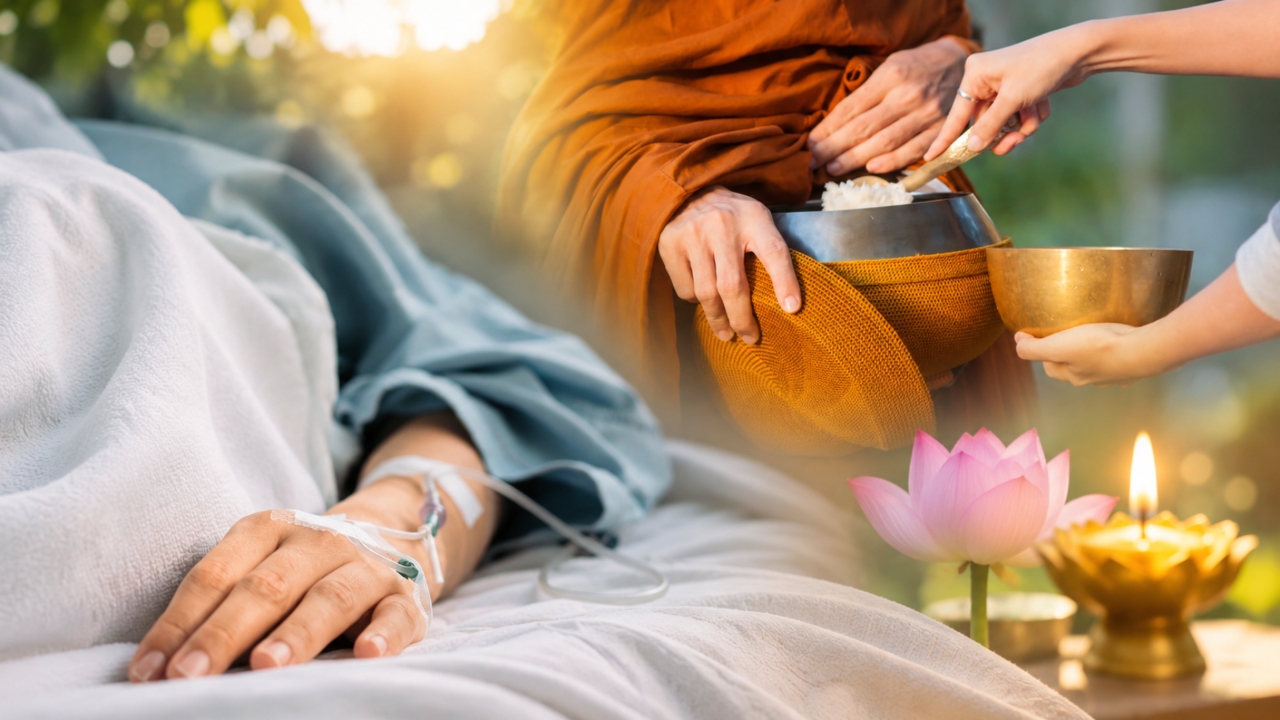
Have you ever heard the saying, “ Frequent illness that doesn't improve despite treatment might be due to past karma?” When suffering from chronic illness or ineffective treatment, some people connect these symptoms to karma, forming the belief in “ karma disease.” What does this term actually mean, and how does Buddhism view illness in relation to karma?
"Karma disease" is a term from folk belief explaining that illness may result from the effects of past karma, especially chronic conditions that don't heal or recur. Some believe that harming others or animals in the past causes later suffering. However, karma disease is not a medical diagnosis and there is no scientific evidence confirming that illness directly results from past karma.
Why do some people believe illness is caused by karma disease?
Additionally, some illnesses have complex causes that are not immediately clear or require ongoing treatment, leading some to link sickness to past karma, though symptoms may stem from various health factors.
Still, chronic illness does not necessarily mean it is due to karma. Persistent symptoms should prompt medical consultation to identify causes and receive proper care, rather than assuming it is from past karma.
How does Buddhism view “karma disease”?

pain can arise from many factors including bodily disorders, seasonal changes, improper self-care, and the effects of karma or one’s own actions. Therefore, illness cannot be solely attributed to past karma; other factors like genetics, environment, and lifestyle also play roles. Can merit-making improve "karma disease"?
In belief about karma disease, some practice merit-making, observing precepts, chanting, spreading loving-kindness, and dedicating merit to spirits they believe have caused past harm, seeking forgiveness and blessings for peace of mind.

karma already done cannot be undone. Merit-making does not erase past karma but creates good karma now by avoiding wrongdoing, doing good, and improving the mind.
There is no medical evidence that merit-making cures illness. Those with chronic conditions or ineffective treatment should see doctors to diagnose and receive proper care, while merit-making can be practiced alongside for spiritual comfort.