

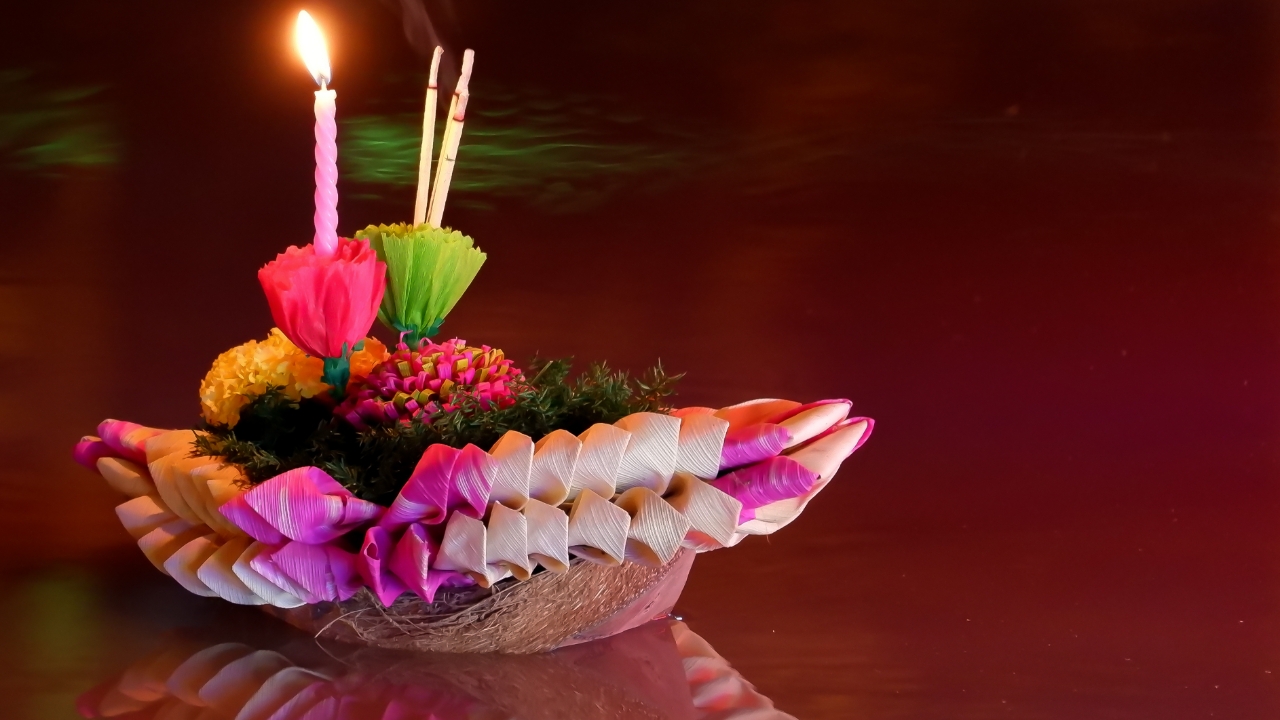
Loy Krathong Day 2026 GMT+7 Falls on Tuesday, 24 November GMT+7. Many have heard the belief that before floating a krathong, one should cut hair, trim nails, or place coins into the krathong because it is believed to help dispel misfortune, grief, and send negativity away from one's life.
Have you ever wondered why hair, nails, and coins are placed in the krathong? What does each item symbolize, and is it necessary every time? Thairath Online invites you to explore these beliefs and understand their hidden meanings.
The origin of the Loy Krathong belief is to pay homage to the Buddha, ask forgiveness from the Goddess of Water as a recognition of the water's value, and to dispel or alleviate misfortune so that negativity passes away from life.
In some regions, it is customary to put hair, fingernails, toenails, or coins into the krathong before floating it. These items carry symbolic meanings varying by tradition.

Cutting some hair and placing it in the krathong is believed to dispel bad luck. Hair, as a part of the body, represents the person floating the krathong, symbolizing letting go of sorrow, grief, and bad experiences to float away with the water.
According to this belief, floating hair symbolically means leaving behind past negativity and starting life with a lighter heart. It does not imply that cutting hair can literally change fate or eliminate misfortune.
Placing fingernails or toenails in the krathong holds a meaning similar to hair. It is believed to cut off bad luck and misfortune before letting it float away with the current.
This belief reflects the idea of releasing suffering and negativity from life, allowing the person floating the krathong to feel renewed.
Besides hair and nails, many also put coins in the krathong, which holds different meanings depending on belief. Some see it as an act of charity or offering, while others view coins as symbols of wealth, placing them to pray for luck and financial prosperity.
It is not necessary because placing hair, nails, or coins in the krathong is merely a belief and custom practiced in certain localities, not a mandatory part of Loy Krathong tradition. The main purpose of Loy Krathong is to show respect and gratitude for the value of water and to continue traditions meaningful to Thai life and culture.