

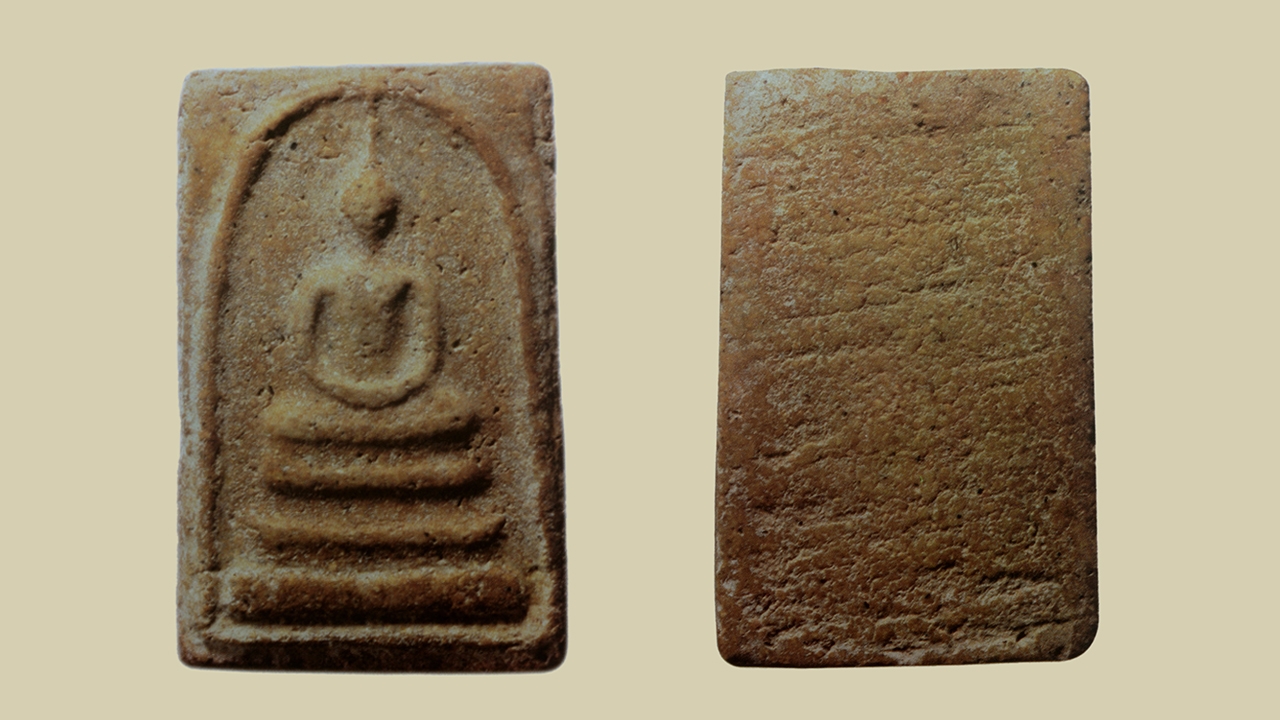
In studying the Somdej amulets of Somdej Phra Phutthachan (Toh Prommarangsi) by forensic methods, the most important first step is to find the original Somdej amulet, or what collectors call the master Somdej amulet, considered like fastening the very first button, which is highly significant.
"Fastening the very first button" The key principle is that the original Somdej amulet, or master Somdej, must be "traceable back" to the maker, confirming Somdej Toh as the creator, which requires various supporting evidence.Different types of evidence must be considered.These include physical evidence, documentary evidence, and witness testimony (now mostly oral traditionspassed down),or expert testimony. According to theory, all evidence used for verification must be relevant to the issue and credible, meaning it must have probative value.
Fortunately, Somdej Toh did not intend to keep the creation of his Somdej amulets a secret. He did not hide the maker's identity, because, as an enlightened monk, he knew what was appropriate. As he once said, his amulets would become rare (which later led to many forgeries). Somdej Toh left many evidential traces in creating his Somdej amulets, especially by placing previously made Somdej Wat Rakang (two canals style) and Somdej Wat Ket Chaiyo amulets inside the main pagoda’s cache when creating the Bang Khun Phrom Somdej amulets at Wat Mai Amataros in 1870 CE, which "the science of Somdej amulets"believes was his intention to pass on the story to future generations, like a gift from him showing what some of his standard design Somdej amulets look like.The discovery of these Somdej amulets is strong, credible evidence with high probative value. These amulets are key physical evidence that can be used to "trace back" to Somdej Toh as the creator. In legal proceedings, some evidential traces may also be considered, even if their weight is limited, such as the finding of some standard-design Somdej Wat Rakang amulets near Wat Chaiyo Worawihan in Ang Thong Province. Although the current owner said these were inherited from ancestors who got them from the Wat Chaiyo cache when the large Luang Pho Toh statue collapsed, this is a relatively weak testimonial evidence. However, when combined with other evidence such as
official records from King Rama V’s reign confirming Somdej Toh’s involvement in creating the large Luang Pho Toh statue at Wat Chaiyo, along with other supporting evidence in the same direction, these traces gain more credibility and weight. This makes the information that Somdej Toh distributed and stored his various design Somdej amulets at Wat Chaiyo Worawihan more believable. (Ajarn Prakit Limsakul or Phlai Chumphon from Thairath newspaper was among those who researched Somdej Wat Ket Chaiyo amulets, which local people collected when they were still affordable.)(The book "Three Somdejs" by Ajarn Prachum Kanchanawat mentions that "In 1878 CE, King Chulalongkorn (Rama V) toured Ayutthaya Province and passed through Ang Thong, where Wat Chaiyo is located. He wrote in his royal diary that... further downstream is Wat Chaiyo, where Somdej Phra Phutthachan (Toh) built a large Buddha image, and he stopped there. Phraya Ratsena, Phraya Ang Thong, and Luang Yok Bat came to welcome and show him around. The statue’s face was unattractive, with a mouth like that of an old monk (Toh), without gold leaf, appearing to not intend to gild it. There was a hole in the water pipe at the hand. Nowadays, someone is continuing the unfinished viharn, but it is unclear who will continue it...")After correctly fastening the first button, the next step in forensic examination of Somdej amulets is to observe, analyze, and research the master amulet’s characteristics, some of which appear only in Somdej Toh’s amulets, or can be called the Somdej amulet’s identity. The purpose is to establish a standard defining what a genuine Somdej Toh amulet should look like.The final step is to compare the amulet under examination to these standards. If it matches, it is considered genuine (according to the theory of "verification standards" and the "weight of evidence" principle, authenticity can vary in degree, as "the science of Somdej" has previously presented). If it does not match, it might still be an amulet made by Somdej Toh but without confirming evidence, or it could be a genuine amulet made by another revered monk or a deliberate copy intended to mislead collectors into believing it is Somdej Toh’s.Conclusion
In verifying genuine Somdej amulets made by Somdej Phra Phutthachan Toh, the credibility of the original or master amulet is extremely important, like the first button. If the original is not credible or has low credibility,

then subsequent processes
will hardly yield
Currently, new knowledge and toolsare being incorporatedto assist in verifying Somdej amulets.From this new knowledge,
it is possible to help determine the authenticity of Somdej Toh’s amulets. The key issue is whetherthese methods and knowledgeare applied with academic honesty, as improper usecould have serious consequences for society. "The science of Somdej amulets" will address this in a future article.For further reading, visit the Facebook page "Science of Somdej Amulets" by Police Lieutenant Colonel Komsan Sanongpong, and thanks to Associate Professor Rangsarn Torsuwan for kindly providing photos of another master Somdej Wat Rakang amulet for educational purposes. Thanks also to the current owner of this amulet, a large, beautiful Somdej Wat Rakang amulet that shows signs of moderate use, with a somewhat coarse but soft texture (mixed with many materials), a white-yellowish tone, and a surface oily stain resembling soy sauce residue on front and back. The edges closely match the mold frame, and it shows the three authentic Somdej amulet features: grainy particles, worm trails, and needle-like pores. The mold is correct per references, with a smooth back but visible wrinkles and folds, and unclear chipping marks possibly due to oil content preventing the texture from drying properly. This amulet is an excellent example for studying Somdej Wat Rakang amulets. Additional articles are available in the "Science of Somdej Amulets" column.AuthorPolice Lieutenant Colonel Komsan Sanongpong, former forensic police officer.Facebook page –Science of Somdej Amulets
Read the column