

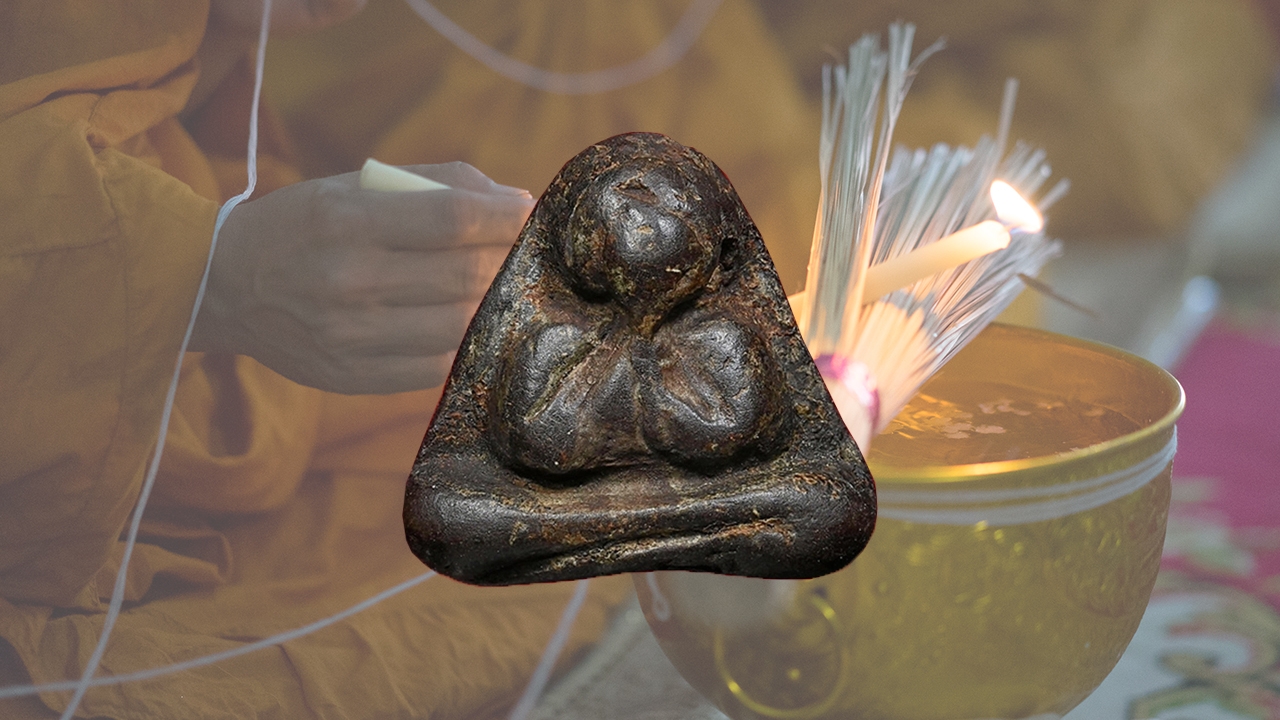
When mentioning "amulet" among the most popular of all time, "Phra Pidta" must be included, known for its distinctive Buddhist artistry and famed spiritual powers "great protection" in both attracting wealth and guarding against harm, making Phra Pidta a treasured item sought by collectors. But behind its sacredness lies a consecration process—today we delve into the faith and traditions passed down through generations.
Phra Pidta is not just an image with closed eyes; it embodies the spiritual teaching of restraining the senses—closing ears, eyes, and mouth—to block out negative external distractions and attain inner peace. For collectors, Phra Pidta symbolizes "luck" and "protection" classified as "great protection" believed to shield devotees from harm and attract prosperity.
Consecrating Phra Pidta is more than placing statues together and chanting. It is a long-standing tradition aimed at "infusing spirit" into the amulet, with each temple or school applying unique sacred techniques. Here are the key holy steps:
1. Ritual to invoke deities
Before consecration begins, the first act is to "notify" local spirits and invite the merit of the Buddha, Dharma, Sangha, and the masters who created each lineage’s Phra Pidta, to ensure auspiciousness and smooth proceedings.
2. Buddhist consecration ceremony
The heart of the ritual involves inviting revered monks with mystical powers to meditate and pray. For Phra Pidta, chanting focuses on mantras related to "great protection" (defense and invincibility) and "wealth attraction," alternating with general Buddhist blessings for good fortune.
3. Special techniques unique to "Phra Pidta"
What sets it apart from other amulets is the "closed eyes," symbolizing mental restraint from external stimuli. Therefore, during consecration, masters often
4. Extinguishing the victory candle ceremony
At the conclusion, the victory candle is extinguished, marking the final moment. In some beliefs, the candle’s smoke or tears are considered auspicious, warding off evil and perfectly closing the sacred ritual.
For amulet collectors, the consecration ceremony is not just about belief but a marker of "value and faith."