

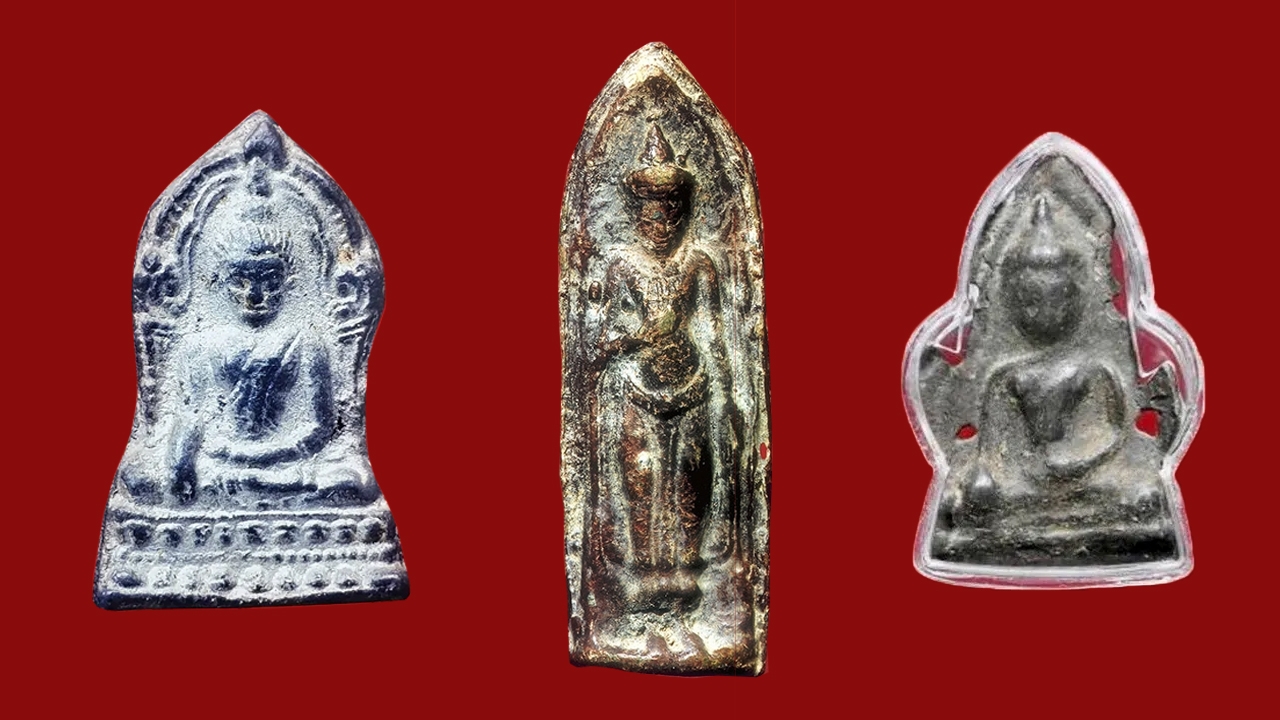
Among collectors of amulets and antiques, besides the highly popular sets of powdered and clay amulets, there is another Benjapakee set praised by experts as the ultimate in spiritual power, which is the "Benjapakee Bronze Warrior Amulets" (bronze is an alloy mainly composed of lead and tin). These are supreme sacred objects filled with exquisite Buddhist artistry and remarkable powers, especially in authority, protection, victory, and invincibility. They are valuable ancient amulets coveted by collectors. Today, Thairath Online will introduce you to five imperial-level bronze warrior amulets, all precious ancient relics highly desired by enthusiasts.
Based on compiled information from the Thai amulet community, this valuable set of warrior amulets includes
Phra Ruang Lang Puen from Lopburi The supreme Lopburi-style amulet acclaimed as the "Emperor of Bronze Amulets," known for its clear powers of authority and invincibility.
Phra Huayan from Lopburi One of the popular amulets from Wat Phra Si Rattana Mahathat, featuring Khmer art from the Bayon period, renowned for its toughness and protection.
Phra Tha Kradan from Kanchanaburi Known as the "Warrior of the Mae Klong Basin," this amulet was made during the U Thong period, characterized by twisted hair and red eyes (in some pieces), offering supreme spiritual protection.
Phra Chinarat Bai Sema from Phitsanulok Found at Wat Phra Si Rattana Mahathat, this amulet blends late Sukhothai and U Thong styles, showcasing beautiful Buddhist artistry and universal powers.
Phra Mahet Sawon from Suphanburi A distinctive double-sided amulet from Wat Phra Si Rattana Mahathat, famed for its protective powers and charm.
According to historical records, most bronze warrior amulets were created during times of war, such as the Lopburi and Ayutthaya eras, to inspire and encourage generals and commanders. Archaeological experts note that the ancient bronze casting process required high heat and precise metal mixing, resulting in surviving amulets displaying a unique "crow's feet rust" or "egg shell rust" pattern, which is a key feature used for authentication.