

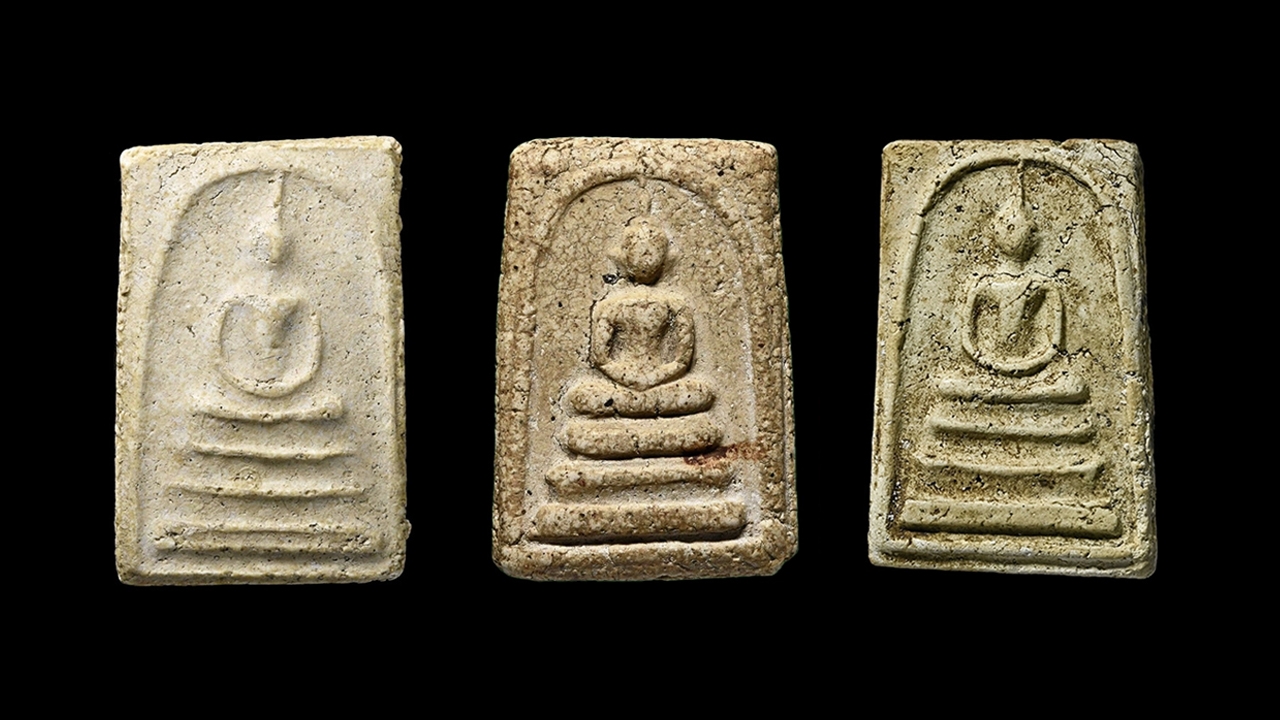
Who says identifying genuine Phra Somdej is difficult? Unlock the emperor’s manual of sacred amulets! A deep exploration "How to Identify Genuine Phra Somdej" of Somdej Phra Phutthachan (To Phrommarangsi) reveals three key flaws and natural traces formed over nearly 150 years, flaws that counterfeit factories find hard to imitate, allowing devotees to accurately assess million-baht amulets.
In the amulet community, "Phra Somdej" especially those made by Somdej Phra Phutthachan (To Phrommarangsi) of Wat Rakang Kositaram, are considered the pinnacle desire of collectors. However, high value leads to many fakes. Learning how to spot genuine Phra Somdej requires focusing on natural principles and the original mold.
1. Examine the shape
A genuine Phra Somdej must have "sharpness in shallowness," meaning the amulet’s lines may not be deeply raised but are sharp and flow naturally. Points to observe include
2. Inspect the sacred materials
The heart of identifying genuine Phra Somdej is the "materials," which include five types of magical powders, cooked rice, banana, shell lime, and soy oil. Features to find in the amulet’s texture are
3. Natural aging and side cuts
Phra Somdej Wat Rakang are over a hundred years old, making authentic aging hard to fake.
Amulet identification is a skill that requires experience; studying original pieces and consulting trusted experts helps reduce risks in collecting.
Photo credit: Sanam Phra column by Seeka Ang