

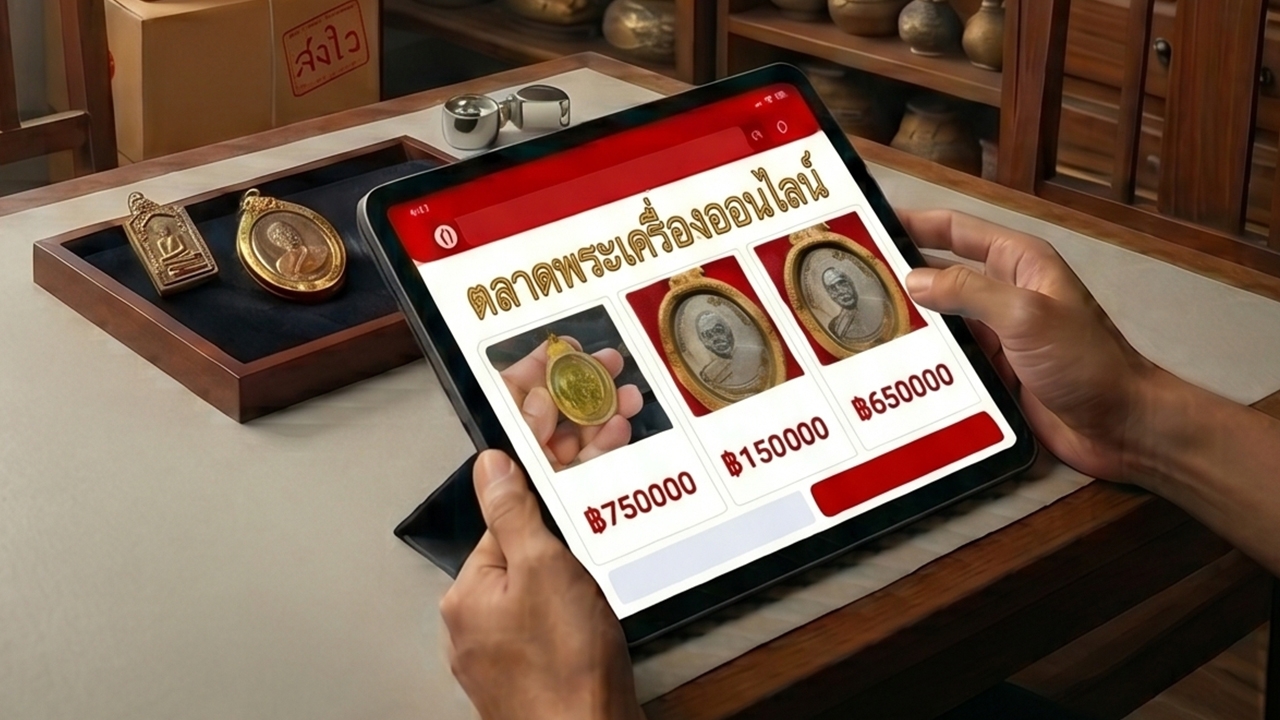
In the digital era of 2026, the practice of leasing and venerating amulets and sacred objects has almost fully transitioned online, including auctions via Facebook Groups, live streams, or e-commerce applications. Cybersecurity agencies report that fraud cases involving online sacred object transactions rank high among lifestyle product scams, as amulets carry sentimental value and prices fluctuate based on buyer preference.
. . . "Buying amulets online" has thus become a double-edged sword: offering convenience on one side but posing the risk of losing a large sum if one is not careful.
The Thai Amulet Collectors Association and industry experts have warned about five common fraudulent tactics scammers use to deceive collectors online, which everyone should memorize.
1. Overly beautiful photos (amulets not as described). Fraudsters often post photos of genuine, flawless, world-champion amulets taken from the internet or famous experts, but after payment, they send fake or damaged, repaired amulets instead.
2. Unusually low prices with claims of "urgent cash need." If a popular amulet usually worth tens or hundreds of thousands is offered for rent at just hundreds or thousands, often with excuses like “need urgent money” or “selling entire collection,” it is likely a fake or scam.
3. Fake pages impersonating famous amulet experts. Currently, there is an epidemic of fake pages copying photos, names, and profiles of well-known experts or certification institutions, then directly messaging victims to offer amulets for sale.
4. Evading issuance of "authenticity certificates." When buyers request the amulet be sent to a trusted institution for certification, scammers often dodge by claiming it wastes time or that they personally guarantee authenticity (which has no legal or resale value).
5. Mule accounts and mismatched transfer names. This is a critical red flag: scammers often use bank accounts of other people to receive payments, avoiding financial tracking by authorities.
Before bidding or transferring money to lease an amulet online, consumers can use the checklist below to preliminarily assess risk.
Items to verify | Recommended actions | Safety status |
| 1. Seller's history | Check the seller's full name and bank account number on the Blacklistseller website or fraud reporting systems. | If there is a negative record ❌ Do not transfer money under any circumstances. |
| 2. Page transparency | Check the "About" menu for the page's name change history and the country of the page administrator. | Frequent name changes or admins located abroad ⚠️ indicate high risk. |
| 3. Product photos | Use Google Reverse Image Search to see if the amulet photos are duplicated on other websites. | If they are photos from others ❌ Do not buy. |
| 4. Guarantee terms | Agree on "authenticity guarantee according to international standards" with full refund if proven fake. | Clear agreements mean safe transactions. |
The best way to buy amulets online is "in-person pickup." At a safe place, or through intermediary platforms that hold payment until buyers receive and verify authenticity.
Leasing amulets online is not scary if collectors conduct transactions patiently, resist greed, avoid cheap temptations, and carefully verify facts every time. Taking just five minutes before transferring money to check the seller's history and amulet condition can sustainably protect your money from cybercriminals.