

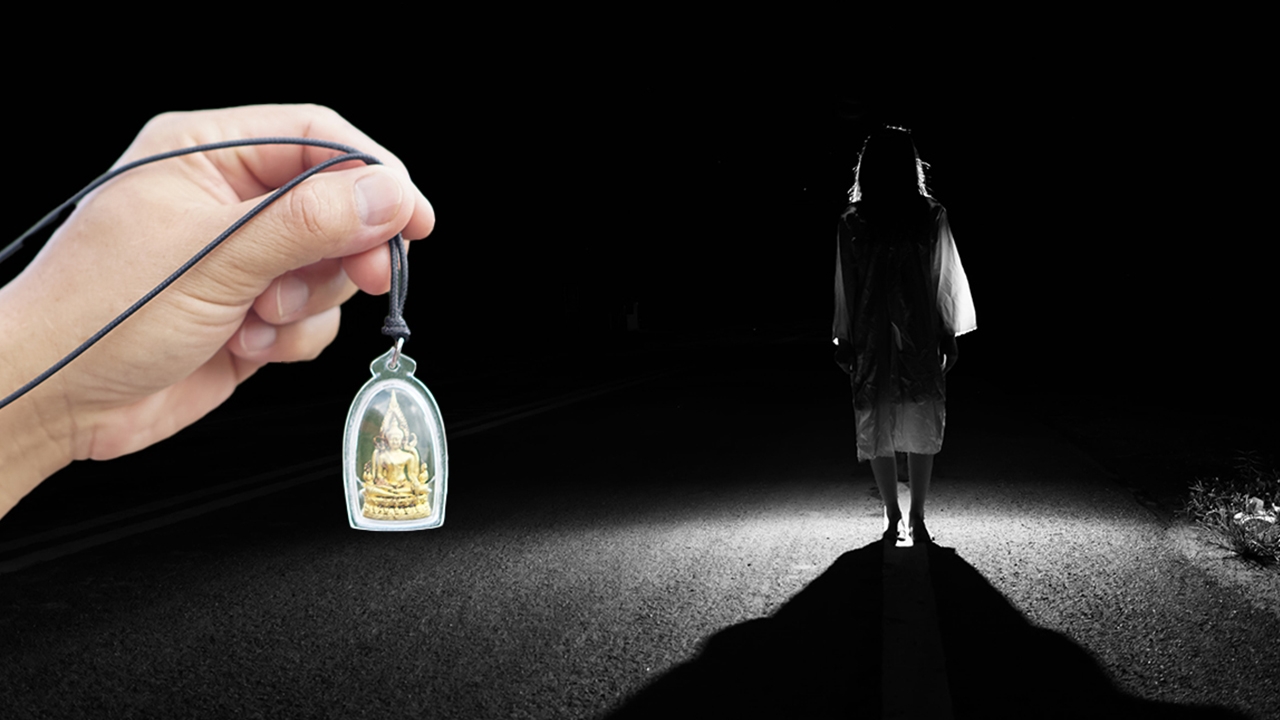
Can wearing amulets really repel ghosts? This question is explored through scientific, psychological, and Buddhist perspectives to determine whether the power of talismans truly wards off spirits or if it is a matter of meditation and psychological refuge instead.
The question is: “Can wearing amulets truly repel ghosts?” This belief has long been part of Thai society. Whenever people face darkness, deserted places, or the fear of unseen things, "amulets" are often the first thing many think of as a spiritual anchor. But in reality, what creates this protective power, and how can it be explained scientifically and through Buddhist principles?
From scientific and psychological viewpoints, wearing sacred objects or amulets significantly affects the wearer’s mental state. Psychologists note that fear of ghosts or the unseen often relates to subconscious states during stress or fear.

According to Buddhist teachings, the creation of Buddha images or amulets historically aimed primarily to be "Buddhānussati" —a reminder to reflect on the virtues of the Buddha—not tools for fighting or destroying spirits.
Many meditation masters explain that the true power of amulets comes from "the mental power imbued with morality and loving-kindness" by the consecrator, combined with the wearer’s faith. If the amulet wearer upholds moral precepts, has a kind heart, and harbors no intent to harm others, this power of goodness acts as a shield against all dangers. In Buddhist teachings, waves of loving-kindness and a peaceful mind are the strongest forces that can extend to the surroundings.
Historically, the belief in wearing amulets to ward off danger and unseen forces developed from ancient cultures using sacred objects and talismans in wartime. As society modernized, this belief evolved into a psychological refuge in daily life, easing anxieties about uncertainties in the world.
Therefore, the question . . . (fragment, no meaningful translation) Can wearing amulets really repel ghosts? may not have a physical answer measurable in a laboratory. But behaviorally and psychologically, amulets serve as "spiritual support" that eases fear, helping wearers gain mindfulness and confidence to live their daily lives peacefully.
Wearing amulets can address psychological needs by reducing fear and providing comfort through brain perception and spiritual refuge. Meanwhile, Buddhist teachings emphasize that beyond sacred objects, the most important factors are living morally, cultivating mindfulness, and committing to goodness. A calm and kind mind is the best protective shield for everyone.