

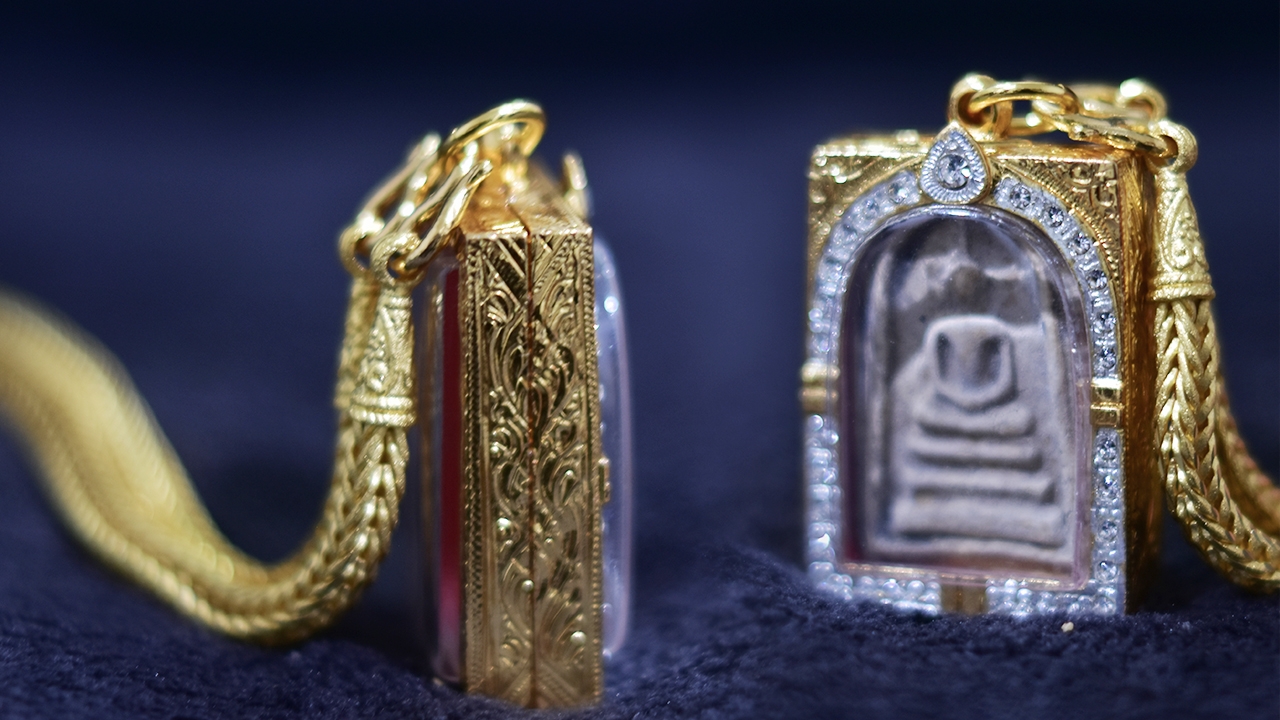
"Phra Khruang" (sacred amulets) are not only sacred objects used for spiritual support or protection talismans but also hold value as antiques and Buddhist art. They have become economic assets with transactions worth tens of billions of baht annually, raising curiosity about why some amulets command prices reaching millions or even tens of millions of baht.
Thairath Online invites everyone to explore the key factors that make "Phra Khruang" become sacred objects valued at the million-baht level.
1. Creation history and Buddhist masters
The foremost factor determining value is the "creation history," especially if made by a revered Buddhist master or senior monk, such as Phra Somdej created by Somdej Phra Phutthachan (Toh Prommarangsi). Amulets from Luang Pho Ngern of Wat Bang Khlong Khanak also command high value, reflecting the faith devotees have in these masters.
2. Rarity and limited production
When demand exceeds supply, prices are driven up. Limited edition amulets, those with clear codes or serial numbers, or rare popular molds often become targets for collectors and experts willing to pay premium prices to own them.
3. Condition of the amulet
Even among the same series, condition can cause price differences. Amulets that fully preserve their original characteristics, with sharp, untouched surfaces that have never been cleaned, and maintain detailed Buddhist art elements, attract more interest and higher market value than those showing wear, chips, damage, or evident repairs.

4. Ownership history
The value of an amulet often grows with its stories, especially personal experiences of protection or career advancement. If the "ownership history" includes famous collectors or prominent business figures, it reinforces faith in the amulet and can multiply its market price several times.
5. Certification from recognized institutions in the amulet community
Currently, there are verification systems issuing "authentic" certificates from popular institutions within the amulet community, along with awards from auctions and contests that guarantee credibility. This recognition elevates the amulet's status internationally, particularly attracting affluent collectors from countries like China, Singapore, and Malaysia, who bid actively, continuously pushing prices of popular models higher.
For a single amulet to reach a value of millions of baht is not due to luck or a single factor. It results from a perfect blend of spiritual value, faith, Buddhist art history, rarity, and acceptance within the collector community, elevating these sacred objects that provide spiritual support into economically significant assets.