

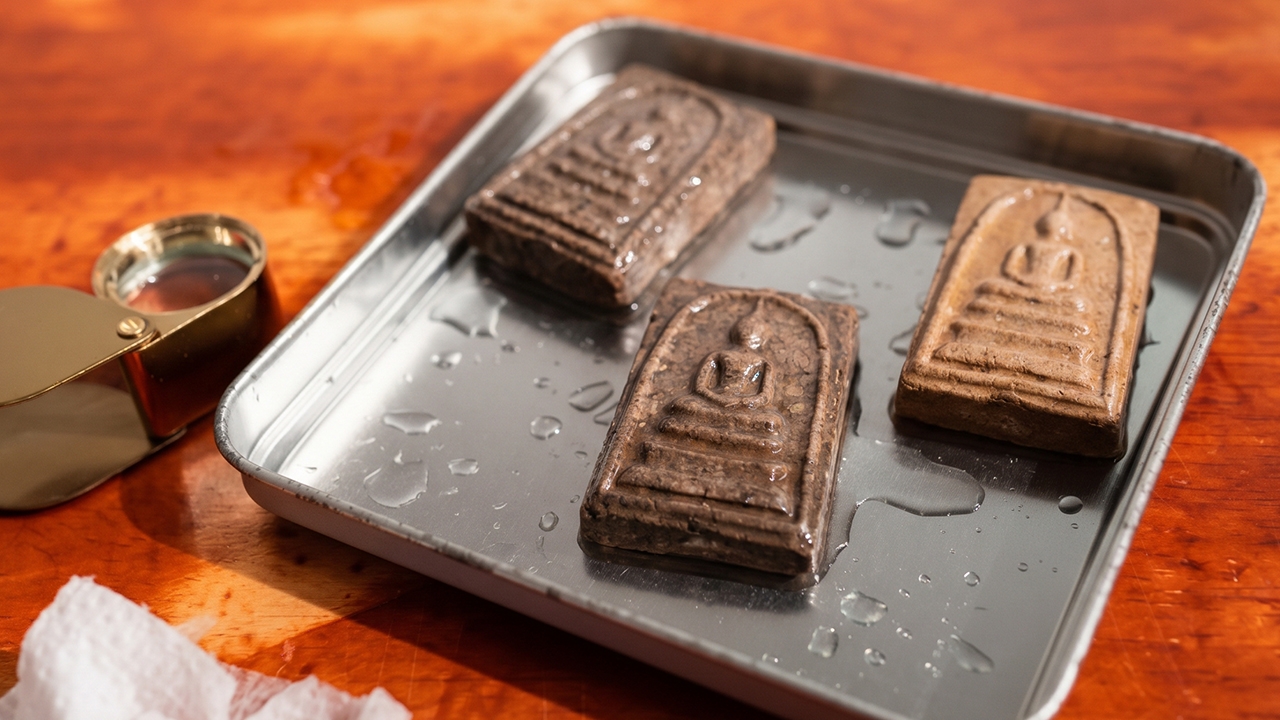
When an amulet gets wet, many rush to dry it as fast as possible. However, using heat or cleaning it incorrectly may cause cracks, damage the original surface, or cause material loss. This is especially important for old, valuable amulets. Therefore, care methods should be chosen according to each material type.
1. Do not rub or scrub. This can cause the original surface and important details of the amulet to peel off.
2. Do not use a hairdryer or expose to strong sunlight. Heat may cause some amulet materials to crack.
3. Do not open the amulet frame yourself. If water is trapped inside, an experienced technician should open the frame.
4. Place in a well-ventilated area. If the amulet is removed from its frame, place it on a clean, dry surface without pressing or rubbing the surface.
Powder amulets, such as Phra Somdej, and clay amulets, like Phra Rod or Phra Soom Kor, often have porous and fragile materials. When wet, they can absorb moisture causing cracks, peeling, or deterioration, especially old amulets with existing cracks.
Care instructions. Place on a clean, dry surface in a well-ventilated area. Avoid handling or scrubbing and never soak again to clean stains. If the material starts to crumble or crack, consult an expert.
Precautions. Do not soak the amulet again to clean or use a hairdryer to speed drying, as this can cause further damage to the original surface and material.

Metal amulets or coins made of copper, brass, bronze, or alloys are harder than powder amulets but moisture can cause stains or corrosion. Green corrosion may appear, affecting the original surface and value.
Care instructions. Gently blot moisture with a soft, clean cloth and air dry in the shade with good ventilation. Avoid hairdryers, WD-40 oil, or metal polishes as they may damage the original surface. Do not attempt to remove rust or corrosion yourself.
Precautions. Old coins with original surfaces should be inspected by experts before cleaning to avoid damage and value loss.
Herbal and some wooden amulets can absorb moisture, leading to swelling, cracking, or mold growth, especially old ones with degraded materials.
Care instructions. Place the amulet on a clean, dry surface with ventilation. Avoid rubbing, strong sunlight, or hairdryers as these can damage the material. Do not apply sandalwood oil or other oils yourself, as they may cause stains or alter the original surface.
Precautions. If the amulet shows swelling, cracks, or mold, consult an expert before cleaning.
When an amulet gets wet, the key is not to rush to rub or dry it with heat. Different amulets have varying fragility, so care should be based on material type and chemical cleaning avoided. For old or valuable amulets, experts should be consulted to preserve the original surface and prevent damage that lowers value.