

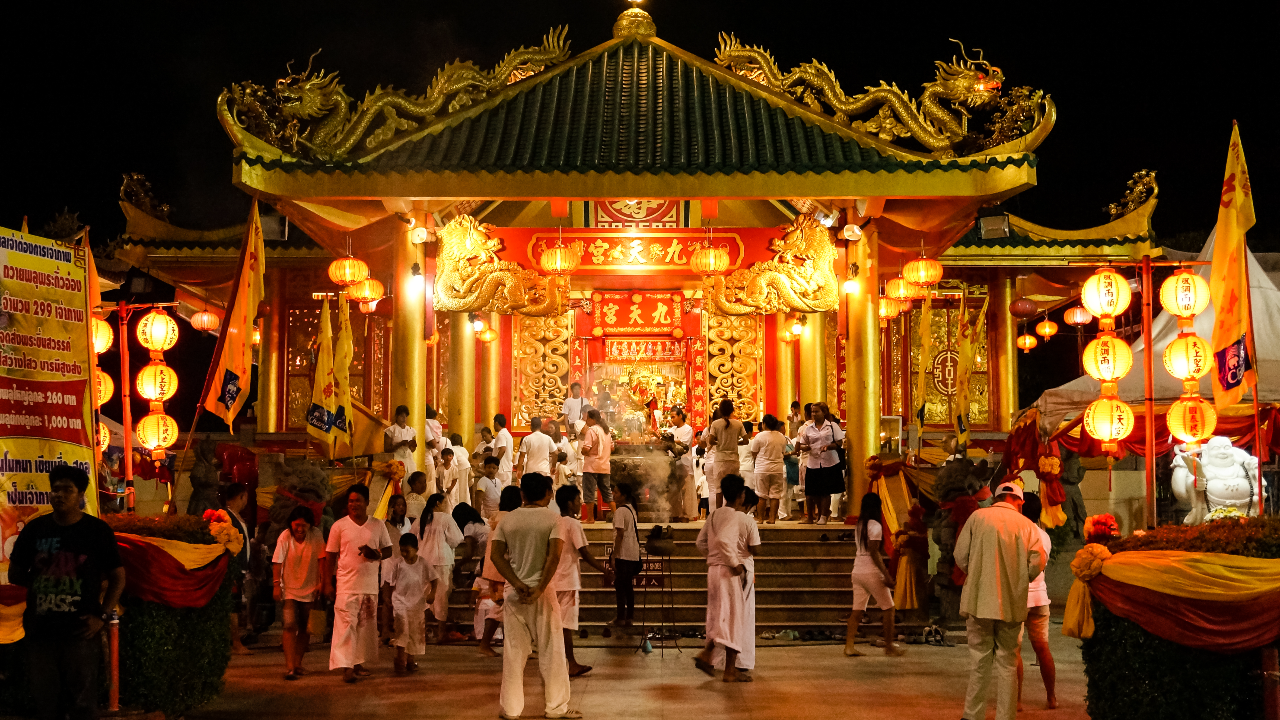
The Vegetarian Festival 2026 is held annually. It takes place between the dates 10-18 October 2026. (Some may begin cleansing their bodies by fasting from 9 October.) Every year, the first day of the Vegetarian Festival begins on the first lunar day of the ninth month and ends on the ninth lunar day of the ninth month according to the Chinese calendar. This tradition has been practiced continuously for a long time and remains strongly influential among Chinese-descended communities across Southeast Asia.
There are many legends regarding the belief in the "Vegetarian Festival," but the most widely known story is that the festival began during the Manchu military occupation of China, when a local militia group called the "Nghee Hoo Tong" united to resist the Manchu army. They expressed their defiance by observing precepts, abstaining from meat and pungent vegetables, and wearing white garments while performing rituals and chanting mantras, believing this would strengthen their spirit and protect them from Manchu gunfire. However, the Nghee Hoo Tong militia was eventually defeated by the Manchu forces, and their nine leaders were executed. Since then, Chinese people have observed nine days of vegetarian fasting in the ninth lunar month to honor the merit and sacrifice of the Nghee Hoo Tong group.
In Thailand, the Vegetarian Festival is a cultural and religious tradition maintained by the Chinese-Thai community, blending ancestral Chinese beliefs with local customs to create a unique practice specific to Chinese descendants in the region.

During the festival, Thailand hosts grand celebrations to preserve the tradition and attract many tourists. Notable events include the Vegetarian Festival in Yaowarat, Bangkok, and the Vegetarian Festival in Phuket.
In mainland China today, the Vegetarian Festival is believed to honor seven Buddhas and two Bodhisattvas, totaling nine sacred figures, and the festival is called the "Celebration of the Nine Emperor Gods."
Explaining the meaning of the word "Je" (vegetarian) The term "Je" (齋), pronounced "jai" in Mandarin, in Mahayana Buddhism corresponds to the concept of "Uposatha," representing a strict observance of precepts, abstaining from meat, and living morally. Thus, "Je" symbolizes purity of body and mind as an act of worship toward the deities revered.

Practices during the Vegetarian Festival 2026 over the nine days and nights include: Abstaining from meat and harming animals. Avoiding dairy products, butter, and animal-based oils. Refraining from pungent vegetables or spices, as well as addictive substances and intoxicants. Avoiding strongly flavored foods: extremely spicy, very sweet, highly sour, and very salty.Observing the five precepts, maintaining calmness of mind and emotions. Performing acts of charity and wearing white clothing. The significance and benefits of observing the Vegetarian Festival 2026 Besides being a religious offering to Bodhisattva Guanyin and revered deities, the nine-day precept observance and abstention from meat serves as a beneficial practice that detoxifies the body, improves digestive and excretory functions, and promotes overall health and vitality. Related news
When is the Vegetarian Festival 2026? A 9-day calendar with tips on how to prepare in advance. What are the auspicious shirt colors for the Vegetarian Festival 2026? Why is wearing white essential, and is wearing other colors considered inappropriate? Selected top captions for the Vegetarian Festival 2026: "Only you captivate my heart, even while everyone else is observing the festival."

