

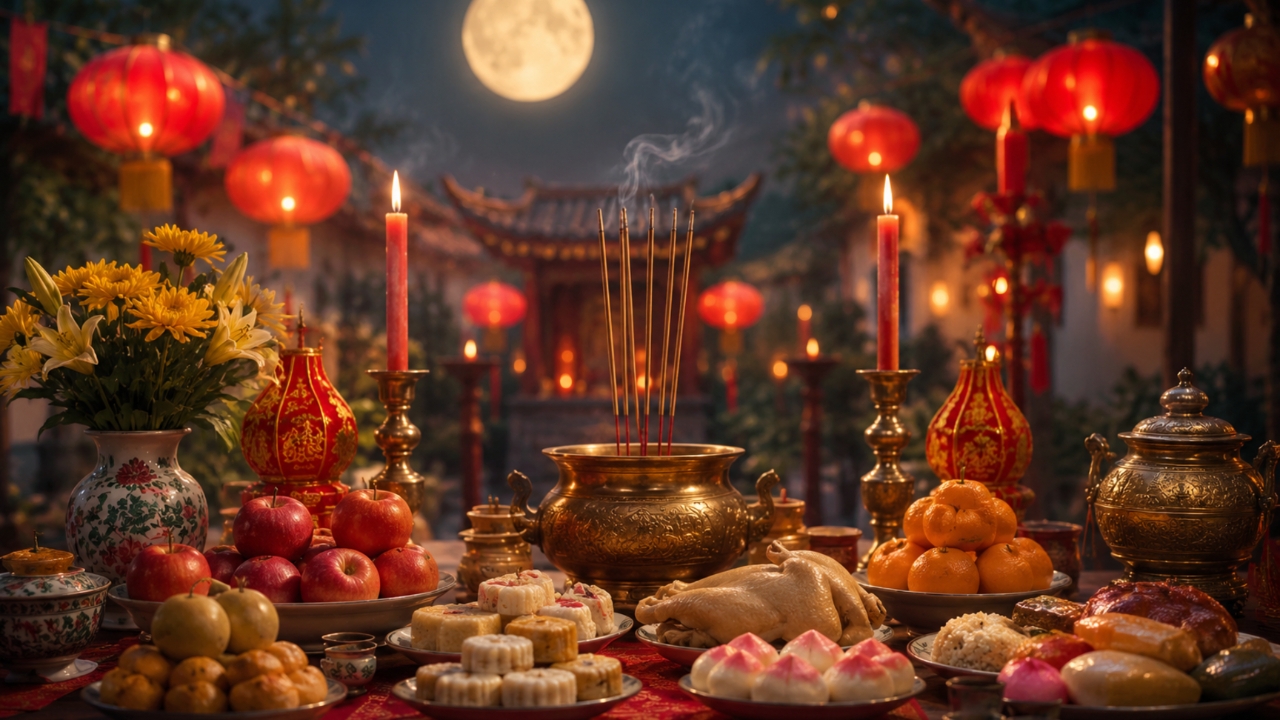
" Chinese Ghost Festival The Chinese Ghost Festival is an important celebration for Thai-Chinese families, during which descendants prepare food, fruit, and offerings to remember and honor their ancestors. This tradition reflects strong family bonds and long-held beliefs about the deceased.
The Chinese Ghost Festival 2026 falls on Thursday, 27 August 2026, which is the 15th day of the 7th lunar month in the Chinese lunar calendar. This day is known as "Zhongyuan Festival" (中元节) or the Zhongyuan Festival.
The Ghost Festival in 2026 is a celebration related to remembering ancestors, showing gratitude, and beliefs regarding spirits. The specific rituals vary across different regions and Chinese communities.
According to Chinese beliefs, the 7th lunar month is often called " Ghost Month " as it is believed that during this time the gates of the spirit world open, allowing spirits to enter the human world. The 15th day of the 7th month is the most significant day, when food and offerings are prepared to honor ancestors and dedicate merit to wandering spirits without descendants to care for them.

The customs of the Chinese Ghost Festival among Thai-Chinese families may differ in details and timing according to family traditions, but generally, the offerings are divided into three main periods:
The morning usually begins with offerings to deities or household gods, such as the Earth God (Tudi Gong) This is commonly done between 6:00 and 9:00 a.m. to show respect and seek blessings before beginning ancestor worship. The offerings vary by family tradition and may include:
Following the deity offerings, a table is set for worshiping deceased ancestors, usually between 9:00 a.m. and noon, to express gratitude and remember the contributions of departed family members. This is a key ritual of the festival. Common offerings include:
Some families make offerings to wandering spirits or those without descendants, typically between 1:00 and 4:00 p.m. In certain Thai-Chinese communities, this ritual is called " Wai Ho Hea Tee " It generally involves separate offerings from the ancestor table and may be set up outdoors, depending on family tradition, such as:
Note: The timing of offerings during the Chinese Ghost Festival 2026 is not fixed; families may begin earlier or later, and the order and details of the rituals differ based on lineage, locality, and inherited customs.

The origins of the Chinese Ghost Festival stem from a blend of beliefs, including Chinese ancestral worship, Taoism, and Buddhism, evolving into an important festival on the 15th day of the 7th lunar month.
In Taoism, the 15th day of the 7th month is called " Zhongyuan " and is associated with " Dì Guān Dà Dì " (Earth Official), one of the three heavenly officials overseeing heaven, earth, and water. Religious ceremonies are held to honor the deceased and seek blessings.
In Mahayana Buddhism, the festival emphasizes filial piety and dedicating merit to deceased parents and ancestors. When these Buddhist ideas merged with traditional ancestral worship, the 15th day of the 7th month gained greater social significance among the Chinese.

Today, these beliefs combine with folk traditions of the " Ghost Month " to form the custom of offering sacrifices to ancestors and wandering spirits in many areas. Thus, the meaning of the Chinese Ghost Festival 2026 goes beyond the spirit world; it also reflects values of gratitude, remembrance of the deceased, and maintaining family bonds across generations.