

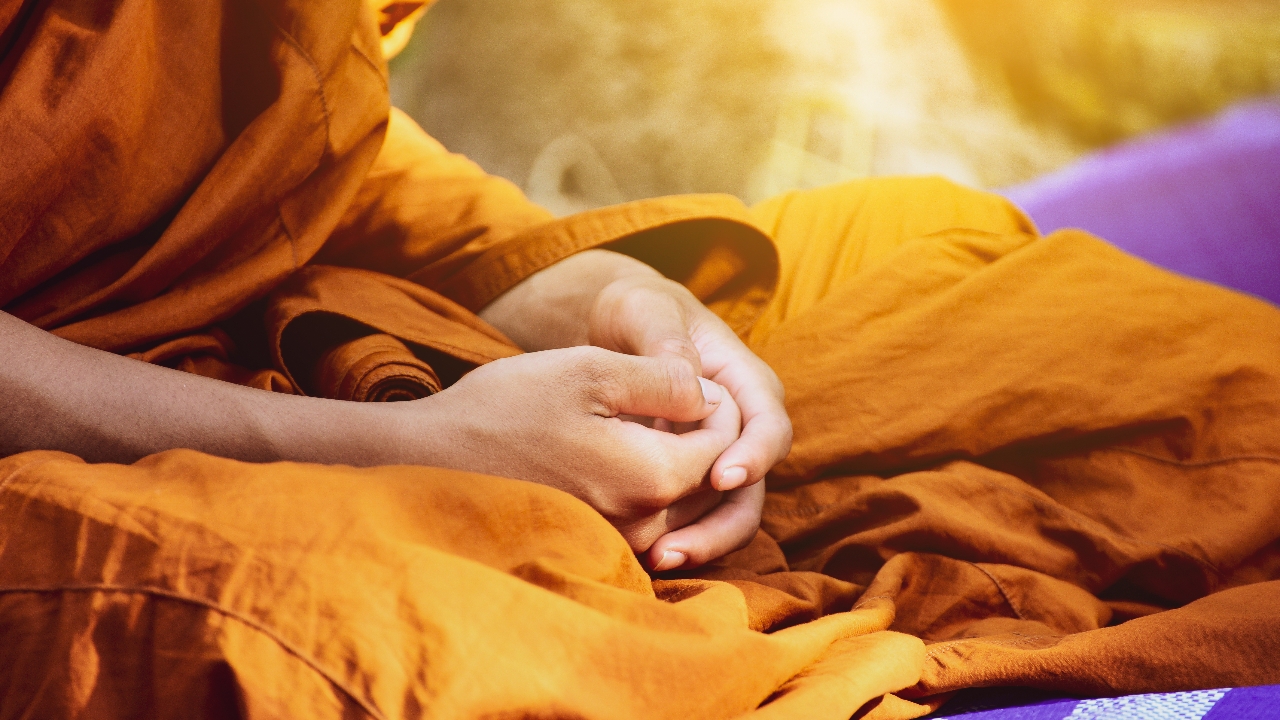
Magha Puja Day 2026 It is an important Buddhist occasion because it marks the day when the Buddha delivered the Ovada Patimokkha sermon: to do good, abstain from evil, and purify the mind. History of Magha Puja Day Learn about its significance and the religious activities to observe here.
Magha Puja The term "Magha Puja" comes from “Magha” or “Maghaburani,” an abbreviation for the third lunar month, referring to honoring the Buddha on the full moon day of this month according to the Indian calendar. On this day, the Buddha first gave the Ovada Patimokkha sermon to the monks, summarizing the essence as: "do good, abstain from evil, purify the mind."
Magha Puja falls on the full moon day (the 15th day) of the third lunar month, usually in February. In 2026, it will be on Tuesday, 3 March 2026.

There are four significant events that happened simultaneously on Magha Puja Day, known collectively as the Fourfold Assembly (Caturangasannibata). These events are:
1. 1,250 monks gathered spontaneously without prior arrangement to pay respects to the Buddha at Veluvana Monastery in Rajagaha, Magadha.
2. All 1,250 monks were ordained by the Buddha himself, known as “Ehipassiko Upasampada.”
3. All 1,250 monks present were arahants (enlightened ones).
4. Their assembly occurred on the full moon day, the 15th day of the third lunar month.
The core teaching on Magha Puja Day is the Ovada Patimokkha, the heart of Buddhism, consisting of three principles: abstaining from all evil, doing all good, and purifying the mind. This is well known as "do good, abstain from evil, purify the mind."
Magha Puja is a major Buddhist holy day. Besides making merit, listening to dhamma talks, observing precepts, and meditating in the morning, candlelight processions around the ordination hall are held in the evening. Participants light incense, candles, and prepare flowers before walking clockwise while chanting as follows:

Magha Puja Day 2026 is a significant religious day. However, if you cannot visit a temple to make merit, chanting at home, making merit, or joining candlelight processions online are also ways to accumulate merit.
Source:Office of National Buddhism
Related news