

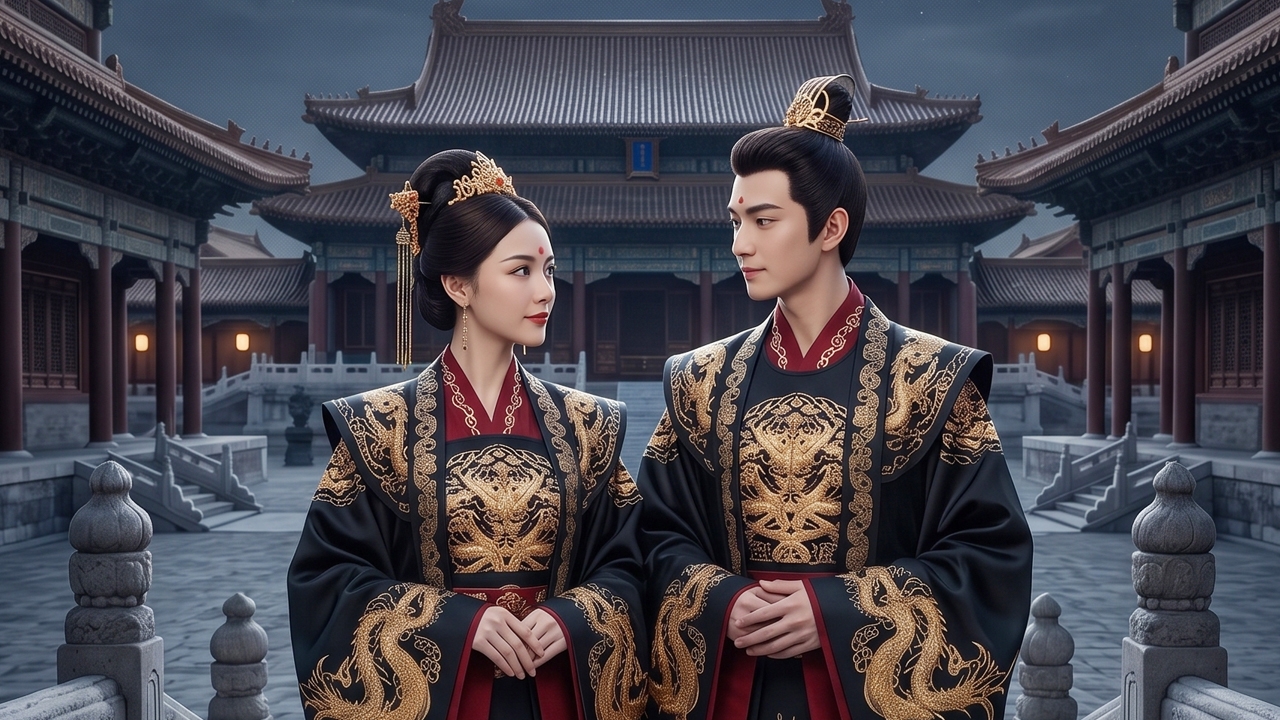
Whenever you watch a Chinese period drama, the terms used can be confusing. "Ranks in Chinese series" Today, we will take everyone on a deep dive into the official hierarchy of the royal court, covering both the front court (nobles) and the inner court (palace consorts) so you can understand any seriesclearly and thoroughly!
One of the charms that make Chinese period dramas, whether about palace intrigues or struggles for the throne loved worldwide, is the intense climb for power. However, many Thai fans often get confused by the complex rank system or titles in Chinese series, which are so numerous that sometimes the plot becomes hard to follow.
In ancient Chinese history (especially the Tang, Song, Ming, and Qing dynasties), the imperial system was strictly divided into two main parts: the "front court" (politics and military) and the "inner court" (the palace and women) Each side had a very strict hierarchy, so much so that greeting someone out of rank or breaking rules could be punishable by death.
In political intrigue dramas about power struggles for the throne, male characters’ ranks are categorized into royal family members and nobles who earned their titles through merit.
1. Male royal family members (imperial clan)
2. Noble ranks (ancient five-level system)
Senior nobles granted special hereditary titles by the Emperor, ranked from highest to lowest as Gong (Duke), Hou (Marquis), Bo (Count), Zi (Viscount), and Nan (Baron). In dramas, hearing "Gong Ye" (Lord Gong) or "Hou Ye" (Lord Hou) signals characters from powerful, influential noble families with vast court influence.

In dramas focusing on palace favoritism, female ranks are complex andchangeaccording to the Emperor’s favor. Here is a familiar system commonly depicted in most series:
Rank levels | Chinese titles | Roles and significance |
Highest rank (Mother of the empire) | Huanghou | The Empress, primary consort wielding power over all palace women. |
Secondary highest wife (special rank) | Huang Guifei | The Imperial Noble Consort, limited to one at a time, ranking above all other consorts. |
Primary consorts | Guifei, Fei | The four main consorts, often daughters of powerful noble families. |
Secondary consorts | Pin | Imperial concubines who have the right to personally raise imperial children. |
Tertiary consorts (lower rank) | Guiren, Changzai, Da Ying | Entry-level concubines who often seek favor to have their names called by the Emperor. |
During the Qing dynasty (Manchu era), the number of inner court positions was strictly limited: one Huang Guifei, two Guifei, four Fei, and six Pin, while lower ranks had no limits. This led to fierce competition to secure a limited spot and climb the ranks.
Understanding ranks in Chinese period dramas helps viewers immediately grasp which family is rising to power, which consort is falling out of favor, and why characters go to great lengths to elevate their rank to the highest in the land.