

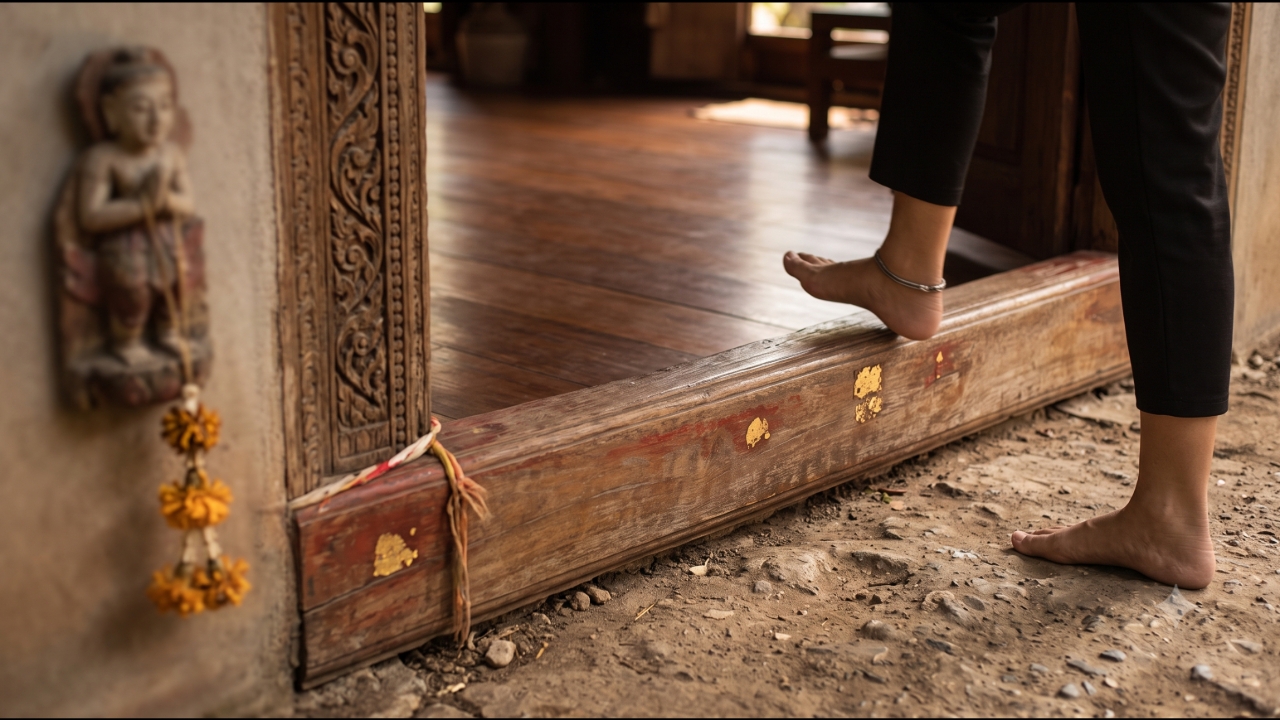
Many people have heard elders warn, “ Don’t step on the door sill. ” This is believed to bring misfortune, but in reality, this belief is not only about sacred spirits. It also reflects the ancient wisdom aimed at caring for the home, preventing danger, and instilling manners for entering and exiting residences.
The door sill is the component located at the bottom of the door frame. It can be made of wood, stone, cement, or other materials and serves to connect the door’s structure and separate the inside from the outside of the house.
In the past, most Thai houses were wooden and raised off the ground. The door sill played a crucial role in helping prevent water, dust, soil debris, reptiles, and dirt from easily entering the house.

According to ancient Thai beliefs, the door sill is an important part of the house, believed to be the dwelling place of sacred spirits or guardians of the home. Some beliefs associate it with the “ Earth Mother ,” symbolizing the land and abundance. Stepping on the door sill is seen as disrespecting what protects the home and may bring bad luck to its inhabitants.
From the Thai cultural perspective, a house door is not just an entrance or exit but also a “ boundary ” between the outside world and the family’s private space. Crossing over the door sill is a way to show respect for the place and homeowner. Especially when visiting others, not stepping on the door sill is a courtesy passed down through generations.

Beyond belief, many see this prohibition as practical advice embedded with reasons for daily life. In traditional houses, the door sill was important to the house’s structure, for example,
The belief in “ not stepping on the door sill ” is therefore not just an old taboo but a blend of faith, culture, and practical wisdom for living. Although today many may no longer hold the sacred belief as in the past, stepping over the door sill remains good etiquette and helps preserve the home for longer use.