

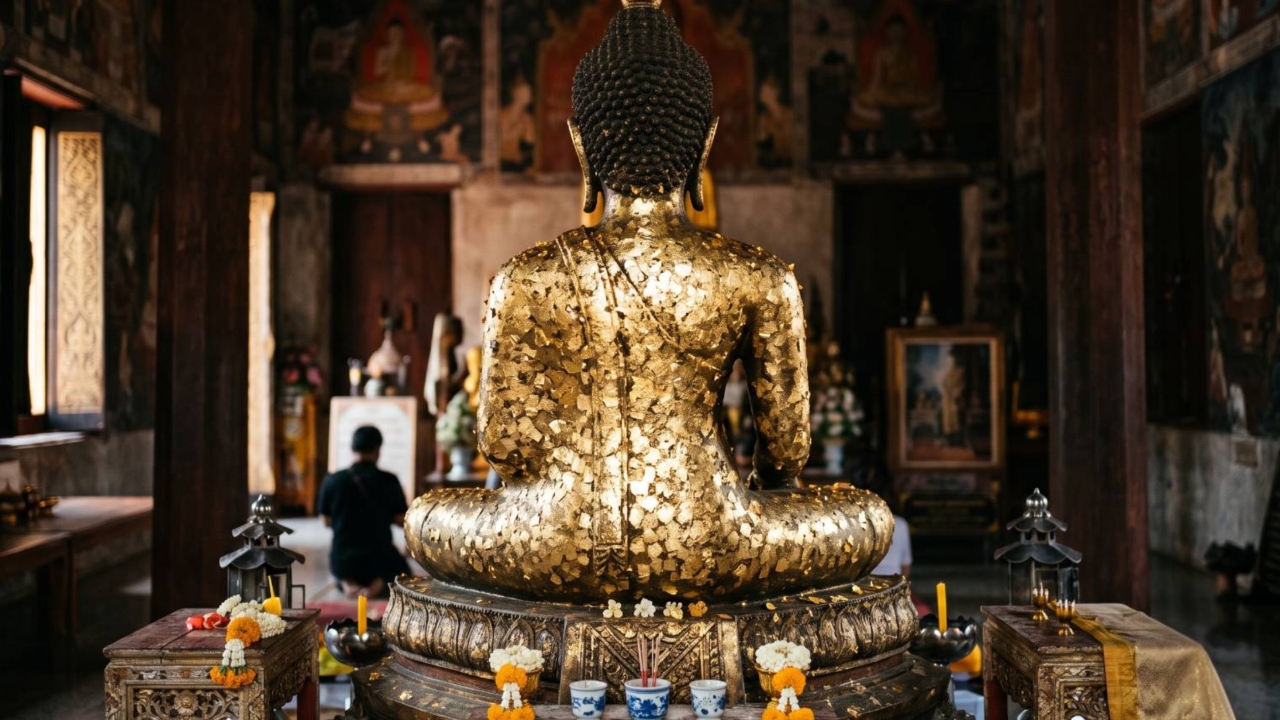
The phrase " gilding the Buddha's back " is a well-known Thai idiom often used to describe doing good without seeking fame or praise. Even if no one sees it, one still chooses to do what is right.
Many may have heard this idiom since childhood, but did you know that the origin of the phrase " gilding the Buddha's back " is not just a metaphor but is rooted in the ritual of gilding Buddha statues, a tradition long upheld in Thai society.
Gilding a Buddha statue involves applying thin gold leaf onto the statue, symbolizing respect and faith in Buddhism. It is believed to accumulate merit and honor the Buddha's virtues.
Typically, people gild parts that are easily visible, such as the face, chest, or hands, as these spots are accessible and popular for gilding. However, sometimes people choose to gild the " back of the Buddha statue ", a place that no one usually notices.

The idiom " gilding the Buddha's back " means doing good deeds, fulfilling duties, or helping others even when no one sees, praises, or rewards you. It compares gilding either the front or the back of the statue, both equally valuable spiritually because what mattersis the intentionbehind the merit-making, not the gilded location.
The phrase " gilding the Buddha's back " became widely known through the royal addresses of His Majesty King Bhumibol Adulyadej the Great (Rama IX), who stated,
“Gilding the back of the Buddha is necessary at times. Most people do not like to gild the back because they think no one sees it. But if everyone gilded only the front and no one gilded the back, the Buddha would not be perfectly beautiful.”
This royal remark reflects that the unseen work behind the scenes is just as important as the visible efforts because every part contributes to the completeness of the work or society.

This idiom does not just encourage silent goodness; it reminds us that " the value of good deeds is not measured by how many people know about them, but by the intention and the benefits they bring." Sometimes, the most valuable contributions are small acts unnoticed by others but indispensable—just like the thin gold leaf on the back of the Buddha statue, which, though unseen, is part of what makes the statue beautiful and complete.