

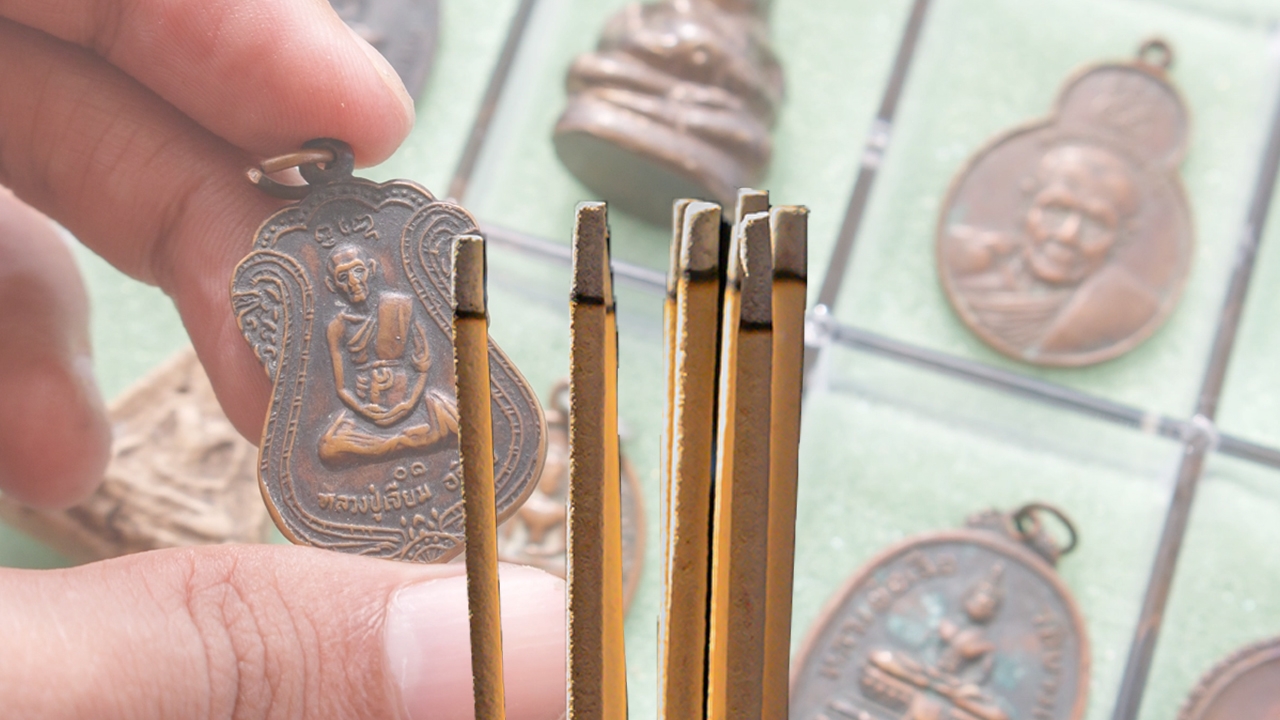
Worshiping amulets has long been a spiritual refuge for Thai people, yet many still wonder "How many incense sticks should be lit when worshiping amulets?" Ancient beliefs and Buddhist teachings conclude that the number of incense sticks reflects meaningful reminders to the mind.
Paying respect and worshiping sacred objects or "amulets" is a spiritual anchor for many Thais. However, a common question when setting up a worship altar or changing a household shrine is "How many incense sticks should be lit when worshiping amulets?" to follow tradition correctly and enhance good fortune for residents.
According to ancient beliefs and Buddhist principles, the number of incense sticks lit for worship varies in meaning and purpose. For worshiping Buddha images, principal household Buddhas, or amulets, the standard number according to Buddhist tradition is "three incense sticks."
Lighting three incense sticks, besides symbolizing the three qualities of the Buddha, in folk belief also represents worship of the Triple Gem — the Buddha, the Dharma, and the Sangha — considered the highest auspicious act at the beginning of paying respects to sacred entities.

Besides the standard three incense sticks for worshiping the Buddha and amulets, local beliefs prescribe incense numbers based on the type of sacred object or entity as follows:
Worshiping amulets or Buddha images at home generally involves lighting three incense sticks to show respect to the Triple Gem and the Buddha's qualities. If in confined spaces like apartments or condominiums, smoke-free incense or simply joining hands in prayer and chanting is acceptable, as the essence of worship lies in a sincere mind committed to morality and mindfulness in life.