

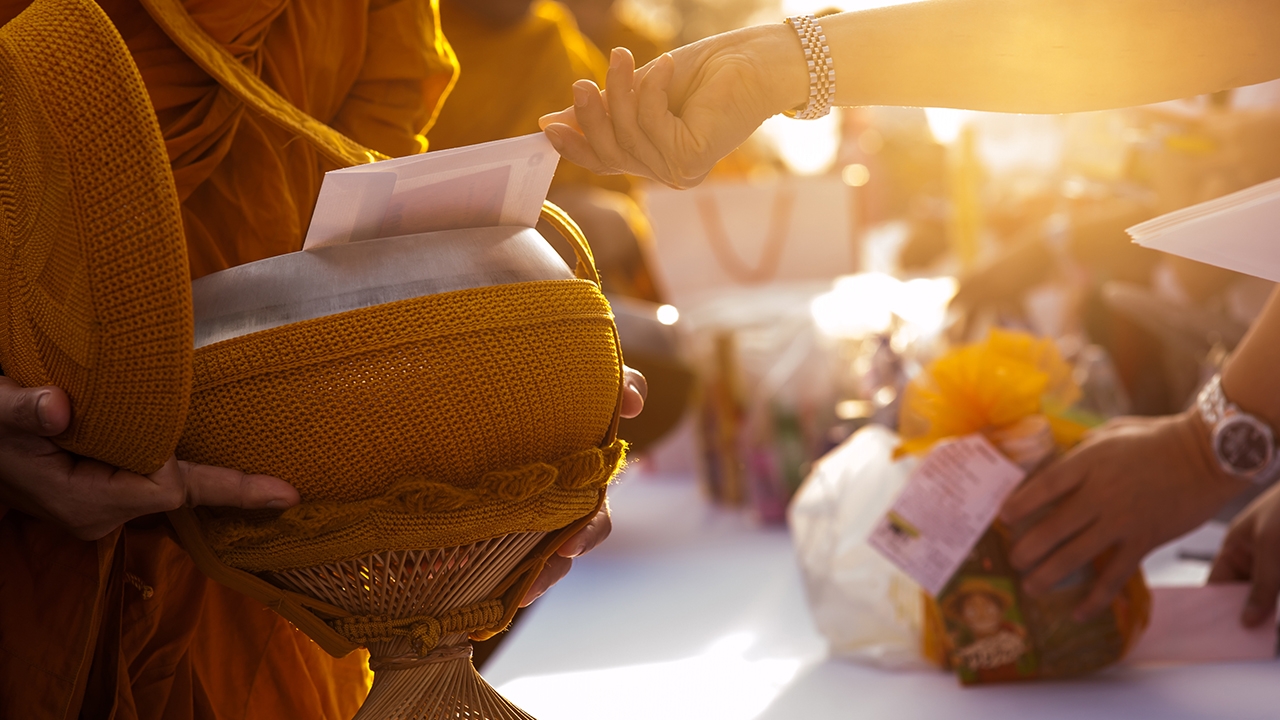
Waking up early in the morning offering alms or making merit at the temple is a way of life long established in Thai society. However, in today's cashless society, where people carry less cash, many wonder if offering cash directly into monks' alms bowls truly generates merit, or if it violates monastic discipline. Understanding the intention behind making merit, alongside learning the proper way to offer money, can help make daily merit-making fulfilling, reassuring, and in full accordance with Buddhist disciplinary principles.
According to the Vinaya Pitaka (Nissaggiya Pacittiya, rule 18), the Buddha forbade monks from accepting, handling, or rejoicing in money or gold, as such possessions are inappropriate for monastics. Offering cash directly into alms bowls or handing money directly to monks causes them to commit unintentional disciplinary offenses.
The purpose of this rule is to prevent monks from accumulating excessive wealth or developing greed for basic necessities. Understanding this prohibition helps laypeople make merit correctly without causing monks to violate their discipline.

In Buddhism, merit-making arises from pure intention. A sincere wish to donate to support the Buddhist community always produces merit.
However, giving cash in alms is less meritorious because it causes monks to commit offenses and requires them to perform ceremonies to relinquish the money to be free of blame. While donors may have good intentions, this condition forces monks to break discipline unnecessarily.
If you wish to donate money to help pay for utilities or temple maintenance, you can do so properly according to monastic rules through the "waiyawachakorn" (temple treasurer or administrator) as follows.
Offering alms is a virtuous act that cultivates generosity, but to maximize merit and benefit, it must be combined with wisdom and understanding of Buddhist discipline. Morning alms should focus on offering fresh or dried food and drinking water into the alms bowl. Monetary donations should be made through temple treasurers, donation boxes, or direct bank transfers to preserve the purity of the monks and ensure the continuation of Buddhism.