

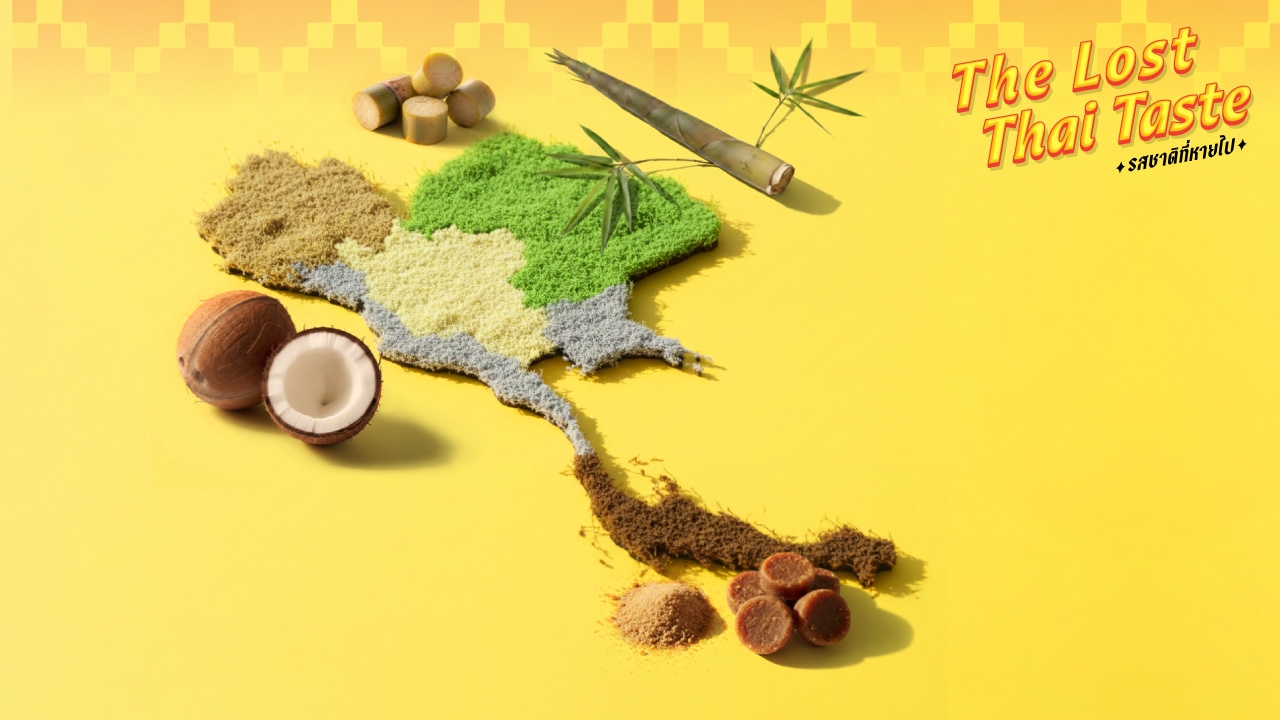
Decoding the"intense sweetness"of Central Thailand's people while searching forDok Sono desserta flavor that is gradually fading from memory
Sweetness in Thai food culture does not come solely from granulated sugar; each region designs flavors based on ingredients available locally.
If we map the paths of sweetness across Thailand's regions, we see clever ingredient choices that create distinct flavors—for example, the North uses sweetness in desserts for merit-making and auspicious occasions, while the South balances sweetness to moderate spicy heat from spices.
Conversely, the Northeast is particularly interesting as its dishes are not very sweet but draw sweetness from natural vegetables and plants. Meanwhile, Central Thailand, being a trade hub, has the greatest access to sweetness, leading to the observation that Central Thais tend to prefer sweeter tastes. Historically and industrially, people there can easily access sweetness at lower prices than elsewhere.

However, amid the trend of industrial sweetness, local dishes such asDok Sono desserta specialty of Phra Nakhon Si Ayutthaya province, are becoming flavors that slowly disappear (The Lost Thai Taste). Environmental factors, the fast pace of society, and palates accustomed to processed sweetness are causing traditional flavors, especially Dok Sono dessert, to gradually vanish.
Certainly, these must be preserved—not only through recipes but also by safeguarding traditional wisdom to prevent the loss of local root flavors over time.
Re-examining the differences in sweetness in favorite dishes may be a small starting point to deepen our understanding of the origins and value of Thai ingredients.