

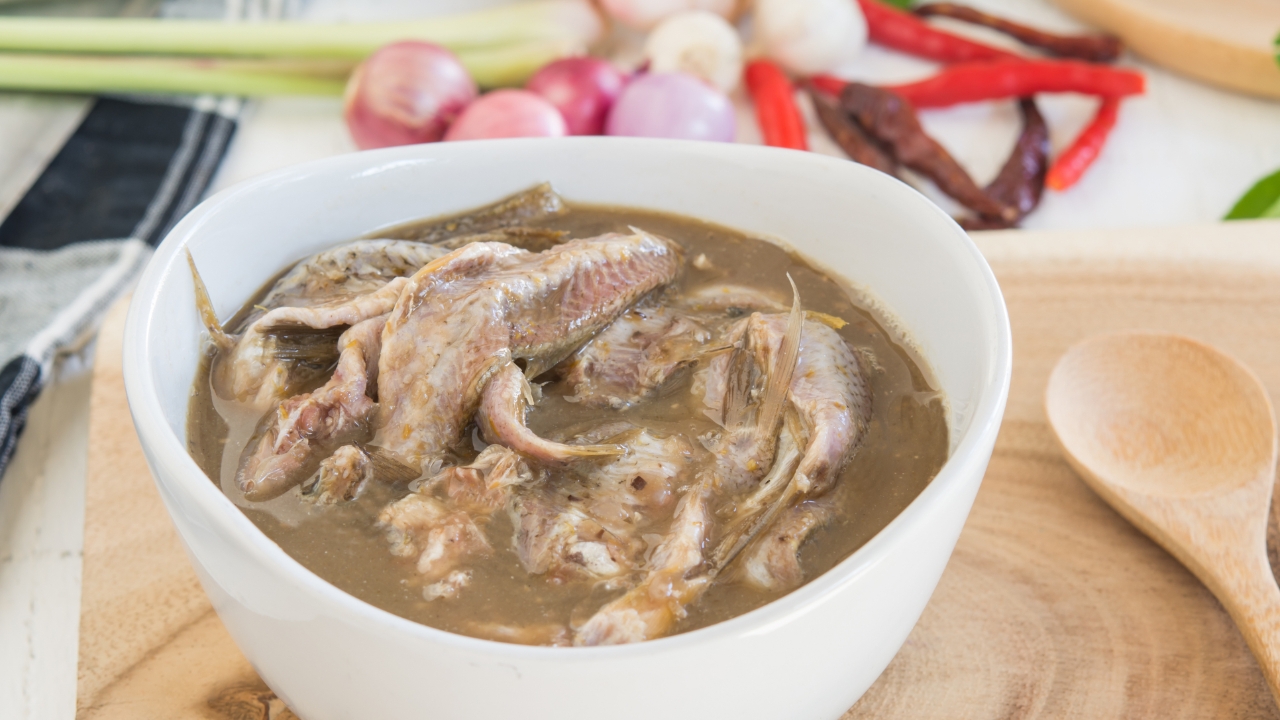
When it comes to Isan food, “pla ra” is a main ingredient in many people's mental image. But do you know where pla ra originally came from? Thairath Online will take you to explore the historical flavors of Isan cuisine.
Chef Paisan Cheevinsiriwat, an expert in Isan cuisine, interestingly explains that pla ra is local wisdom for preserving food to consume during the dry season, reflecting one form of the Isan people's struggle to survive.
They preserved fish caught during the rainy season by fermenting it in jars called “pla daek” in the Isan language, or what we know as pla ra, to store and use for seasoning during the dry season.

“I think it’s food for fighters. When there’s a drought and nothing else to eat, you have to eat it. And I believe Isan people are creative in making these foods tasty enough to eat.”
Beyond its unique taste, the “smell” of pla ra. (Fragment only, no translation needed) is a key element that makes it memorable, especially the “nong” scent, which means a pungent odor that helps to intensify the strong flavors of Isan food.
“The flavor of pla ra is quite individual. Some people like the 'nong' smell, meaning a pleasant pungency, not a bad odor. For me, it depends on the dish—whether it needs that 'nong' or not. Personally, I prefer it less 'nong' because when used as an ingredient, it blends better with other flavors.”

Regarding why Isan food tends to have a stronger taste than other Thai regional cuisines,. (Fragment only, no translation needed) He recalls the past drought periods in Isan, which caused hardship due to difficulty finding food. Strongly flavored dishes helped make eating with sticky rice more enjoyable.
“In the past, Isan really suffered from drought. When people felt hardship, they made their food strongly flavored to eat with sticky rice so the rice’s taste wouldn’t be overwhelmed. If the food was bland, eating it with sticky rice wouldn’t have much flavor. This is why dishes are intensely flavored and pla ra is a key ingredient.”
Thus, pla ra is not just a seasoning to enhance food taste but is filled with historical stories of life struggles against drought by the Isan people, combined with creative thinking to further develop Isan cuisine’s flavors.
Why does the thought of Isan food always bring pla ra to mind? And if there were no pla ra, what else does Isan food have to offer? Find the answers in THE LOST THAI TASTE, Episode 2.
Supported by the Department of Cultural Promotion.