

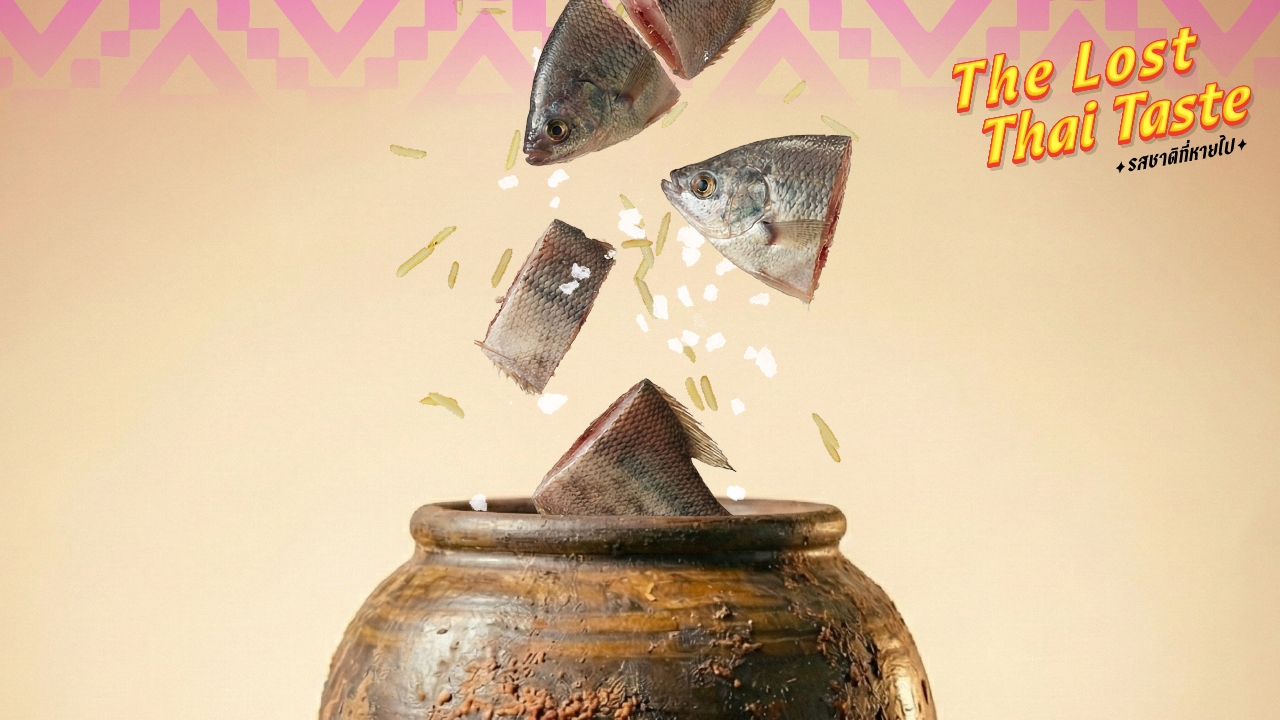
Get to know "Pla Ra" or "Pla Daek" more profoundly, from the origins of the often misunderstood name, through the traditional local fermentation process, to nutritional information that reveals greater benefits than expected, along with safe eating tips.
"Pla Ra" or "Pla Daek" is not just a uniquely scented seasoning; it is a heritage of wisdom passed down by Isan ancestors. Originating as a method to preserve food during floods, it has become the "soul" of Isan cuisine today. Thairath Online takes you deep into its origins and traditional production methods that have turned "Pla Ra" into a lucrative export product.
Many perceive the word "Daek" as impolite in Central Thai, but in Isan culture, "Pla Daek" has a deeper meaning. One theory suggests it evolved from "Laek," referring to the fish being fermented until soft and broken down. Another interpretation relates to the action of "pressing or packing" the fish tightly into jars for fermentation.
Beyond Thailand, "Pla Ra" is a shared culture across Southeast Asia: the Lao also call it "Pla Daek," Cambodians name it "Pla Hok," and Vietnamese refer to it as "Mam."
The key to "Pla Ra" lies in fermentation, with salt as the main preservative ingredient. The important steps are as follows.

According to the Nutrition Division of the Department of Health, 100 grams of "Pla Ra" provides 149 kilocalories and is rich in beneficial nutrients.
Though beneficial, it is crucial to always cook "Pla Ra" before eating to reduce risks from liver flukes and small amounts of nitrosamine compounds, which dissipate with heat. Also, due to its high sodium content, consumption should be moderate.
Today, "Pla Ra" has advanced from the kitchen corner to department stores and global export markets, with modern packaging and strict hygiene standards. Yet, the spirit of Isan and ancestral food preservation wisdom remains tightly packed in every jar, a pride connecting people through familiar flavors.
Source: Food Research and Development Institute, Kasetsart University