

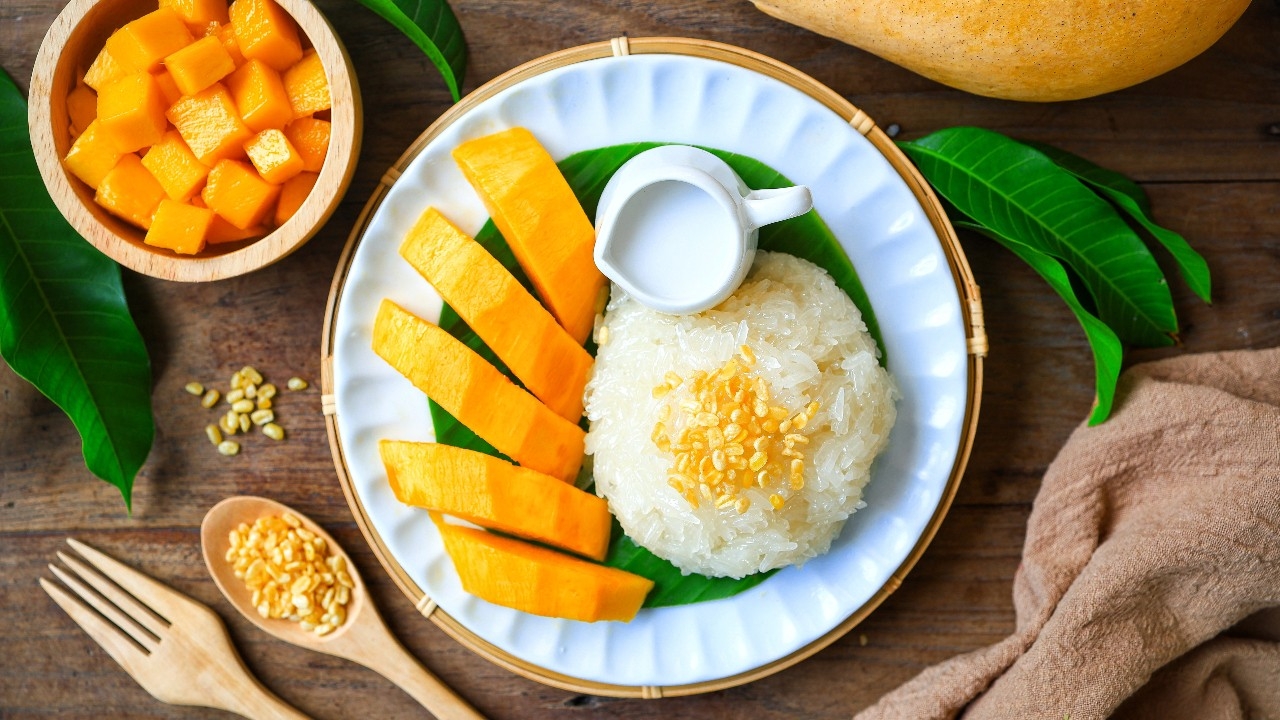
A collection of nutritionist tips on how to eat mango sticky rice without causing a spike in blood sugar or risking diabetes. Suitable for those losing weight and elderly people who want to enjoy it without harming their health.
"Mango sticky rice" is a popular summer dessert known worldwide as a cultural soft power. However, for health-conscious individuals, diabetics, or the elderly, its sweet fragrance often comes with concerns about high sugar and calorie content. A single serving can contain 450–600 calories, equivalent to 4-5 ladles of steamed rice! Thairath Online presents nutritionist techniques on how to enjoy mango sticky rice happily without causing blood sugar spikes or damaging your figure.
Understanding the biochemical mechanisms of this dish helps plan consumption accurately, based on research and nutritional principles as follows.
Nutrition research shows that sticky rice contains a higher proportion of amylopectin than regular rice. This branched molecular structure allows enzymes in the body to digest it into sugar very quickly, giving it a high GI of 85-98 (classified as High GI).
Combined with ripe mango, which naturally has high fructose and glucose (GI around 51-60 depending on ripeness), eating them together causes a sudden blood sugar spike, or postprandial hyperglycemia, which is dangerous for diabetics and elderly individuals with insulin resistance.

Although coconut milk is high in saturated fat, from a food science perspective, its fat content can slow stomach emptying somewhat, which may slightly reduce sugar spikes compared to eating plain sticky rice. However, consuming large amounts increases total calories and can adversely affect cholesterol levels.
Ripe mango contains not only sugar but also mangiferin and beta-carotene. Several studies indicate these compounds help reduce cellular inflammation. Eating a moderate amount of mango (half a mango) provides more benefits than consuming sweets made solely from white sugar.
Nutritionists recommend choosing sticky rice made from black or darker rice varieties, as they contain more dietary fiber than white rice, helping slow sugar absorption into the bloodstream. If buying from a shop, try to reduce the sticky rice portion to 1-2 tablespoons per serving.
A medium ripe mango contains relatively high sugar. For elderly people or those managing blood sugar, eating only half a mango per serving is advised. Also, choose mangoes that are just ripe, not overripe and mushy, since the GI increases with ripeness.
The key technique is "do not eat mango sticky rice as a snack on an empty stomach" because it causes rapid sugar spikes. It is recommended to eat it after meals that include green leafy vegetables or high protein, as fiber from vegetables helps trap sugar and slow carbohydrate digestion.
The coconut milk topping often contains added salt and sugar for flavor. To lower calories and sodium, avoid adding extra coconut milk beyond what is already used for soaking the sticky rice. While golden mung beans seem beneficial, omitting them helps reduce excess calories if you are watching your weight.

If you indulge in mango sticky rice, nutritionists recommend walking for about 15-20 minutes after the meal. This helps muscles use blood sugar immediately, reducing fat accumulation.
At-risk groups should limit consumption to 1-2 times per week and regularly monitor blood sugar levels. If you eat mango sticky rice on a given day, omit steamed rice or other starches from main meals to avoid exceeding daily carbohydrate limits.
Eating mango sticky rice deliciously and healthily is not about "restriction" but about "choosing wisely" and "controlling portions." Small behavioral changes following these recommendations will help you enjoy the summer while keeping your health intact and blood sugar stable.