

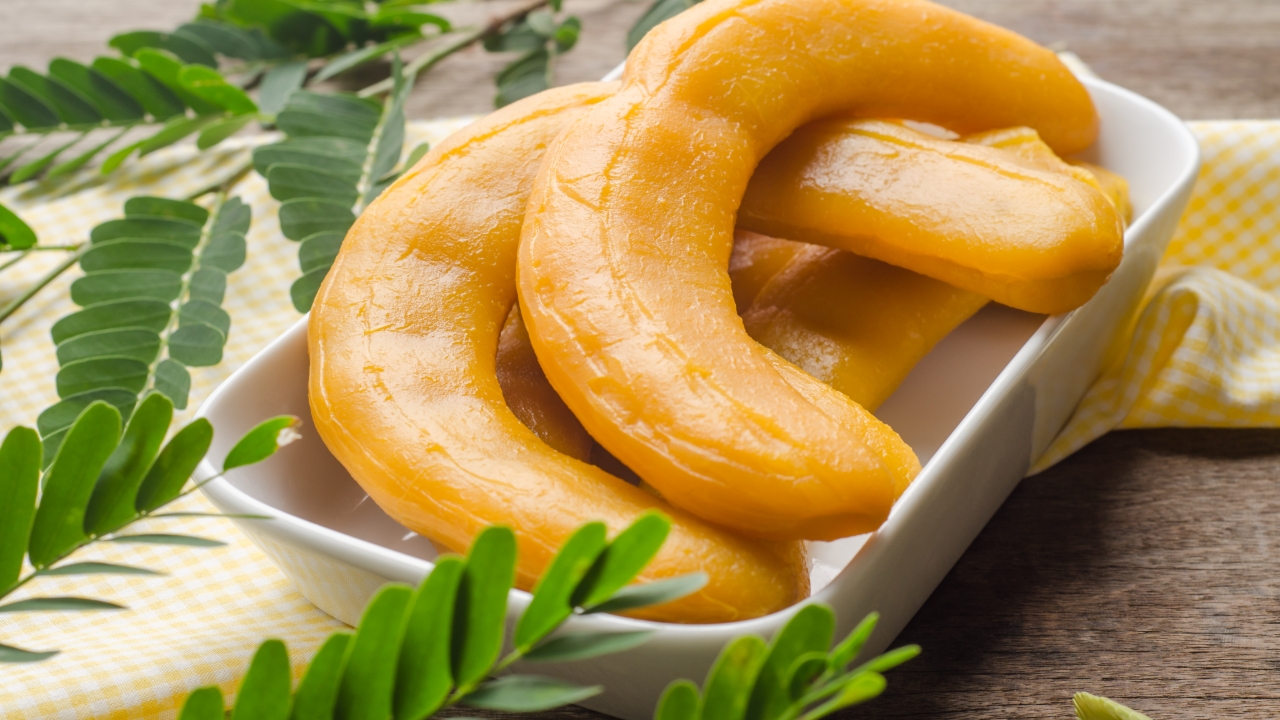
" Tamarind Preserves have become a popular snack sought by many, offering a sweet and sour flavor with a hint of saltiness and a refreshing, crisp texture. However, achieving a professional-level taste requires specific secrets in preparing ingredients and properly reducing the sourness. Today, Thairath Online will reveal a detailed tamarind preserve recipe you can easily make at home.
The preservation method of "soaking in syrup" is a traditional Thai wisdom that transforms very sour fruits into long-lasting sweets, especially tamarind preserves, which focus on crispness and appealing color.

Large giant tamarind pods (choose intact pods) 1 kilogram
Granulated sugar 500 grams
Salt (for soaking and seasoning)
Lime water (calcium hydroxide solution)
Water
1. Preparing and peeling tamarind: Soak the tamarind in hot water for about 5-10 minutes to loosen the shell. Then carefully peel off the shell with a knife, trying not tobreak the tamarind flesh.Rinse thoroughly with clean water.
2. Reducing sourness and increasing crispness
Soak in saltwater: Place the peeled tamarind in concentrated saltwater (half a cup of salt) and soak overnight to reduce the intense sourness.
Soak in lime water: After rinsing off the saltwater, soak the tamarind in "lime water" for about 4-6 hours. This step is very important as it helps the tamarind flesh become crisp.
3. Making the syrup: Boil about 1 liter of water, add granulated sugar and a little salt, simmer until the sugar dissolves and the syrup thickens slightly. Then turn off the heat and let it cool completely (pouring syrup while hot will soften the tamarind flesh).
4. Soaking the tamarind in syrup: Place the prepared tamarind in a clean glass or high-quality plastic container. Pour the fully cooled syrup over the tamarind until fully submerged. Seal the container tightly and refrigerate for 1-2 nights to allow the syrup to fully penetrate the flesh.
Keep the color bright and prevent darkening : While peeling, soak the tamarind briefly in water mixed with lemon juice or alum and gently swirl. This helps thetamarind fleshstay white and prevents blackening.
Cold enhances flavor : Tamarind preserves should be eaten very cold or served with ice to boost freshness and refreshment.
Making tamarind preserves is not as difficult as it seems. The key lies in patience during saltwater and lime water soaking to achieve the right crisp texture and balanced flavor. This recipe is not only great for family consumption but can also be developed into a supplementary income source.