

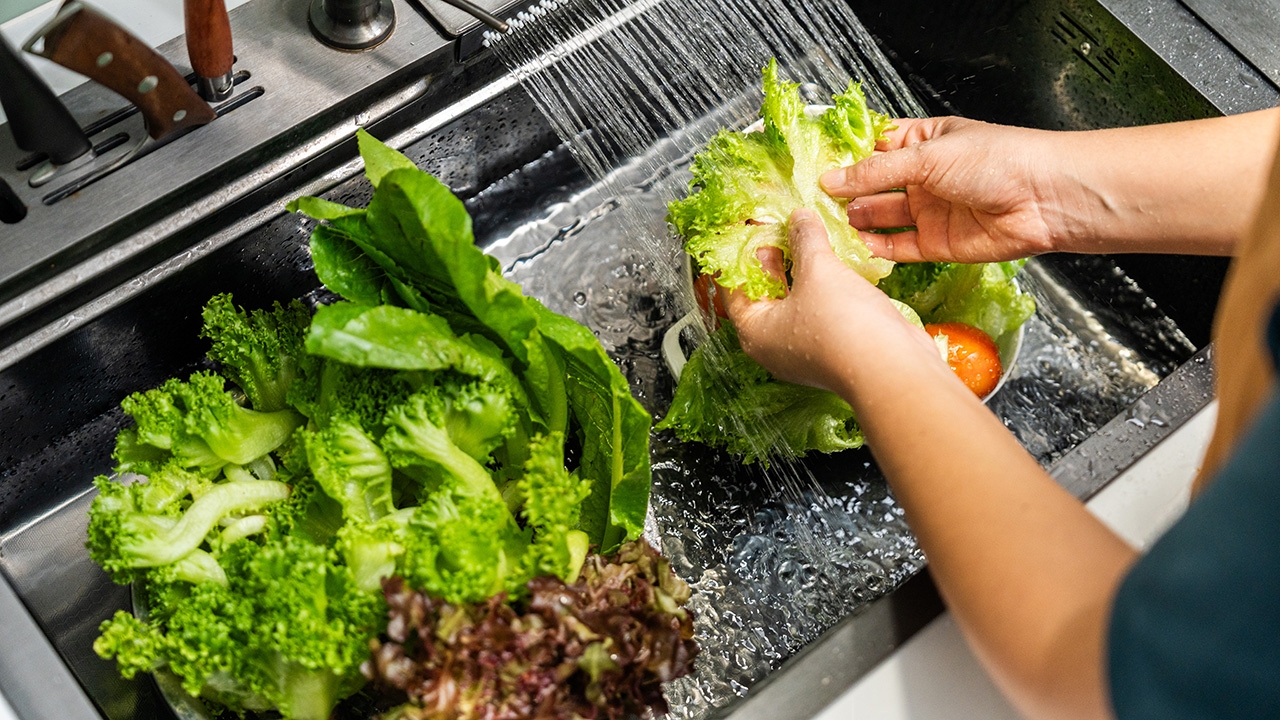
Are you worried about pesticide residues on fresh vegetables? Many people wonder, "What is the best way to wash vegetables?" to ensure that the salads and fruits on their dining tables are truly clean and safe. Thairath Online presents a ranking of vegetable washing methods to reduce chemical residues, based on statistics from the Department of Health, Ministry of Public Health. Let's see which kitchen aids are most effective.
To maximize the effectiveness of cleaning fresh vegetables, here is a ranking of washing methods that best reduce chemical residues.

If asked what is best for removing chemical residues, "baking soda" (sodium bicarbonate) tops the list. According to the Department of Health, it can reduce chemical residues by up to 95%.
Although its chemical residue reduction is less than baking soda, 5% concentration vinegar stands out for its acetic acid which has antimicrobial properties, effectively reducing bacteria and parasite eggs.
A classic method any household can do without any additives. It effectively washes away dust, soil, and general dirt, though the reduction rate of chemical residues varies depending on the type of chemicals present on the vegetables.
For modern consumers seeking convenience, food-grade vegetable washes are another good option. Although no official statistics from the Department of Health confirm their effectiveness, these products are specially designed to dissolve wax, chemicals, and bacteria without damaging the taste of the vegetables.
In summary, for maximum effectiveness in removing chemical residues, "baking soda" is the best answer for washing vegetables. However, other methods can be chosen based on convenience and the type of vegetable. The most important thing is to wash vegetables properly every time before eating for good hygiene.