

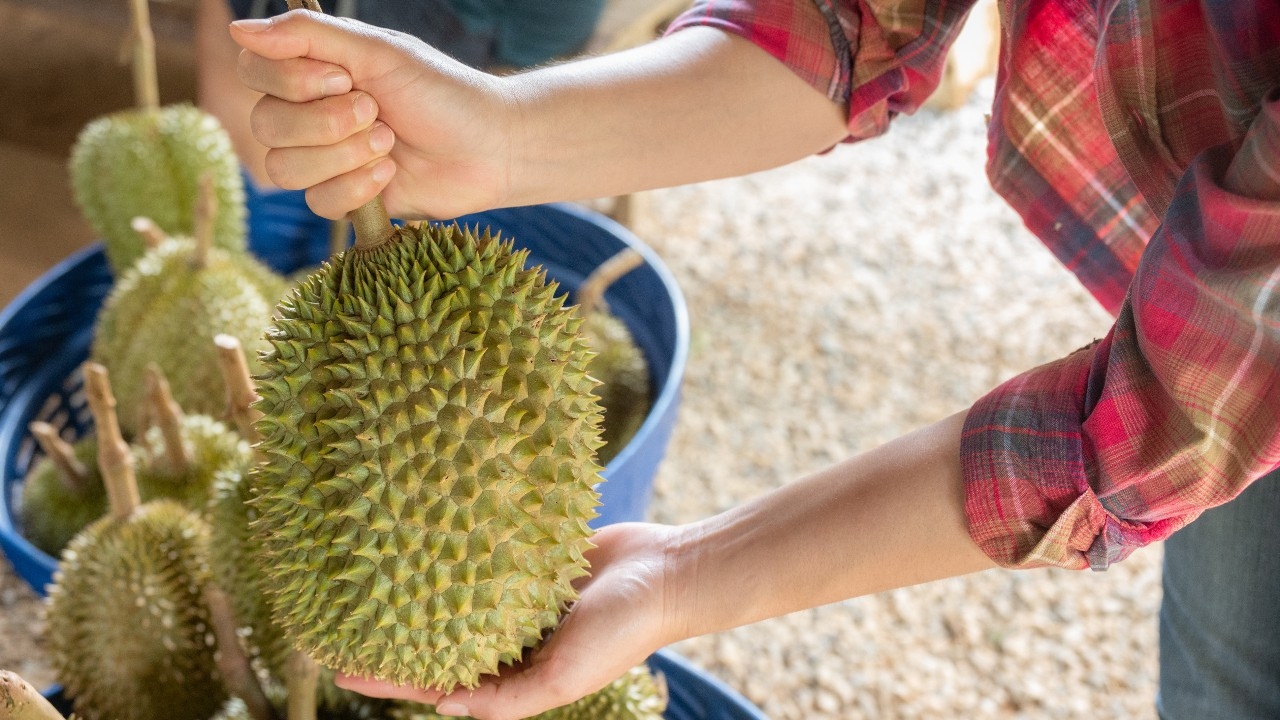
A collection of professional tips for selecting durian by checking the stem, tapping the shell, inspecting the spikes, and preventing being fooled into buying underripe durian, along with advice on how to pick affordable durian with the best quality.
Amid the viral trend of "durian priced at 100 baht each" many eagerly await the chance to taste the king of fruits at a friendly price. However, with good fortune often comes risk, especially the danger of being "fooled" into buying underripe or low-quality durian. To ensure your 100 baht is well spent, Thairath Online shares a definitive guide to choosing durian carefully before paying, so you can be confident you'll get the right flesh to create your favorite dishes without worry.
Often, budget durians come with limitations, such as being undersized or fallen fruit. Without careful selection, you may end up with underripe durian that has hard, tough flesh and a poor taste. Knowing basic tips can help you accurately distinguish "good-quality cheap durian" from "cheap but inedible fruit."
A mature durian stem is dark brown, hard, and feels rough like sandpaper. When brushed, it feels coarse. Naturally ripened durian will have a stem that detaches easily but leaves a fresh wound mark. If the stem is shriveled or too soft, it may be an old durian that has lost its flavor.
Mature durian spikes are dark brown, with dry tips that break easily. When squeezing the spike tips together, they should be flexible like a spring. If the spikes are still bright green and soft, it indicates underripe durian that was picked prematurely.

Look at the grooves between durian segments. Mature durian shows clear separations with a soft brown color, not dark green uniformly across the fruit. The deeper and clearer the grooves, the higher the chance of getting fully fleshed segments.
This is the durian seller’s secret move! Lightly tap the durian segment. A ripe, mature durian produces a "loose and hollow" sound (a "boong" sound), as the flesh starts to separate from the shell. A dull sound ("tuk") means the durian is still unripe or the flesh is too dense, making it less tasty.
Ready-to-eat durian emits a mild fragrance from the stem or base. No scent means it is underripe. If the smell is too strong, sour, or reminiscent of fermented fish, the durian is overripe or spoiling.
For those hunting foraffordable durian,it is recommended to choose "odd-shaped" durians or small fruits that still have good segment weight. Undersized durians are often sold at a flat price per fruit, so if you follow the 5 tips above, you can enjoy premium-tasting durian without breaking the bank.
Selecting durian isn’t just about luck; it’s the science of observation. No matter the price, if you can check the stem, tap for sound, and smell properly, every baht spent will be worthwhile. Once you have the perfect durian flesh, you’re ready to transform it into the delicious dishes you’ve planned.