

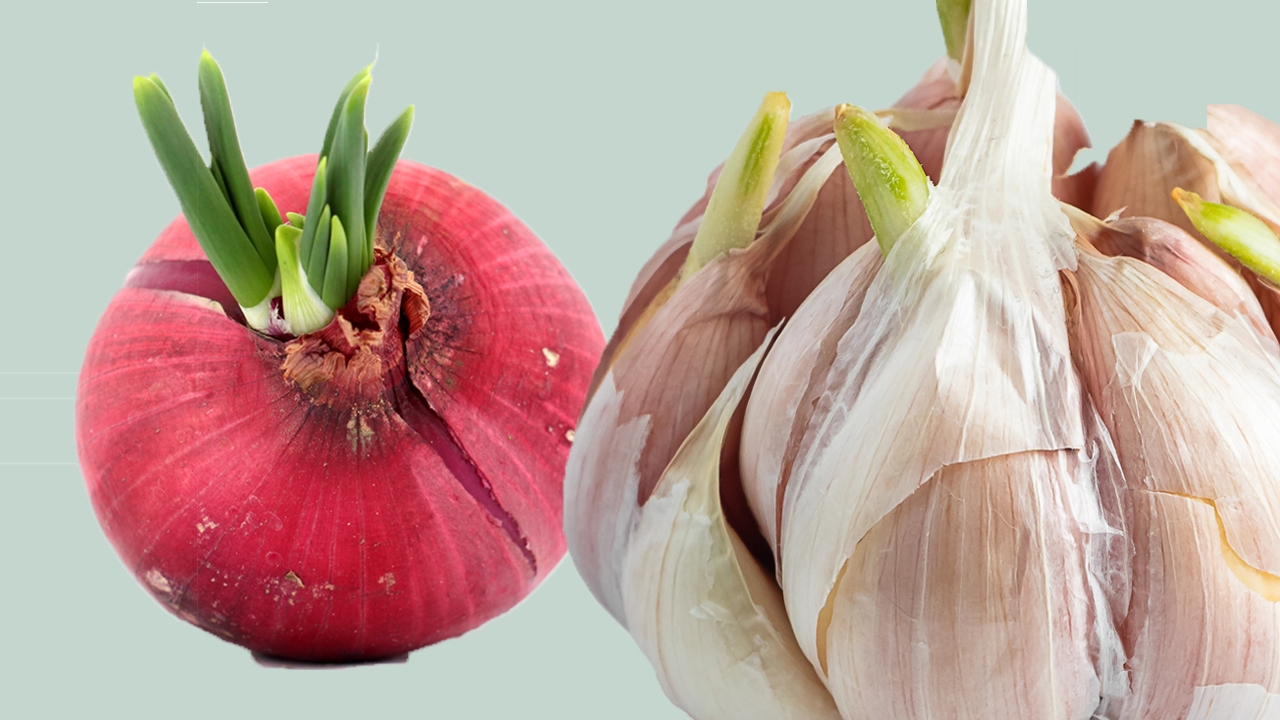
Many home cooks have encountered the problem of buying fresh produce to stock the kitchen, but Thailand's hot and humid climate accelerates the sprouting of these vegetables, raising the common question: Are sprouted onions and garlic still safe to eat? Or should you just give up and throw them away, fearing health risks similar to those associated with "potatoes" which produce toxic solanine when roots or green shoots appear?
Today, we bring you the medical and scientific answers to clarify the behavior of these kitchen vegetables accurately.
The answer is yes, you can eat them normally without any toxins. The biological structure of onions and garlic is entirely different from that of potatoes. When onions or garlic start to sprout green shoots, they are merely using the stored nutrients and sugars in the bulb to grow, not producing any toxins harmful to humans. However, the changes that happen when onions and garlic sprout are as follows:
Research in food chemistry shows an interesting fact: garlic sprouted for about five days has higher antioxidant levels than fresh, unsprouted garlic. This is because the plant is actively developing its immune system to grow into a new plant. Therefore, the green shoots of garlic are rich in beneficial nutrients and can be chopped and cooked with your dishes. If you dislike the texture, simply slice the garlic clove in half and remove the green shoot in the center.
Precautions Although sprouted onions and garlic are not toxic, you should check for "black mold or rot" If you see black spots, soft or mushy flesh, or a foul odor caused by storage in damp conditions, discard them immediately because mold spores are harmful to health.
In summary Sprouted onions and garlic are safe to eat and you don’t need to panic or waste food. Their taste and texture naturally decline somewhat, but if kept clean and free from mold, these kitchen staples can still be used to create delicious dishes.