

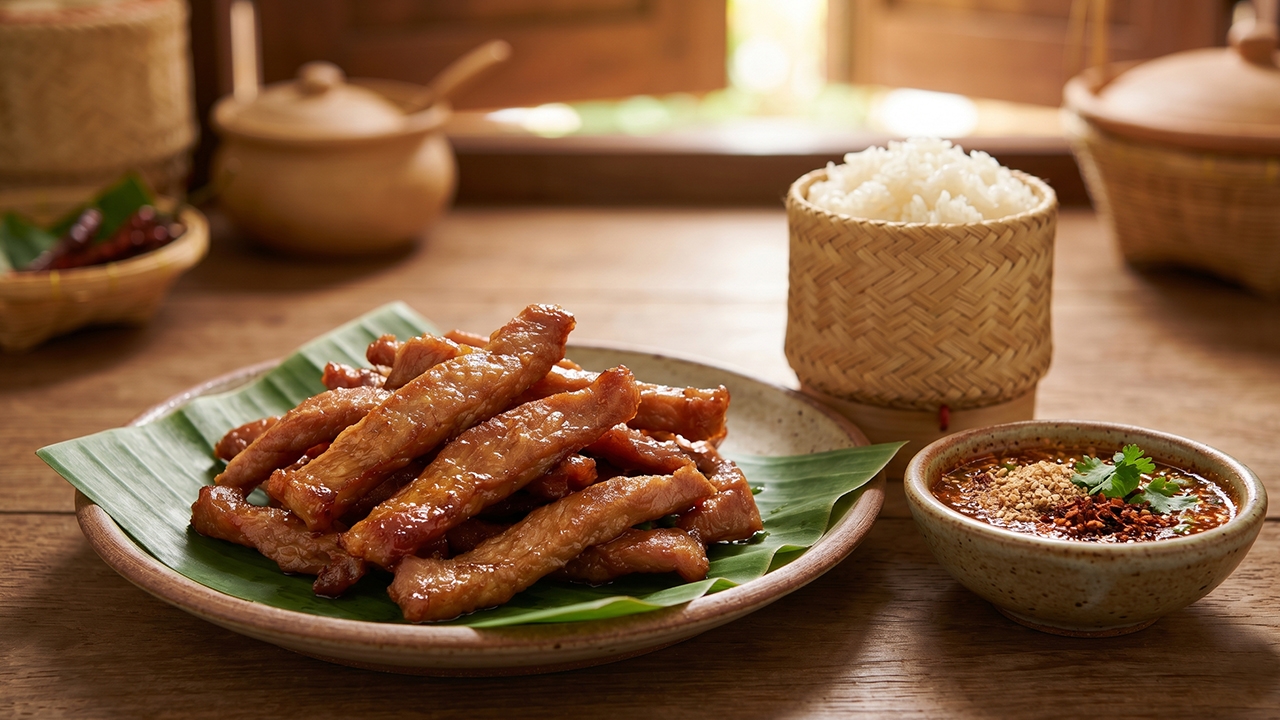
Here is a recipe and method for making sun-dried pork, a popular preserved dish that's easy to prepare. Included are tips for marinating the pork to keep it tender and avoid toughness, and guidance for frying it to an appealing golden color. This recipe suits both home cooking and income-generating sales.
Sun-dried pork is one of Thailand's traditional dishes born from ancestral food preservation wisdom. Meat is marinated with seasonings, then sun-dried to reduce moisture, which extends shelf life and intensifies the pork's flavor. Food and nutrition experts note that appropriate sun-drying time keeps the pork tender without becoming too dry or tough. Today, this dish is widely enjoyed as a main dish, often served with hot sticky rice or as a side snack.
The key to delicious sun-dried pork lies in selecting the right cut of pork and balancing the seasoning. The standard, easy-to-follow recipe includes the following ingredients:
Wash the pork and pat it dry, then cut it into long strips about 1 centimeter thick. Avoid cutting too thin, as the pork will shrink further when sun-dried.
Pound coriander roots, garlic, and peppercorns until finely ground.
Place the pork strips in a mixing bowl, add the pounded spice mix, oyster sauce, light soy sauce, and palm sugar. Massage the seasonings thoroughly into the pork for about 5-10 minutes. If desired, add sesame seeds at this stage.
Cover with a lid or plastic wrap and refrigerate for 1-2 hours to enhance the flavor.

Place the marinated pork in a single layer on a rack or bamboo tray. Be careful not to overlap the pieces. Sun-dry under strong sunlight for about 3-4 hours, turning the pork every 2 hours. Over-drying will make the pork dry and tough.
Besides marinating and sun-drying, the frying method is another critical factor in achieving tender, flavorful pork rather than tough meat. Here are simple frying tips anyone can follow.
Palm oil is recommended for frying because it withstands high heat, helps the pork develop an appealing yellow color, and produces a perfectly cooked texture without burning.
Heat a pan with enough oil to cover the pork pieces. Use medium heat and wait until the oil is very hot before adding the pork.
PrecautionsAvoid high heat, which burns the outside bitterly before the inside cooks. Also, never use low heat as it causes the pork to absorb oil, shrink, and become tough.
After adding the pork, stir and spread the pieces evenly to cook thoroughly. When the pork starts turning golden yellow, quickly remove it and drain on a rack to remove excess oil.
Avoid frying until the pork is dark brown in the pan because residual heat will continue cooking and darkening the pork after removal. Overcooking dries out the pork and diminishes its tenderness.