

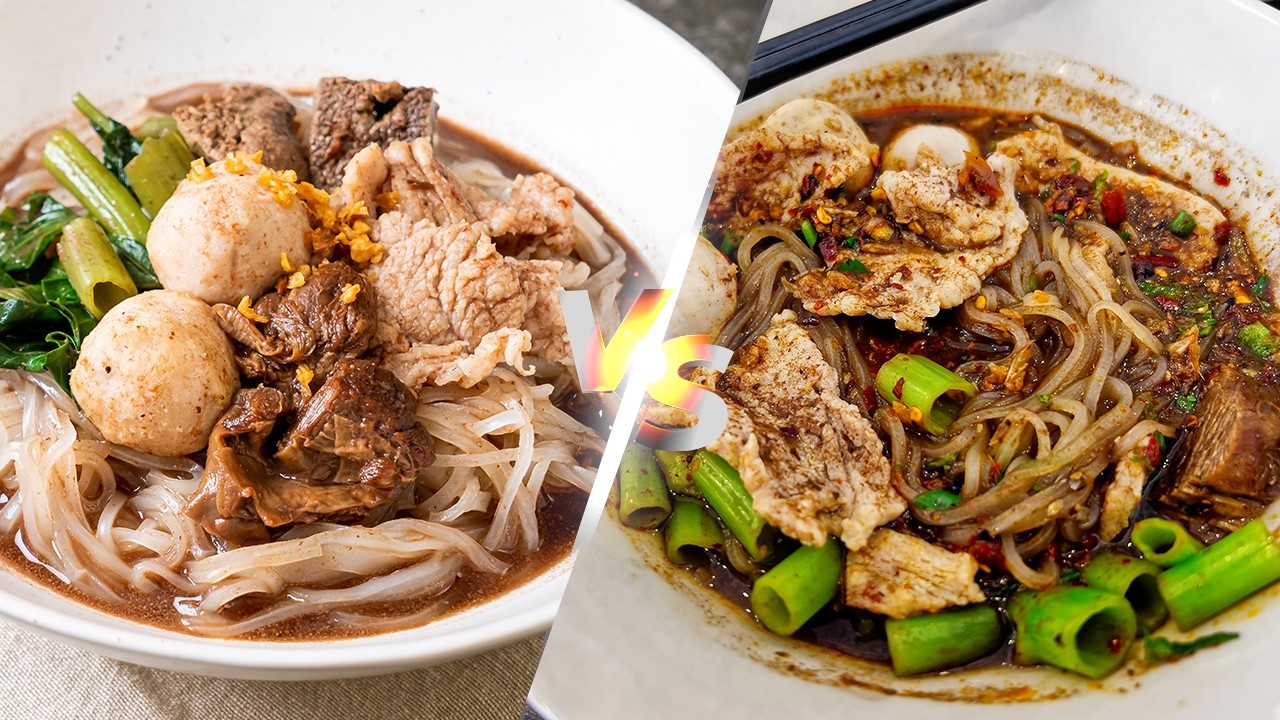
Would you like boat noodles or Nam Tok noodles? This popular question often stumps many food lovers who have long thought these two dishes were the same. However, within the culture of Thai street food, these two dishes are clearly different, both historically and in their broth preparation. Thairath Online helps clear up the confusion, dissecting the differences between these two iconic noodle dishes in a straightforward way.
Though the dark-colored broth can confuse many, a deeper look into their cooking methods and culinary history reveals they are defined by entirely different criteria.
1. Nam Tok Noodles are defined by the "method of adding fresh blood."
Here, the term "Nam Tok" does not refer to a waterfall, but is a culinary term meaning "adding fresh cow or pork blood" directly into the bowl, then pouring piping hot, thick broth over it.

2. Boat Noodles are defined by "history and lifestyle identity."
The term "Boat Noodles" refers to noodles that originated from vendors selling them on rowing boats along canals in the past, like Rangsit Canal or the canal around Victory Monument. Thus, the dish is closely tied to waterway life and its culture.

| Comparison criteria | Nam Tok Noodles | Boat Noodles |
| Naming criteria | Named after broth preparation method (adding fresh blood) | Named after history and lifestyle (sold on boats) |
| Bowl size | Typically regular size (can be large or small) | Traditionally small bowls with thick broth |
| Broth base | Clear broth or regular stewed soup, then fresh blood added | Intensely simmered Chinese-Thai herb broth (usually already contains blood) |
| Typical table accompaniments | No fixed rule | Must have crispy pork rinds and Khanom Thuai as signature sides |
"" Almost all boat noodles are a type of Nam Tok... but not all Nam Tok noodles are boat noodles. ""
In 2026, these two dishes have blended and evolved so the lines are less clear. Many boat noodle vendors have moved on land to shopfronts or upscale malls but maintain the small bowls and traditional sides. Meanwhile, Nam Tok noodle vendors have intensified their broth flavors. Understanding these differences helps food lovers order exactly what they want and deeply appreciate Thai street food culture.
Related news