

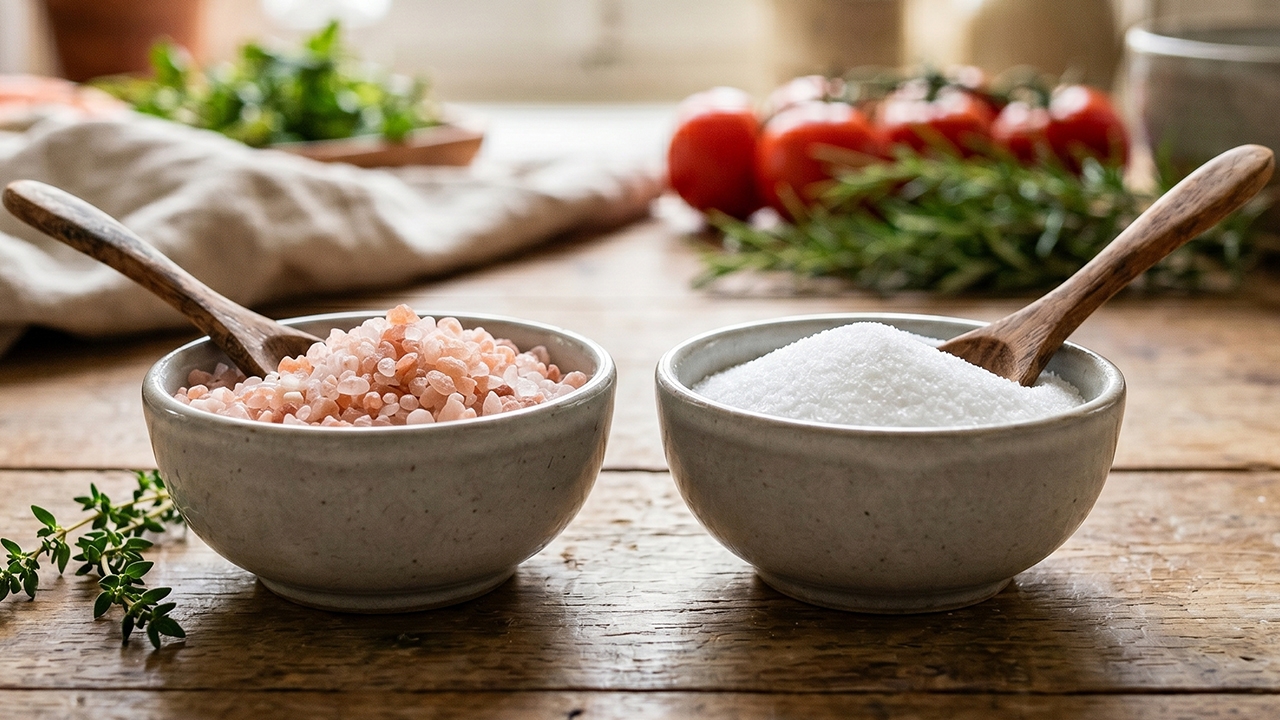
"Pink Salt" or Himalayan Salt has become a popular item among health enthusiasts despite costing several times more than regular salt. Let's explore whether it truly lives up to the hype or is merely a marketing trend.
Pink salt also known as Himalayan Pink Salt, is a natural salt harvested from the Khewra Salt Mine in Pakistan, near the Himalayas. The extraction process largely relies on manual labor and natural methods, avoiding chemical treatments or bleaching like common table salt.
Its pastel pink color comes from the natural mineral and nutrient structure within it. Due to limited sources combined with transportation and marketing costs, pink salt commands a price significantly higher than regular cooking salt in the market.
Many switch to pink salt believing it offers health benefits superior to regular white salt. Scientific analyses reveal the following facts: .

The popularity of Himalayan salt is driven by multiple factors beyond health benefits.
Consumers today are willing to pay more for ingredients labeled "100% natural" and unrefined.
The attractive pink hue enhances food presentation and is frequently featured in cooking content by popular bloggers, encouraging purchase behavior.
The World Health Organization (WHO) recommends a maximum sodium intake of 2,000 milligrams per day (about one teaspoon of salt), regardless of salt type. Excessive consumption of pink salt, assuming it is healthier, can cause the same health risks as regular salt, such as high blood pressure, kidney disease, and heart disease.
If you choose pink salt for its distinctive mild flavor, appealing color, and natural, unbleached quality, the extra cost may be personally satisfying. However, if you expect it to treat diseases or significantly reduce sodium intake, scientific evidence shows no meaningful difference compared to regular salt.