

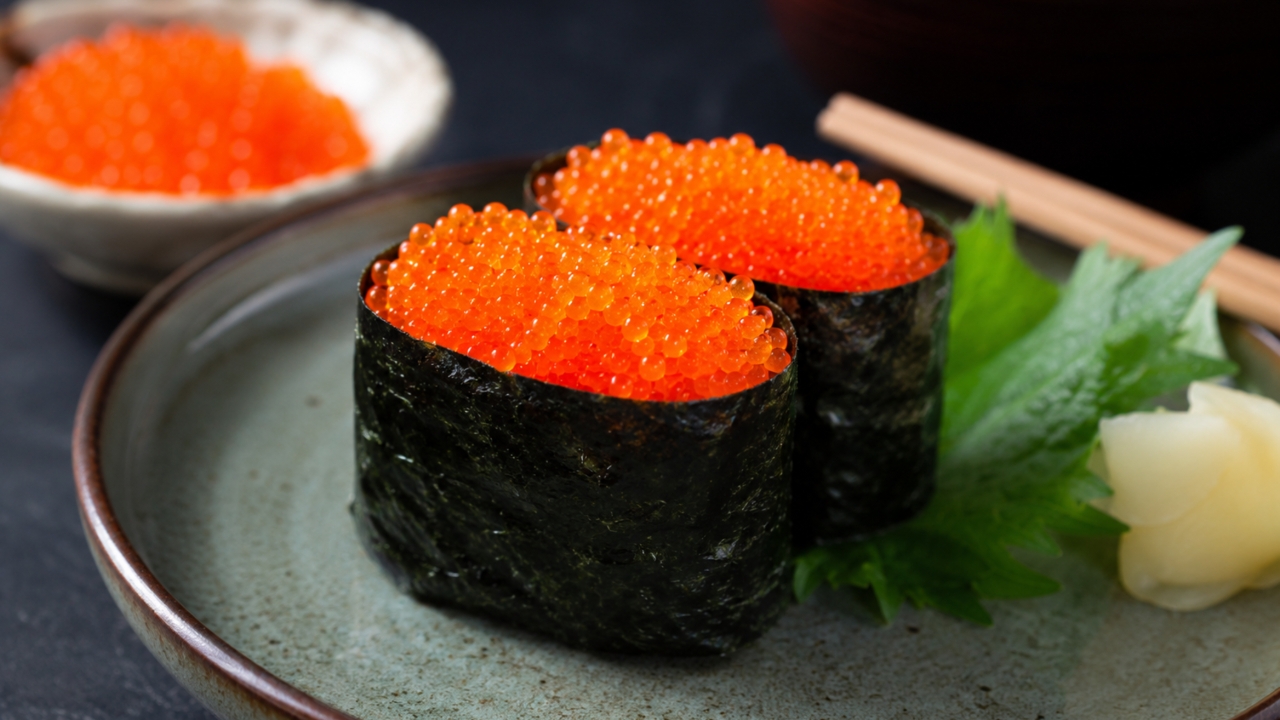
What exactly is "shrimp roe" made of? For those who enjoy Japanese cuisine, especially the dish " shrimp roe sushi, you’re probably familiar with the small, round, orange beads sprinkled on top that give a crunchy sensation when bitten. These are commonly called " shrimp roe, but did you know that these tiny orange beads aren’t actually made from shrimp as many believe? Thairath will reveal the answer together with you.
" Shrimp roe is called "Ebiko" in Japanese. In reality, it is the eggs of the capelin fish (Capelin), known in Thailand as "pla khai," which are notable for their uniquely crunchy texture that enhances the flavor of various dishes.
Restaurants prefer using capelin fish eggs instead of shrimp eggs because capelin produce a large quantity of eggs suitable for diverse processing, whereas shrimp produce fewer eggs, making them unsuitable for food industry production.

The bright orange color of "shrimp roe" we see is not the natural color of the fish eggs. Normally, capelin eggs are pale yellow before they are fermented, seasoned, and dyed to look more appetizing. Sometimes, the color is adjusted to black or deep red to make dishes more visually striking.


Although shrimp roe offers health benefits, there are precautions to consider, and it should be consumed in appropriate amounts due to the following reasons:

However, the next time you eat sushi topped with shrimp roe, you might want to reconsider your understanding, because those familiar crunchy orange beads are actually " capelin fish eggs not shrimp eggs as many think.
Although the name can be misleading for Thai people, shrimp roe remains a popular ingredient that enhances both flavor and texture in Japanese cuisine, and it also provides protein, omega-3, and other beneficial nutrients. By consuming it in moderation, you can enjoy tasty food while taking care of your health.