

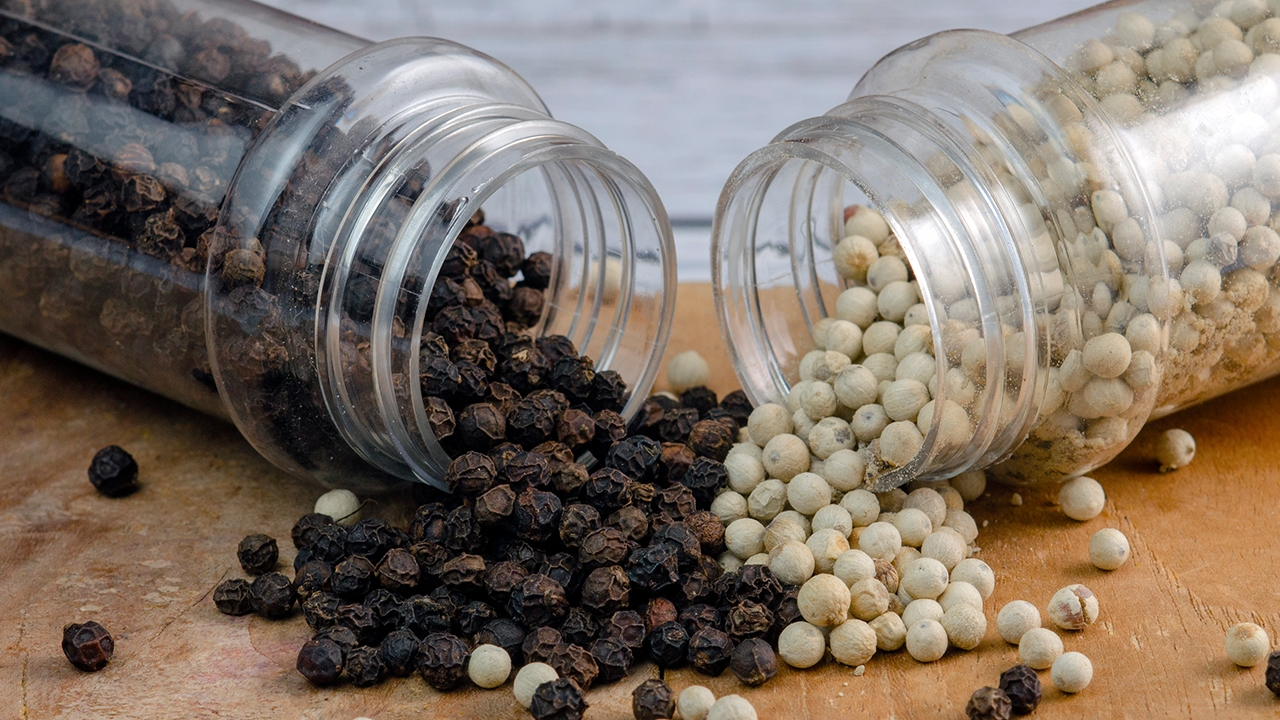
When discussing a distinctive spice that has long been a staple in Thai kitchens, it is undoubtedly "pepper" an ingredient that enhances the spiciness and aroma of favorite dishes. However, many still wonder about the differences between black pepper and white pepper. Are these two spices really from the same plant?
Thairath Online will delve into the differences between "black pepper" and "white pepper" in terms of origin, production process, flavor, and health benefits, so readers can understand and choose them correctly according to nutritional principles.
Flavor and aroma
Both types of pepper contain an important compound called "piperine," an alkaloid responsible for the heat and offering several health benefits. Research and nutritional data show that this compound has the following properties:
| Characteristics | Black pepper | White pepper |
| Food style | Suited for dishes where the peppercorn appearance and strong aroma are desired, such as black pepper stir-fries, steaks, or barbecue meat marinades. | Ideal for traditional Thai-Chinese dishes, meals that require neatness and visual appeal without black specks. |
| Recommended dishes | Black pepper pork stir-fry, steak sauces, Western-style fried rice. | Clear soups, rad na (Thai-Chinese noodle dish), rice porridge, wonton filling marinades, and the "three salts" blend (cilantro root, garlic, pepper). |
Black and white pepper are produced from the same plant variety but differ in the ripeness of the fruit and peeling steps. Black pepper has a sharp aroma and aids digestion, suitable for strongly flavored dishes, while white pepper offers a smooth heat ideal for soups and visually clean dishes. Choosing appropriately helps maximize flavor and nutritional benefits.